For most of its history, NATO’s credibility rested on assets it could command: troops, bases, weapons systems, and integrated military planning. Deterrence depended on capabilities that were clearly owned, coordinated, and deployable under alliance authority. Today, however, the foundations of collective defence increasingly lie outside NATO’s direct control. Undersea data cables, satellite networks, commercial cloud infrastructure, energy grids, and privately operated logistics systems now underpin military readiness and alliance coordination. This shift reflects a broader transformation, much like security itself. Modern military power now relies not only on armed forces but increasingly on complex civilian infrastructures governed by private firms and national regulators, rather than the alliance. As NATO adapts to this environment, it faces a growing paradox: its defence posture depends on systems it neither owns nor commands.
The Civilian Foundations of Military Power
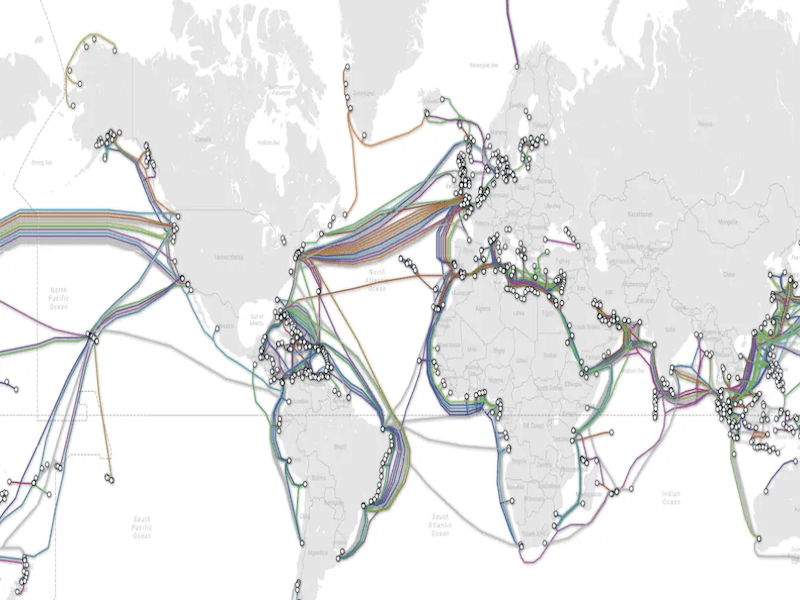
Contemporary defence operations are inseparable from civilian technological and economic systems. Military communications depend heavily on commercial satellites and digital networks. Operational planning relies on cloud computing services operated by multinational technology companies. Energy supply chains, transportation logistics, and port infrastructure, essential for troop mobility, are largely privately managed. Unlike traditional military assets, these systems fall outside NATO’s institutional authority. Ownership is dispersed across corporations, regulatory frameworks differ among member states, and operational decisions are shaped by market incentives rather than alliance strategy. While this arrangement increases efficiency and innovation, it introduces structural vulnerabilities into collective defence. Infrastructure disruptions no longer require direct military confrontation. Cyberattacks, sabotage of undersea cables, or disruptions to commercial logistics networks can degrade alliance readiness without crossing the threshold of armed attack. Such actions exploit ambiguity, allowing adversaries to weaken NATO cohesion while remaining below Article 5 triggers.
Deterrence in an Age of Interdependence
These structural vulnerabilities reflect a deeper shift in how deterrence operates in an interconnected world. Joseph Nye, a political scientist known for his work on soft power and international relations, argues that modern deterrence increasingly operates through interdependence rather than purely military confrontation. In the digital age, vulnerability emerges from connectivity itself. NATO’s strength and deep integration among allied economies and technologies also create new avenues for coercion. Privately governed infrastructure complicates deterrence because responsibility is complicated. If a privately owned cable network is sabotaged or a cloud provider disrupted, attribution becomes politically and legally complex. The question of whether such incidents constitute collective defence challenges remains unresolved. This ambiguity risks undermining deterrence credibility. Adversaries may calculate that attacks on civilian infrastructure will generate disruption without triggering a unified military response. In this sense, deterrence becomes less about preventing invasion and more about managing systemic disruption.
Resilience Without Authority
Recognizing these risks, NATO has increasingly framed resilience as a core component of collective defence. Alliance documents emphasize infrastructure protection, supply-chain security, and civil preparedness as essential to readiness. Joint NATO–EU cooperation has also expanded around critical infrastructure protection. Yet NATO’s role remains fundamentally limited. The alliance cannot regulate technology firms, mandate infrastructure standards across sovereign states, or directly manage privately owned networks. Responsibility lies primarily with national governments and market actors whose priorities may diverge from collective security objectives. This creates what might be called collective defence without command: NATO depends on systems essential to deterrence but lacks formal authority over their governance. The alliance can coordinate, advise, and encourage best practices, but it cannot compel compliance.
Strategic Implications for the Alliance
The growing privatization of security infrastructure challenges traditional assumptions about sovereignty and alliance responsibility. During the Cold War, defence planning focused on military balance and territorial defence. Today, resilience depends as much on digital continuity, economic stability, and infrastructure reliability as on traditional military capability. This transformation increasingly blurs the boundary between civilian and military domains. Security policy increasingly overlaps with industrial policy, technology regulation, and economic governance areas, where NATO has limited institutional competence. As a result, alliance effectiveness depends on cooperation with actors operating outside its command structure. The strategic risk is not simply vulnerability but coordination failure. Without clearer mechanisms linking governments, private firms, and alliance planning, NATO may struggle to respond coherently to disruptions that fall between civilian and military categories.
NATO’s evolving security environment reveals fundamental institutional tension. The alliance remains organized around collective military defence, yet the systems enabling that defence are increasingly privatized and globally interconnected. As reliance on civilian infrastructure grows, deterrence depends less on what NATO controls and more on what it can coordinate. The challenge ahead is therefore institutional as much as strategic. Ensuring credible collective defence will require deeper integration between security institutions, national regulators, and private infrastructure providers. NATO’s experience suggests that in the twenty-first century, protecting the Alliance may depend not only on commanding forces but increasingly on governing interdependence itself. Addressing this gap may ultimately require redefining collective defence not only as a military commitment, but as a shared responsibility across public and private governance systems.
Image credit: Submarine Cable Map (date unknown), depicting global submarine telecommunications cable infrastructure, by TeleGeography via SubmarineCableMap.com.
Disclaimer: Any views or opinions expressed in articles are solely those of the author and do not necessarily represent the views of the NATO Association of Canada.