Compared to men, women and girls are more susceptable to sexual violence in instances of conflict and peace-building. Common conceptions of sexual violence imagine the perpetrator to be a soldier belonging to a party involved in the conflict. In reality, perpetrators can have affiliations with groups beyond just militaries. However, a separation often forms to separate troops, depicted as perpetrators, from stabilizing troops or peacekeepers who are assumed to be detached from committing this violence. Victim-testimonies and data reveal that the use of sexual violence and exploitation against vulnerable women, by those who are expected to bring stability and aid, is rampant. This article investigates how NATO approaches and responds to the issue of sexual violence perpetrated by peacekeepers.
The issue of organizational personnel committing sex crimes was particularly evident in Bosnia and Herzegovina in 2002. Here, UN troops known as the Stabilization Force patronized brothels which sold and trafficked women during the conflict. In addition, these troops did not report the brothel’s activities and became involved in the recruiting and selling of women. In doing so, the troops undermined their intended roles of restoring peace and security and instead, directly contributed to violence. Following the reveal of these crimes, none of the accused faced any sort of punishment. This outcome sparked outrage and was a stark reminder that institutions must develop frameworks for ensuring they prevent rather than exacerbate conflict-related sexual violence.
A lack of institutional jurisdiction has been cited as a factor impacting the UN’s ability to respond to reports of sexual violence. However, researchers argue that cycles of gender-based violence towards women also play a large role in the perpetuation of acts of rape and sexual exploitation in conflict. Violence committed by UN peacekeepers belongs to what scholars refer to as the wider “continuum of violence,” which describes how these acts are prevalent pre-conflict, but become intensified by conflict. Thus, the reason why the UN has not been able to adequately prosecute and prevent this violence is not only an institutional misstep but a systemic issue in which sexual violence is deemed as a natural byproduct of conflict.
Scholars say this is a display of gender dynamics and the constructed power imbalance between men and women. Gender roles and their assumptions place men and women in opposition to one another. Through this oppositional relationship, a hierarchy forms through gendered subordination; women are considered inferior and in need of the protection of men. In conflict, these prescribed gender roles and widely shared assumptions operate in ways that justify sexual violence against women.
Feminist scholars argue that the harmful pre-existing power imbalance becomes worsened by the increased vulnerability of women in conflict. Women in conflict-zones become negatively impacted by the economic harms of war and are forced into positions where they exchange sex for necessities like food. Peacekeepers notice this economic disparity and exploit women, exacerbating the unequal power distribution between the two parties. Therefore, in the case of the UN, these competing power dynamics alongside the lack of institutional jurisdiction creates a dangerous environment in which cycles of violence can be perpetrated by peacekeepers. It is imperative that international organizations that are deploying troops missions are adequately addressing and responding to these cases.
NATO has acknowledged the presence of these crimes and has clarified how this violence contradicts the Alliance’s core values and credibility. This stance is guided by NATO’s commitment to the Women, Peace and Security (WPS) Agenda, which acts as a general framework for combatting systemic violence against women. The Policy on Preventing and Responding to Sexual Exploitation and Abuse as well as Breaking the Silence and Fighting for Dignity: Combatting Conflict-Related Sexual Violence (Resolution 491) both emphasize that conflict-related sexual violence is rooted in harmful gender norms and structural inequalities. These frameworks also reiterate that all parties involved must cease and prevent this sexual violence from happening. NATO aligning their strategies with recommendations from scholars in the field is a crucial component in addressing this violence.
The conflict in Bosnia and Herzegovina in 2002 illuminates how the issue cannot be addressed in one specific way at one particular level. Addressing the presence of sexual violence committed by those providing aid needs to be comprehensive and widespread. Through the adoption of its policies on preventing sexual violence, NATO has committed to providing mandatory training to troops, commanders, and heads of NATO bodies to ensure institutional alignment with these objectives. In addition, NATO has committed to providing the appropriate long-term support to raise awareness surrounding allegations of sexual violence and ensure that the investigations that ensue will reflect a process that will help seek justice and accountability. The efforts to include these policies signals to other international organizations that this type of violence is not acceptable.
Despite a promising momentum, NATO responses to this violence face barriers due to the Alliance’s limited jurisdiction over troops deployed from member countries. Troop Committing Countries (TCCs) ultimately have the final monopoly of accountability mechanisms for troops accused of committing these crimes. NATO has stated that nations are responsible for pursuing criminal proceedings and discipline. Yet, one might take issue with the fact that even though these troops on NATO missions are committed by different countries, they are ultimately representing NATO objectives and values. Thus, while NATO should exhaust all resources when it comes to addressing this violence internally, the Alliance should also increase pressure on TCCs to take these allegations more seriously. Alternatively, NATO can also attempt to seek out multilateral avenues for prosecution like legal routes or making these policies legally binding for troops.
Despite not having jurisdiction over the troops that are deployed on missions, NATO has the resources and institutional standing to implement measures to address and respond to conflict-related sexual violence. In doing so, NATO not only strengthens its overall response to sexual violence in conflict, but can act as an example for related international organizations. One of the ways organizations like NATO can aim to prevent this violence is by reaffirming that acts of sexual violence committed by troops are not isolated incidents but instead belong to wider structures of gender-based violence. NATO must ensure that allegations brought forth are met with institutional accountability. This can improve avenues for prosecution and ensure perpetrators of this violence do not enjoy impunity.
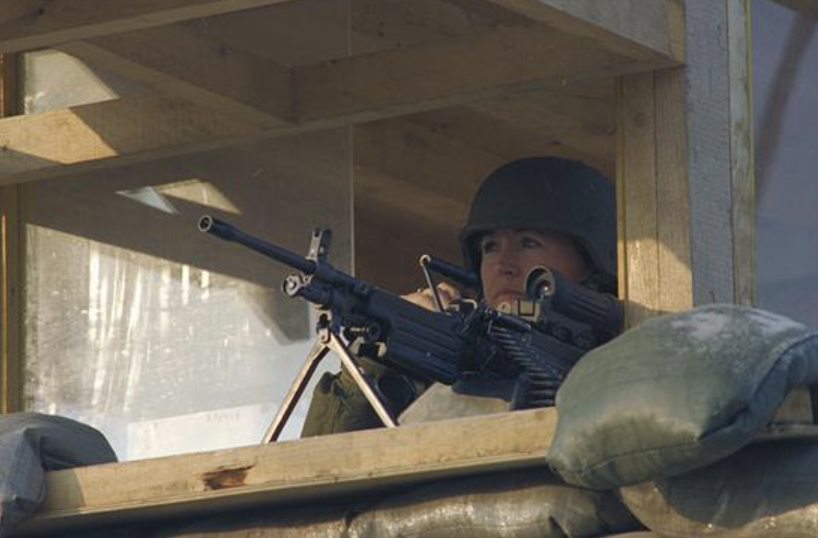
Photo: UN Duty in Bosnia depicting a female soldier standing by, 1993. Photo courtesy of the Department of National Defence.
Disclaimer: Any views or opinions expressed in articles are solely those of the authors and do not necessarily represent the views of the NATO Association of Canada.