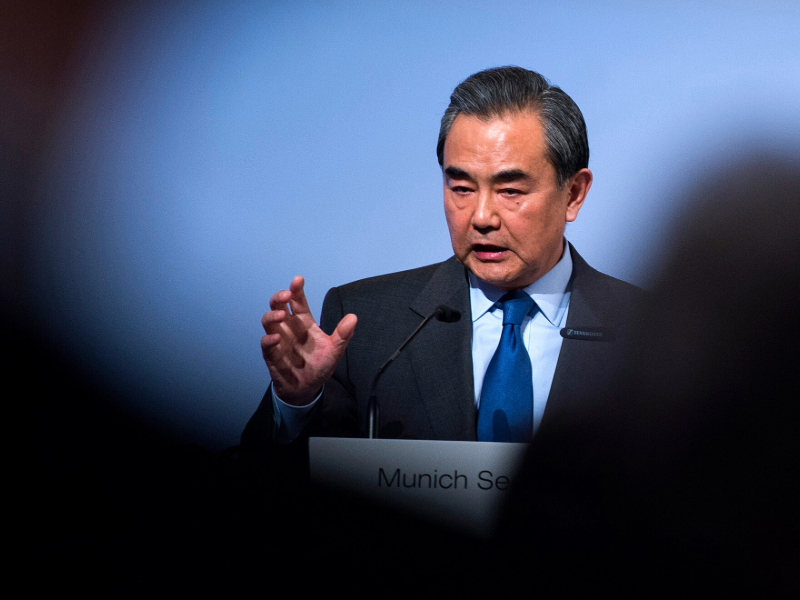
On December 30, 2025, Chinese Foreign Minister Wang Yi announced that China had mediated in northern Myanmar, Cambodia-Thailand and India-Pakistan, without any “interference in the internal affairs of others.” China has engaged in conflict mediation more frequently since 2013, motivated by the need to protect Belt and Road Initiative (BRI) projects, Chinese citizens abroad and its security interests, especially on its borders, as well as a desire to signal responsibility to the international community. China’s expanded presence, however, has strained its ability to adhere to its stated commitment of non-interference, resulting in an increasingly flexible domestic interpretation of the principle. Some regional actors have viewed Beijing’s mediation skeptically, fearing Chinese power projection or seeing its engagement as self-serving and aligned with authoritarian actors. Although publicly professing China’s role in each conflict in the same language of non-interference, Beijing’s behaviour in Myanmar visibly crossed its own self-professed lines. While previous rounds of China-brokered conflict mediation Cambodia-Thailand and India-Pakistan could be described as examples of facilitative mediation, where a mediator voluntarily brings parties together without using leverage to help them come to an agreement, In Myanmar China appears to have engaged in manipulative mediation, using its position and leverage to shape outcomes. NATO members are increasingly operating in the Indo-Pacific, including Canada through Operation HORIZON and the United States through new anti-ship systems deployed in the Philippines near Taiwan. As they do, they will encounter China not only militarily but diplomatically, making an understanding of its diplomatic strategies important, especially in conflicts where allies have their own interests. NATO allies and partners should distinguish between China’s facilitative and manipulative approaches to mediation to know when cooperation or concern is warranted.
Beijing’s mediation in Myanmar can be classed as manipulative, contradicting Wang’s claim of non-interference, because it used pressure tactics to push parties towards its desired outcomes. China’s shared border with Myanmar and its significant economic interests in the country give it stakes in stability. Conflict has already threatened energy flow, hindered mining operations and disrupted numerous infrastructure projects, while fighting has sent refugees and artillery shells across the border. The 2021 military coup worsened the security situation, increasing threats to Chinese assets and pushing Beijing to assert more influence in ceasefire negotiations. Western companies’ departures, driven by international pressure to freeze out the junta, also increased China’s economic influence. In 2024 and 2025, Beijing used the country’s economic interconnectedness to influence negotiations by pressuring the Myanmar National Democratic Alliance Army (MNDAA) to sign a ceasefire and leave the city of Lashio by closing border crossings and cutting off electricity and trade to areas held by rebels. China’s decision to send officials to monitor the handover of the city has since been described as blatant encroachment. Media reports indicate that China has manipulated transportation routes and commercial flows to encourage rebel groups to come to peace talks or de-escalate hostilities. The United Wa State Army, a key rebel group, has said that the threat of Chinese “punitive measures” led it to stop aiding other rebel groups, demonstrating the influence Beijing has exerted in the conflict.
On the other hand, Beijing’s mediation in Cambodia-Thailand can be classed as facilitative and in line with its principle of non-interference. The country’s involvement shifted toward active conflict management when fighting erupted in July 2025, driven by economic and security concerns, as well as a desire to cement its presence in regional conflict-resolution frameworks. In turn, the Chinese Foreign Ministry offered to mediate at a meeting of ASEAN foreign ministers, and a Chinese envoy pressed for de-escalation at an emergency UN Security Council meeting. Still, its role was overshadowed by US President Trump’s threat to cease tariff negotiations with Cambodia and Thailand if fighting did not end. Despite Beijing’s offer to help mediate, its involvement amounted to little more than a diplomatic presence at the signing. When fighting began again in December, Beijing engaged in shuttle diplomacy. It brought together the countries’ foreign ministers, though this meeting took place after the two countries had already negotiated a ceasefire. Beijing’s quiet approach, which did not impose conditions or offer economic incentives, contrasted with Washington’s political pressure tactics and coercive diplomacy.
Of the three Indo-Pacific conflicts listed by Wang, China’s involvement in India-Pakistan was the most limited. While Wang spoke with officials from India and Pakistan, Beijing’s mediation appears to have remained restrained, especially given that India denied any third party was involved in brokering the ceasefire in its four-day border clash with Pakistan in May 2025. India claimed that direct talks between it and Pakistan’s Directors General of Military Operations (DGMOs) calmed tensions, and unnamed government officials reportedly claimed that China “played no role in the cessation of hostilities”. Pakistan later praised Washington for its important role in the ceasefire, which President Trump was the first to announce, but India’s denial of third-party involvement contradicts this. China’s close relationship with Pakistan, and border disputes with India, naturally limit its role as a neutral mediator. Similar to Cambodia-Thailand, Beijing avoided providing material benefits or imposing penalties on the involved parties to shape their behaviour.
Beneath the same claim of non-interference, China’s approach to mediation varies considerably. Several factors may explain why China engaged in facilitative mediation in Cambodia-Thailand and India-Pakistan, but opted for manipulative mediation in Myanmar. China has economic interests in all five countries, but only in Myanmar did conflict occur directly on its border. Fighting on China’s borders and its desire to prevent destabilizing regime collapse made the stakes in Myanmar considerably higher, and may have pushed Beijing toward a more coercive approach. Myanmar’s fragmentation and the two countries’ economic interconnectedness give China leverage it lacks elsewhere, as armed groups dependent on China may be easier to pressure than sovereign states. A junta long denied international recognition may have less ability to resist. In Cambodia-Thailand and India-Pakistan, by contrast, more assertive diplomacy risked backlash from regional players, and potential accusations of bias may have discouraged a more hands-on approach. Given China’s own border disputes with India, its ability to act as a neutral broker is limited. In their competition to present themselves as the leading mediator, Washington’s involvement in Cambodia-Thailand overshadowed Beijing’s, at least initially, potentially leaving it unsure how to proceed. The same may have been true in India-Pakistan, where Pakistan nominated President Trump for the Nobel Peace Prize for his role in brokering the ceasefire. Restraint also served Beijing’s aims, as facilitative mediation let it position itself as a responsible regional power and advance its model of Asian-led conflict management and its Global Security Initiative.
NATO and its partners should not take Beijing’s language of non-interference at face value, nor dismiss it outright. Alarm should be reserved for manipulative mediation, such as in Myanmar, where China pressured parties involved to achieve its desired outcomes. Elsewhere, NATO members and China share an interest in regional stability, creating openings for cooperation. With mediation likely to remain one of Beijing’s main foreign policy instruments, allies should be open to working with China when its mediation is facilitative, while recognizing that it may use similar language to describe different approaches elsewhere.
Disclaimer: Any views or opinions expressed in articles are solely those of the authors and do not necessarily represent the views of the NATO Association of Canada.
Image: Chinese Foreign Minister Wang Yi. “Wang Yi MSC 2017” (2017), by Kleinschmidt/MSC via Wikimedia Commons. Licensed under CC Attribution 3.0 de.