In November 2025, the Canadian Armed Forces (CAF) unveiled a plan for expanding the Supplementary Reserve force from 4,384 personnel to 300,000. In doing so, the CAF aims to create a civil defence corps out of the Supplementary Reserve.
The Supplementary Reserve is distinct from the larger Primary Reserve, which is made up of part-time CAF personnel with other full-time commitments who are fully trained and equipped, receive regular training, and who may be called up to full-time duty if required or volunteer for it. The Supplementary Reserve, in contrast, currently mainly consists of retired CAF members who are willing to return to duty in cases of national contingency, who do not receive regular training or equipment.
Under this plan, the 300,000 new Supplementary Reserve members would be given minimal training in the use of firearms, driving military vehicles, and operating drones, drawing primarily from the federal and provincial civil services. Recognizing the need for a “whole of society” approach in creating civil defence resilience, the Canadian plan points to Finland and Sweden, NATO’s newest members, as possible role models given their governments’ proactivity in funding civil defence measures.
Article 3 of the North Atlantic Treaty commits allies to “[maintaining] and [developing] their individual and collective capacity to resist armed attack.” Civil defence is excluded from the new 5% of GDP defence spending commitment, but is nonetheless becoming a priority for more NATO allies in the context of prolonged Russian aggression.
Despite the plan’s allusions to Finland and Sweden as inspirations, however, both Finland and Sweden rely on conscription in their defence model, while Canada’s proposed plan relies on civil servants as the backbone of the Supplementary Reserve – a move unprecedented within NATO. A Supplementary Reserve made up of ‘double-hatted’ civil servants may prove to hinder government efficiency in cases of crisis if civil servants are activated as part of the reserve instead of performing vital state functions. Indeed, Chief of the Defence Staff General Jennie Carignan has already felt it necessary to publicly repudiate this element of the plan after facing civil service backlash.
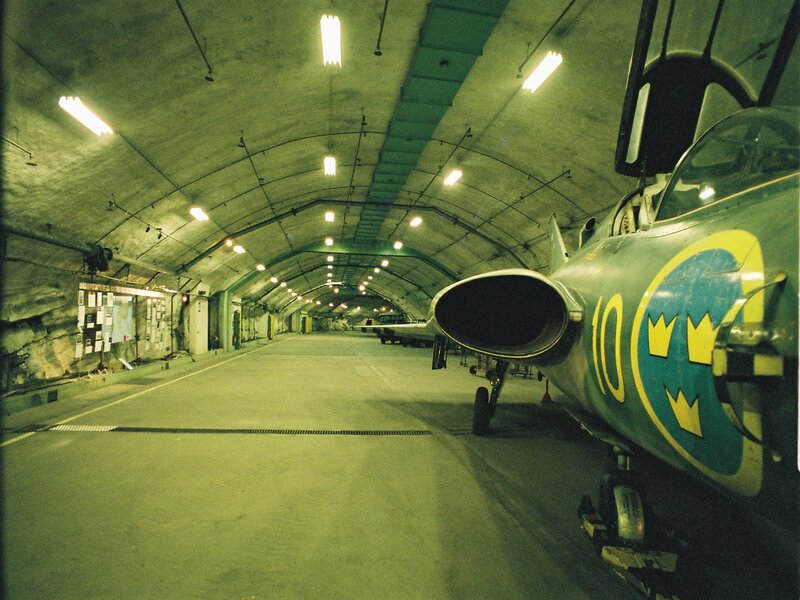
While the Swedish and Finnish cases demonstrate that establishing a culture of civil defence certainly takes a whole-of-society effort, such efforts do not end with providing basic military instruction to bureaucrats. In both Sweden and Finland, the concept of Total Defence emphasizes the duty of every member of society to participate in national readiness. Children are instructed in civil defence measures from a young age, parking garages and other public subterranean structures double as a country-wide network of bunkers in cases of emergency, and a broad societal consensus exists that such efforts are meaningful and necessary in the current security context.
What’s more, in November 2024, every household in Sweden, Norway, and Denmark received updated guidance on what to do in the case of war or crisis in the form of pamphlets or emails. This was not an unprecedented measure. Nordic governments regularly update emergency preparedness material and distribute copies to households, with a renewed emphasis on measures in the event of invasion. Sweden and Finland’s comprehensive civil defence efforts are partly due to their recent history as neutral states in Europe. Though neutrality may prevent unprovoked aggression, it also means that a state has no formal allies, making it necessary to emphasize self-reliance in defence. Both states’ decisions to join NATO following Russia’s full-scale invasion of Ukraine in 2022, point to the gravity of the situation and the degree to which the international system faces an inflection point.
NATO states’ degree of urgency in implementing civil defence measures and popular support for additional civil defence measures seem to correlate with the distance of a NATO state from Russia.
NATO allies that are geographically closer to the Russian threat seem to be more proactive in their civil defence efforts and have broader popular support for such measures. Conversely, allies that perceive themselves to be more distant from the conflict seem to be less willing to undertake these measures. This is certainly the case in Spain, which has demanded and successfully negotiated a unique opt-out from the new 5% defence spending target. The move is a testament to broad public perceptions that Spain’s geographic distance from Russia makes such measures unnecessary, and to the Spanish government’s need to balance international commitments and far-left parliamentary opposition towards defence spending.
On NATO’s Baltic frontline, the situation is fundamentally different. In Lithuania, a citizen’s militia with state recognition and backing, the Lithuanian Riflemen’s Union, is experiencing a surge in interest. Since Russia’s first invasion of Ukraine in 2014, Latvia has followed the Nordic lead in adopting what it calls a “comprehensive state defence” model in civil defence, emphasizing deep integration between critical civilian infrastructure, local governments, and the military. Even Estonia, the smallest of the Baltic states, has been planning since 2022 to eventually field an entire army division.Though Canada is experiencing a similar uptick in applications to join the CAF, ongoing administrative issues continue to lead to long backlogs for would-be recruits.
However, Canada also has a culture of civilian gun ownership, which deserves consideration in a whole-of-society approach to civil defence. Drawing from the example of the Lithuanian Riflemen’s Union, Canadian policymakers may wish to consider the merits of providing some kind of standing state-supported organization which promotes responsible gun ownership and other civic readiness skills, such as first aid and basic fieldcraft. This may mobilize relevant existing civilian experience in service of civil defence. Such an organization may also attract interest from citizens who have reservations about the CAF’s commitment requirements, but remain interested in contributing to civil defence readiness. It would be distinguished from the CAF’s Primary and Supplementary Reserves by exclusively providing civil defence training, and could complement or augment the Canadian Rangers’ role in sovereignty patrols in sparsely populated regions. Above all, such an organization would occupy a missing space in civil society as a unitary entity providing civil defence training to interested Canadians.
Though Canada’s Arctic is certainly proximate to Russia, most of Canada lives far from the Arctic Circle, and introducing civil defence concepts into primary and secondary education will be instrumental in breaking down assumptions that Canada is insulated from security threats by virtue of its geographic location. Moreover, various Canadian defence policy thought leaders recognize the imperative of broadening civic participation in preparedness exercises for enhancing readiness.
As the adage goes, si vis pacem, para bellum — if you want peace, prepare for war. The essential driving factor in future Canadian civil defence plans must be a desire to inculcate a culture of mutual responsibility among Canadians and a broad popular willingness to develop resilience under conditions of crisis or war. Civil defence initiatives are not only necessary for creating societal resilience to any potential attack, but also vital in establishing a cultural consensus that managing and mitigating crises is a civic responsibility. A 300,000-strong corps of civil servants will not suffice for creating broad cultural acceptance of civil defence efforts, and the Department of National Defence cannot undertake a whole-of-society effort alone.
To truly begin this whole of society effort, Canadian civil defence policy must draw from all the cultural institutions which make civil defence work on the frontline of NATO. From exposing young Canadians to civil defence concepts in the classroom to creating resilient physical infrastructure, there is much federal, provincial, and local governments must do in concert to instill in Canadians a consensus that preparedness in an unstable world is a virtue.
Image credit: Ready to Protect Sweden (2006), depicting a Swedish air force bunker built underneath a civilian airport, by konstriktion via Flickr. Licensed under CC BY-SA 2.0.
Disclaimer: Any views or opinions expressed in articles are solely those of the authors and do not necessarily represent the views of the NATO Association of Canada.