Modern adversaries no longer need to cross borders to weaken Canada’s security. They focus instead on the environment in which defence decisions are made. Public trust, ideas about cost, and perceptions of Canada’s place in the world become strategic targets. When the informational space around defence policy is filled with confusion or mistrust, even the strongest decisions become difficult to explain, implement, or maintain.
Disinformation changes this environment not only by spreading false claims, it shifts what feels believable or politically safe. Certain narratives portray long term deployments as unnecessary, modernization as wasteful, or NATO commitments as something imposed from outside. Canada depends on informed consent and trust in institutions. For that reason even gradual changes in the public atmosphere matter greatly.
Canada’s security agencies have warned about this challenge. The Canadian Security Intelligence Service notes that foreign interference affects every part of Canadian society, including national security decisions and democratic processes. A federal inquiry reached a similar conclusion. It found that no election results were altered sufficiently to change the outcome, but slow responses and unclear communication allowed harmful narratives to undermine confidence. The decisions remained valid, but the environment surrounding them did not.
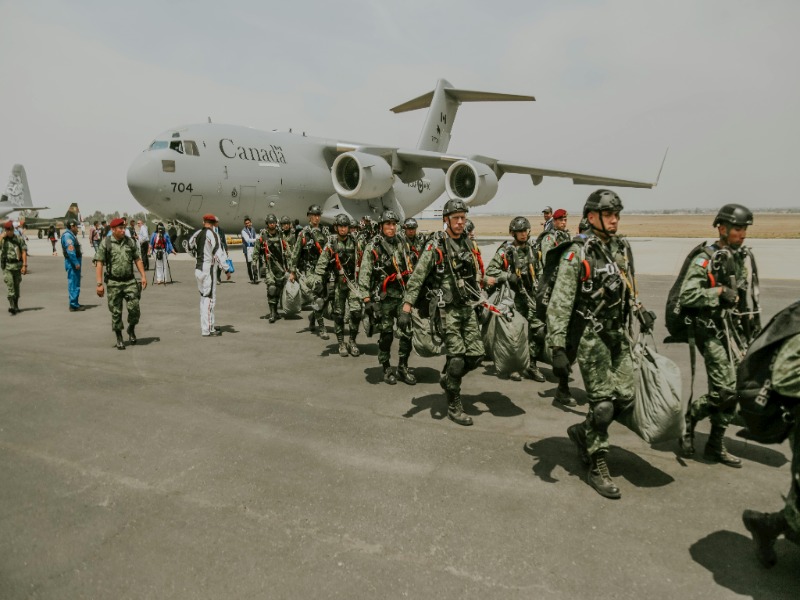
Defence policy is especially sensitive to such pressure. It involves high costs, classified information, and long planning horizons. Decisions on Canada’s role in Latvia, the scale of support to Ukraine, or the timing of major procurement files are complex. Citizens often see only isolated pieces of this picture. That limited visibility creates space for manipulation.
Research from the NATO Strategic Communications Centre of Excellence shows how Russian linked information operations describe Allied deployments as provocative and illegitimate. These messages aim to reshape the political climate rather than convince every individual. If Canadians begin to view the mission in Latvia as a costly provocation, the environment around future decisions becomes less stable even when the facts remain unchanged.
Procurement is another vulnerable area. Long development cycles and technical adjustments create genuine uncertainty. In such conditions misleading narratives about corruption or incompetence spread easily. Over time they shape public expectations and influence how elected leaders perceive political risk.
Canadian researchers have highlighted related weaknesses within National Defence. A study from the Canadian Global Affairs Institute found that strategic communications became slow, fragmented and overly cautious at the very moment adversaries increased their activity. When official messages take weeks to clear, while manipulative content spreads within hours, the informational space tilts away from accuracy and toward speculation.
This gradual shift is the real danger. It narrows the horizons of decision makers. It changes how journalists frame questions. It makes long term investment appear politically unsafe. Disinformation does not need to win individual debates. It only needs to make the entire environment more fragile.
Improving this environment requires more than correcting individual falsehoods. It calls for better systems of communication and clearer public engagement.
One improvement is timelier and more consistent communication about defence. Vacuums invite speculation. Countries such as Estonia and Finland address this by offering regular explanations, background briefings, and open conversations with experts. Their practices reduce the space for adversarial narratives long before decisions reach the public.
Another improvement is to build communication into defence planning from the beginning. NATO increasingly treats strategic communications as part of capability development. Canada can adopt a similar approach by asking early in the process how a decision will be understood and which hostile narratives may arise from it.
Reducing the civil military information gap is also essential. When researchers, journalists, and civil society understand defence issues more clearly, they become trusted interpreters during moments of uncertainty. This creates resilience that cannot be achieved through official communication alone.
Finally, greater clarity about timelines and tradeoffs in procurement can lessen the impact of misinformation. Even brief explanations of delays or technical adjustments reduce the temptation to fill informational gaps with speculation.
Democratic societies rely on debate, disagreement, and questioning. These qualities strengthen rather than weaken national defence. The risk arises when adversarial actors tilt the informational environment before discussions even begin. In the twenty first century the way a country talks about defence is already part of its defence.
Canada’s security depends not only on equipment, budgets, and military readiness. It also depends on whether the public understands why certain choices matter and whether institutions earn its trust. When narratives shape choices before policy even begins, safeguarding the information environment becomes a core act of national defence.
Any views or opinions expressed in articles are solely those of the authors and do not necessarily represent the views of the NATO Association of Canada.
Photo retrieved from Pexels.