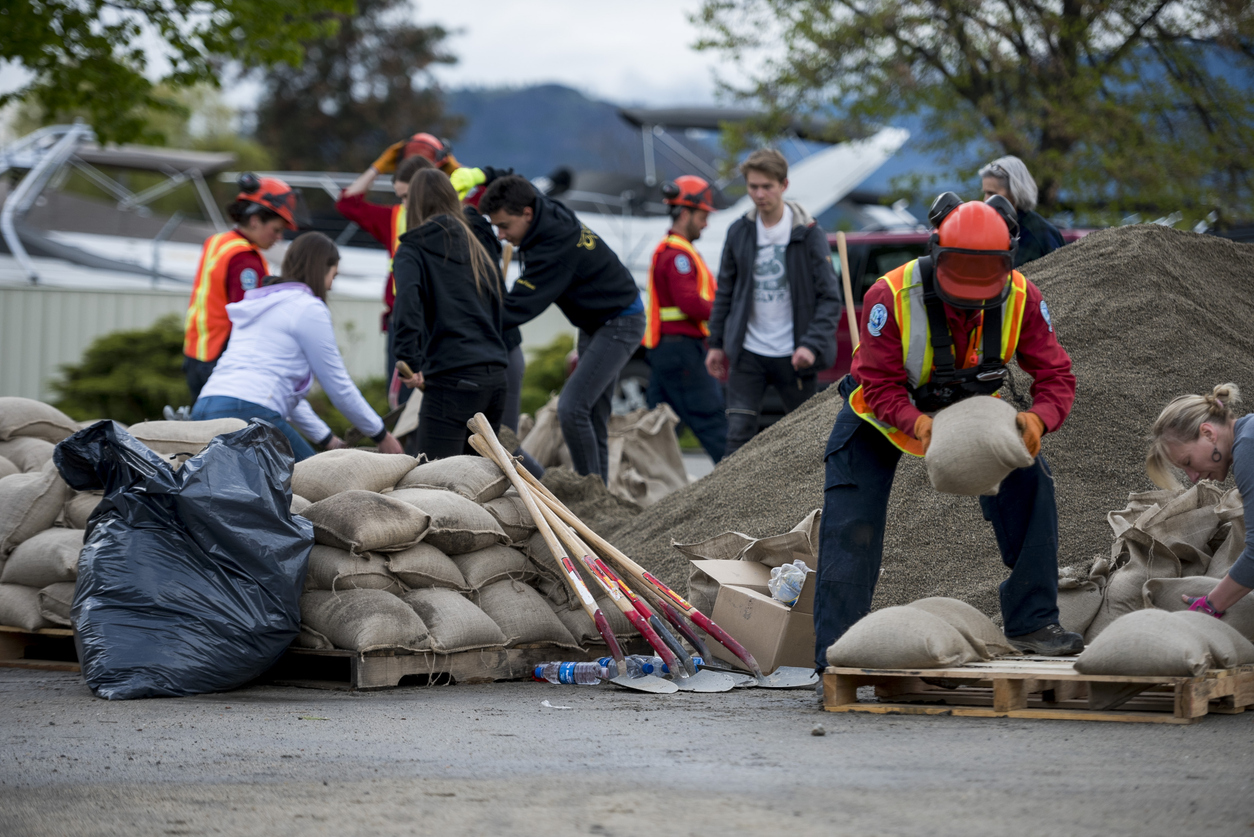
Climate change is increasingly shaping the security environment across the North Atlantic. Extreme weather events, including flooding, wildfires, heatwaves, and coastal storms, are placing growing pressure on infrastructure, emergency response systems, and economic activity.
Recognising these dynamics, NATO’s 2022 Strategic Concept acknowledges that climate impacts affect military operations, degrade critical infrastructure and shape geopolitical competition. Framed as a threat multiplier, climate change amplifies existing vulnerabilities and complicates alliance readiness if left unmanaged. As a result, resilience has emerged as a core security objective within NATO’s evolving climate framework. NATO-adjacent analysis conceptualises resilience as a preventative security strategy: the capacity to absorb and manage shocks before they undermine societal stability or trigger cascading failures. With the world’s longest coastline and critical nodes of transatlantic trade and logistics, these communities are highly exposed to climate impacts and central to security and stability.
This article examines how community-level climate resilience in Canadian coastal communities contributes directly to NATO’s transatlantic security by strengthening adaptive capacity and embedding local action, reducing the likelihood that climate shocks escalate into alliance-level security challenges.
Coastal Communities as Frontline Actors
Canadian coastal communities function as frontline actors in climate adaptation, translating climate risk into governance and infrastructure decisions with direct security implications. With more than seven million residents living in coastal zones and a substantial share of national and transatlantic trade moving through Canadian ports, these communities sit at the intersection of environmental exposure. Exposure to extreme weather patterns creates persistent stress on housing, port operations, and critical infrastructure. These impacts require ongoing local management rather than episodic emergency response. As a result, coastal communities are the first to adapt to disruptions before they escalate into systemic failure. Their effectiveness directly shapes whether climate shocks remain local or cascade into national and alliance-level vulnerabilities.
Federal initiatives such as Canada’s National Adaptation Strategy and the Climate Resilient Coastal Communities (CRCC) Program prioritise community-led planning, recognising that local governments and civil society possess critical knowledge necessary for effective adaptation. By supporting shoreline management, flood risk mapping, and emergency preparedness tailored to local conditions, these initiatives strengthen local resilience.
Community-Level Climate Resilience: Concepts and Mechanisms
The effectiveness of community-level resilience is shaped by governance structures that determine how climate risk is assessed, financed, and managed. Municipalities acting in isolation often face binding constraints in fiscal capacity, technical expertise, and regulatory authority. As climate risks intensify, these constraints increase the likelihood that adaptation efforts remain fragmented, underfunded, or misaligned with broader risk-management objectives.
Collaborative, multi-level governance networks help address these limitations by enabling coordination across jurisdictions and policy domains. When local adaptation measures are integrated, they function as part of a wider risk-management system rather than as isolated interventions strengthening recovery capacity. For example, in 2020 Netherlands’ Delta Programme, which coordinates flood protection across national ministries and municipalities, estimated avoiding economic losses of tens of billions of euros. The program’s multi-level approach protects over 60% of the Dutch population, demonstrating how coordinated governance reinforces system-wide resilience.
Adaptive capacity enables communities to reduce vulnerability before climate shocks occur. In Canadian coastal regions, including Atlantic Canada, British Columbia, and the Arctic, the capacity is strengthened through resilient infrastructure, climate-informed land-use planning, and ecosystem-based adaptation. Federal initiatives such as Canada’s CRCC program support 21 pilot projects involving more than 160 coastal communities.
Community resilience also contributes directly to operational readiness by stabilising the civilian infrastructure essential to economic activity and defence logistics. Coastal communities host ports, transportation corridors, communications networks, and energy systems critical to both commercial supply chains and military mobility. Climate-related disruptions can degrade these assets, delay response timelines, and divert resources away from domestic crisis management. By shortening recovery times and enabling decentralised response during climate shocks, resilient communities reduce the likelihood that climate events constrain national operational flexibility. Community-level resilience functions as a force multiplier: it preserves readiness by preventing climate stress from translating into prolonged demands on state and allied capabilities. For example, in Eastern Canada’s flood-prone communities, such as Nova Scotia, more than 90% of extreme events are handled locally or at the provincial level. This lessened the reliance on provincial and federal deployments.
The strategic value of community resilience increases when local adaptation is embedded within multi-level governance and knowledge-sharing frameworks. Climate risks frequently exceed municipal capacity, requiring vertical coordination for funding, regulatory authority, and long-term planning, and horizontal coordination across communities and sectors to reduce spillover risks. In Canada, 25% of Canadians now live in municipalities with climate adaptation plans that were developed with support and coordination through intergovernmental programs and shared frameworks. This helps governments integrate climate risk assessments into infrastructure rather than working in isolation.
Local adaptation also generates knowledge which is shared amongst community members. When integrated into provincial, national, and allied planning processes, this knowledge improves risk assessment and strategic foresight. For NATO, such integration enhances the ability to anticipate risks that may not be captured through centralised assessments alone. Embedding community resilience within broader governance frameworks, therefore, strengthens domestic stability while contributing to transatlantic preparedness and recovery capacity.
Pathways from Local Resilience to Transatlantic Security
By maintaining local service continuity during climate shocks, resilient coastal communities help prevent environmental disruption from escalating into national emergencies. Canadian disaster risk reduction assessments find that every dollar invested in adaptation saves fifteen dollars in post-disaster recovery costs, reducing reliance on federal and military surge capacity. The Canadian Armed Forces have been deployed dozens of times over the past decade in response to floods, wildfires, and storms, with senior defence officials noting a growing strain on readiness as domestic climate deployments increase. Strengthening community-level resilience, therefore, functions as a first line of defence against climate-induced instability, preventing localised shocks from translating into sustained demands on national and allied resources.
Community-level risk assessments provide critical data for NATO’s strategic planning. Coastal municipalities monitor sea-level trends and storm frequency, generating localised evidence that integrates into national risk frameworks. This is valuable given NATO’s gap in resilience planning related to indirect and cascading climate risks. By providing early indicators of systemic stress, community-level monitoring can help anticipate effects before they materialise. Local resilience contributes to adaptation and preventative security planning across the alliance.
Resilient coastal communities function as training grounds for climate adaptation, emergency response, and crisis management, generating transferable knowledge relevant to transatlantic security. Canadian municipalities regularly conduct emergency simulations, evacuation planning, and inter-agency coordination exercises, building institutional expertise. For example, the Eastern Shore Coastal Monitoring and Adaptation Initiative in Nova Scotia brought together residents and stakeholders to co-produce knowledge on climate risks. Training in shoreline monitoring, hazard identification, and data collection generated locally grounded evidence to inform adaptation decisions.
Community-level resilience is not peripheral to transatlantic security but foundational to it. Investments in adaptive capacity, knowledge exchange, and coordinated governance reduce the risk that climate impacts evolve into unmanaged security externalities. In doing so, they preserve state capacity and safeguard critical civilian and military infrastructure.
For NATO and its members, the implication is clear: strengthening community-level climate resilience is a strategic security investment rather than a domestic adaptation measure. Canada’s coastal communities, supported by federal initiatives and Indigenous leadership, offer a model of how locally grounded resilience can scale upward, contributing to national stability and a more secure transatlantic alliance.
Image credit: iStock 941191996 (stock photo), depicting a government-related stock image used by Open Access Government, by iStock via Getty Images. Licensed under the iStock license.
Disclaimer: Any views or opinions expressed in articles are solely those of the authors and do not necessarily represent the views of the NATO Association of Canada.