From rare earth mineral extraction to immense water usage, to an unlimited supply of electricity, to the soaring demands of data centers and AI infrastructure, humanity’s technological progress is entangled with environmental strain and resource insecurity. In the United States alone, over 5,000 ‘power-hungry’ data centers have used 4% of the country’s total electricity in 2023.
Where does Canada fit in? While the exact Canadian figure is low, the growth trajectory of AI data centers in Canada signals similar concerns, if we follow our neighbours. Canada’s cooler environment, abundant water sources, and vast lands provide the perfect setting for data centers. This is an opportunity for Canada to invest in acquiring data centers and allow the nation to become a leader in the industry, but at what cost? The environmental implications of such endeavors are profound. AI facilities use up to 100-200 megawatts of electricity, which can roughly power 150,000 homes. Even low-carbon provinces, such as Quebec and Manitoba, divert immense amounts of electricity from local communities and industries to AI facilities. Additionally, these centers rely on rare earth minerals that are extracted from politically unstable or environmentally destructive mining regions. The overall expansion of AI data centers threatens to increase national electricity demand and water consumption, increasing the country’s carbon footprint. Beyond environmental impacts, hosting AI data centers also raises national security concerns, as heavy reliance on foreign-owned cloud operations can expose Canada’s systems to external control and vulnerability.
Another environmental risk is that the overall expansion of AI data centers will increase national electricity use and water consumption. If all AI data center projects currently under regulatory review in Canada proceed, they could account for up to 14% of the country’s total power needs by 2030. This expansion may challenge Canadian utilities, power-system planners, and energy-policy goals. Furthermore, while cooling by cold climate helps reduce mechanical cooling, it does not eliminate the use of computing servers and equipment required for vast amounts of energy. Around half the energy used in Canadian data centers goes directly to server computing, and another 40% to cooling systems.
The environmental footprint of AI data centers is multi-dimensional, with electricity use, water consumption, land use, resource extraction, and e-waste. In Canada, industrial energy use and greenhouse-gas emissions rose in 2022, with industrial GHG emissions up 2.2% on a yearly basis. While data centers are not singled out in that number, their growing share of electricity demand means they will contribute increasingly to Canada’s overall emissions profile. Globally, the carbon intensity can exceed national averages, as seen with AI data centers accounting for 4% of the United States’ electricity consumption and emitting more than 105 million tons of carbon in 2023, 48% higher than the national average. While Canada’s grid is cleaner, the same dynamic will occur; as demand grows, emissions will increase. Additionally, the water footprint would be significant. The World Economic Forum estimates that a 1-MW facility can use up to 25.5 million liters of water annually for cooling, especially evaporation systems, which is a major driver of this consumption. For Canada, 1.13 million liters per day are used for a medium-sized center, in comparison to the United States, 449 million gallons per day.
The extraction of rare earth minerals is essential for these centers. In Canada and globally, mining and processing these materials can generate e-waste, require water, and immense energy. For instance, after mining, tailings and waste rock may contain heavy metals and acids, which can contaminate soils, streams, and groundwater. In Canada, while critical mineral development is framed as an opportunity, the Office of the Auditor General of Canada warns that ramping up mining will result in “adverse environmental effects” and increases in greenhouse gas emissions unless managed carefully. Although hosting AI infrastructure may seem clean on the surface, the mineral extraction needed to supply hardware can carry substantial environmental costs, which must be acknowledged and mitigated.
There are also security risks with hosting AI data centers. These facilities become a part of Canada’s critical infrastructure, and the country’s heavy reliance on foreign-owned cloud operations may lead to security threats. According to the Treasury Board of Canada Secretariat, “as long as a service provider that operates in Canada is subject to the laws of a foreign country, Canada will not have full sovereignty over its data.” Even when data is produced in Canada, true sovereignty requires that the provider, supply-chain, governance, and legal jurisdiction remain under Canadian law. This vulnerability is exposed when Canadian organizations rely on foreign-owned cloud providers. For example, through the U.S. CLOUD Act, U.S. authorities may compel U.S.-based companies to disclose data, even if that data is stored abroad. Digital sovereignty involves ensuring a nation’s autonomy and security in managing its digital infrastructure and guaranteeing sovereign access to data collected on its territory.
Canada’s rapid expansion of AI data centers brings both economic opportunity and significant risk, as these facilities demand vast amounts of electricity, water, land, and critical minerals. At the same time, Canada’s growing dependency on foreign-owned cloud providers threatens digital sovereignty, exposing national systems to external jurisdiction and security vulnerabilities. Addressing these challenges will require strong policies that balance technological growth with environmental protection and secure, sovereign digital infrastructure.
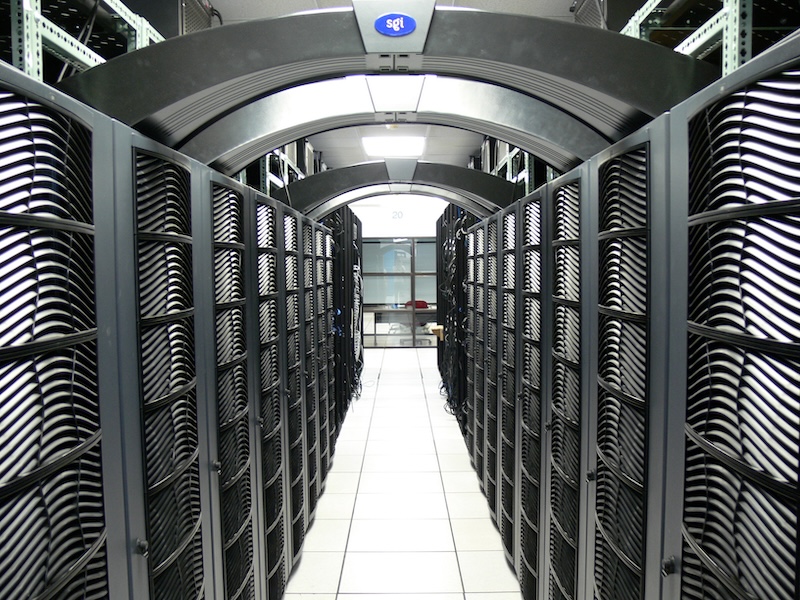
Image credit: Virginia Tech – data center (2008), depicting a data center at Virginia Tech, by Christopher Bowns via Wikimedia Commons. Licensed under CC BY-SA 2.0.
Disclaimer: Any views or opinions expressed in articles are solely those of the authors and do not necessarily represent the views of the NATO Association of Canada.