Energy infrastructure is rarely just about energy. Pipelines shape geopolitics, power grids encode alliances, and ports built for trade can quickly acquire military relevance. China’s planned Medog Hydropower Station in Tibet (Xizang) is a striking illustration of this reality. At first glance, it is a colossal clean-energy project meant to advance decarbonization and domestic energy security in a strategically vital – yet sparsely populated frontier – of Chinese civilization. Upon a closer look, however, Medog becomes something else entirely: a case study in how energy infrastructure can simultaneously fortify the state internally while generating leverage externally.
For NATO and its partners, this matters far beyond the Himalayas. Medog underscores a broader trend in which infrastructure – especially energy infrastructure – functions as a dual-use strategic asset, capable of producing electricity at home while reshaping power balances abroad. Understanding this logic is increasingly central to energy security, climate security, and alliance resilience.
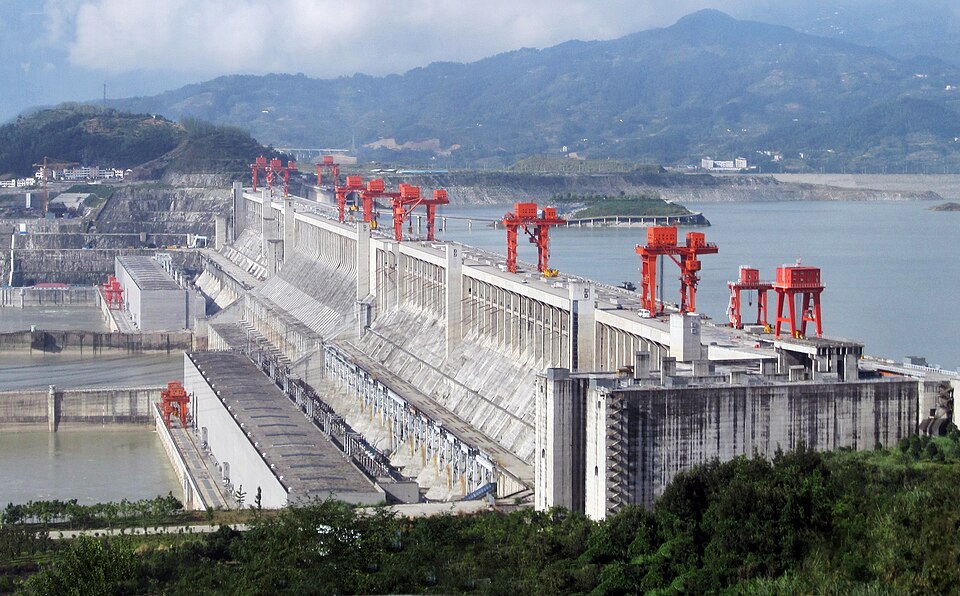
Medog is not a conventional hydropower project. Planned near the “Great Bend” of the Yarlung Tsangpo River, where it plunges out of the Tibetan plateau toward South Asia, the project is expected to reach roughly 60 gigawatts of installed capacity, which is nearly three times the output of the Three Gorges Dam. Once operational, it could generate around 300 billion kWh annually, making it the largest hydroelectric facility ever built.
From Beijing’s perspective, the rationale is straightforward. Hydropower in Tibet offers vast, untapped potential; the region contains some of China’s most powerful rivers and steepest elevation gradients. Harnessing this energy supports three core objectives: expanding renewable energy generation, reducing long-term dependence on imported fuels, and integrating Tibet more tightly into China’s national economy.
In energy security terms, Medog strengthens China’s resilience. Large scale domestic hydropower provides baseload electricity that is immune to maritime chokepoints, sanctions, or fuel price volatility. Combined with China’s ultra-high-voltage transmission network, electricity generated in Tibet can be sent thousands of kilometres east to industrial and urban centres. This is decarbonization with strategic characteristics: clean energy that also reduces exposure to external pressure.
But Medog’s importance does not stop at China’s borders.
The Yarlung Tsangpo surpasses the territorial boundaries of China, becoming the Brahmaputra as it enters India and flowing further into Bangladesh, supporting hundreds of millions of people through agriculture, fisheries, and freshwater supply. Any major intervention upstream therefore carries unavoidable transboundary implications.
China describes Medog as a project that will not significantly affect downstream flows. Even if taken at face value, this reassurance misses a crucial point: scale itself creates leverage. A dam of this size introduces the technical capacity to regulate water flows seasonally, retain sediment, and alter hydrological timing – even without permanently “turning off” the river.
For India, the concern is not absolute deprivation but strategic uncertainty. Dry-season flows are vital for agriculture and hydropower in northeastern India. Even modest reductions, if poorly timed, could have outsized economic and social effects. Conversely, sudden releases during monsoon periods could exacerbate flooding in already vulnerable regions. The issue is less whether China would deliberately weaponize water, and more that it would possess the option to do so under conditions of crisis or coercion.
Bangladesh faces an even starker asymmetry. As the lowest riparian state of this river, it has minimal ability to buffer upstream actions. Changes in sediment flow could accelerate delta erosion and salinity intrusion, while altered hydrology would compound climate stresses the country already faces. For Dhaka, Medog is a reminder that energy decisions taken far upstream can reverberate directly into food security and human security downstream.
Medog illustrates how energy infrastructure can externalize risk: one country’s energy security gain becomes another’s strategic vulnerability.
It is precisely here that Medog assumes analytical importance for NATO. The dam exemplifies a form of latent coercion; that is, power that does not need to be exercised to be effective. Control over upstream infrastructure creates leverage through uncertainty, dependence, and asymmetry.
This dynamic is not unique to China or to hydropower. Europe has experienced analogous pressures through gas pipelines, electricity interconnectors, and critical energy chokepoints. What Medog demonstrates is that similar logic now applies to climate-aligned infrastructure. Renewable energy assets are not inherently benign despite their beneficial effect on the global environment; they can be just as geopolitically consequential as fossil fuel systems.
Importantly, this form of leverage operates below the threshold of armed conflict. It fits squarely within what NATO increasingly describes as hybrid competition – the use of economic, infrastructural, and environmental tools to shape the strategic environment without triggering conventional/kinetic responses. In such contexts, ambiguity is an asset. The absence of clear intent does not negate the presence of strategic pressure.
Beyond this, there are further reasons that Medog should matter to NATO policymakers.
Above all, the question of precedent arises. If large scale energy infrastructure is normalized as a unilateral tool of strategic leverage, similar dynamics will proliferate elsewhere. As climate adaptation accelerates, dams, grids, hydrogen hubs, and rare-earth processing facilities will become focal points of competition. Medog, thus, could be an early signal of what the future will look like.
The direct implications of Medog for NATO partners is also pertinent. India is an increasingly important strategic partner for many NATO members, even if it is not a formal ally. Its capacity to contribute to regional stability depends significantly on its resource and energy security. Furthermore, any provocation originating from Medog as perceived by New Delhi could act to raise the spectre of potential conflict between two nuclear-armed geopolitical heavyweights, which is contrary to NATO’s fundamental interests. Infrastructure that heightens India’s vulnerability indirectly affects the broader strategic equilibrium NATO endures to safeguard.
While NATO is not directly a water management organization, its members and mission are deeply invested in maintaining the rules-based approach to global security. The absence of binding transboundary governance for projects like Medog highlights a gap in international norms that NATO can endeavour to fill. This could be accomplished via NATO member states’ established reputation for, and expertise in, upholding and advancing international legal frameworks and mediating interstate tensions, including a similar dispute between Ethiopia, Egypt, and Sudan.
Medog forces a reframing of energy security. The framing of viewing ambitious energy projects as solely domestic endeavours is no longer sufficient: energy infrastructure increasingly reverberates to shape the security of others, intentionally or not.
For NATO, this implies a need to think more systematically about how infrastructure functions as a strategic instrument. That does not mean opposing renewable energy development or hydropower projects per se. It means recognizing that intentions are less important than capabilities, and that infrastructure embedded in contested geopolitical space carries unavoidable security externalities.
This also has implications for how NATO and its members engage globally. Supporting transparency, data-sharing, and cooperative governance around transboundary infrastructure constitutes crucial preventive security policy. Likewise, incorporating infrastructure-based coercion into the Alliance’s scenario-planning and resilience assessments is becoming as essential as preparing for more traditional threats.
The lesson is clear for the transatlantic alliance. In an era of intensifying strategic competition and climate transformation, energy infrastructure is never an inert or neutral entity. It is a vector of influence, a source of resilience for some and heightened vulnerability for others. Treating it as such – analytically, strategically, and normatively – will be essential if the alliance is to remain ahead of the curve in a regionally and thematically interconnected security landscape.