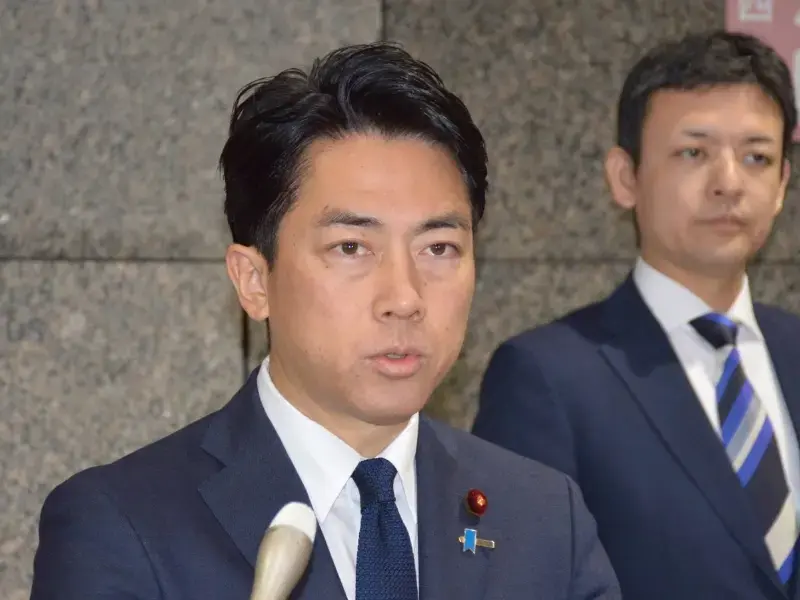
In early January 2026, North Korea conducted its first missile launch of the year, firing at least two ballistic missiles toward the Sea of Japan. Pyongyang later described the test as part of a hypersonic missile drill aimed at evaluating the effectiveness and readiness of its deterrence capabilities. The launch immediately drew condemnation from Tokyo. Japanese Defense Minister Shinjiro Koizumi warned that the test threatened “the peace and security of our country, the region, and the international community,” noting that such actions violated United Nations Security Council resolutions.
While missile tests from North Korea are not new, the January launch highlighted how escalation has become routine rather than exceptional. Actions that once triggered regional crises now occur with increasing frequency, reflecting Pyongyang’s growing confidence in its military capabilities. More importantly, this test did not occur in isolation. As North Korea’s military activity becomes increasingly intertwined with Russia’s war in Ukraine, security threats in Europe and the Indo-Pacific can no longer be treated as separate. This convergence carries direct implications for both Japan and NATO, underscoring the need for deeper institutional coordination.
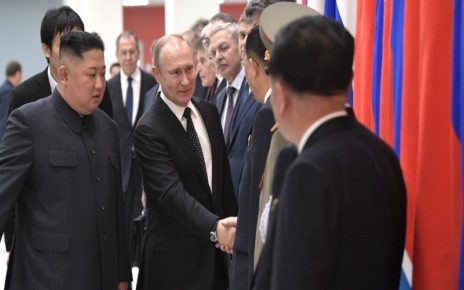
Since Russia’s full-scale invasion of Ukraine, Pyongyang has emerged as a crucial supporter of Moscow’s war effort. Western intelligence assessments indicate that North Korea has supplied large quantities of artillery shells, missiles, and other munitions to Russia, while also reportedly deploying between 14,000 and 15,000 troops since late 2024 to assist Russian forces. In exchange, North Korea is believed to be receiving economic assistance and technological support aimed at modernizing its largely Soviet-era military infrastructure. Such cooperation risks accelerating Pyongyang’s missile accuracy, surveillance capabilities, command and control systems, developments that would further destabilize Northeast Asia.
This unprecedented military collaboration directly links Indo-Pacific security to the Euro-Atlantic theatre. By underwriting Russia’s war in Ukraine, North Korea has effectively inserted itself into an emerging network of authoritarian cooperation. NATO officials have increasingly warned of an “axis of autocracies” in which Moscow and Pyongyang play complementary roles, supporting one another’s strategic ambitions while challenging the rules-based international order.
As NATO Secretary General Jens Stoltenberg has repeatedly emphasized, Russia’s aggression in Europe is not merely a regional crisis but a global one. A failure to deter expansionist behaviour in Ukraine risks emboldening like-minded regimes elsewhere to test international resolve in their own regions.
For Japan, this deteriorating security environment has fundamentally altered long-standing defence assumptions. For decades, Tokyo maintained a strictly self-defence-oriented military posture, shaped by constitutional constraints and a strong public commitment to pacifism. However, North Korea’s relentless missile testing, including launches that have flown over Japanese territory, has steadily eroded confidence in this model.
Under these reforms, Japan committed to doubling its defence spending to approximately 2 percent of GDP by 2027, a target accelerated to early 2026 under the current government. This increase places Japan in line with NATO’s defence spending benchmark and positions it among the world’s top military spenders.
Japan has also begun acquiring counterstrike capabilities, including longer-range missiles designed to deter imminent attacks. Investments in emerging technologies, such as unmanned systems and advanced surveillance platforms, further reflect Tokyo’s determination to strengthen deterrence.
Prime Minister Takaichi Sanae has framed this transformation as a necessary response to an increasingly severe security environment, emphasizing that Japan can no longer rely solely on restraint in the face of mounting regional threats. North Korea’s nuclear advancements and rhetoric surrounding preemptive strikes have underscored the urgency of preparedness.
Importantly, Japan’s military revival is not aimed at power projection or alliance expansion. Rather, it represents a strategic effort to reinforce stability, enhance deterrence, and contribute to regional security alongside partners that share democratic values.
Japan’s evolving defence posture carries implications far beyond its national borders. By framing regional instability as part of a broader challenge to the international order, Tokyo has increasingly aligned its strategic outlook with that of NATO. Traditionally focused on Euro-Atlantic defence, NATO has gradually acknowledged that geographic separation no longer guarantees strategic insulation. The Alliance’s 2022 Strategic Concept explicitly recognized that developments in the Indo-Pacific can directly affect transatlantic security, marking a significant evolution in NATO’s threat perception.
This shift has been reinforced through growing engagement with Indo-Pacific partners, particularly Japan, South Korea, Australia, and New Zealand. Leaders from these countries have attended recent NATO summits, and cooperation has expanded in areas such as cyber defence, maritime security, space, and emerging technologies.
One proposal that reflects this evolving approach is the potential establishment of a NATO liaison office in Tokyo. Such an office would not represent military deployment or the creation of an “Asian NATO.” Rather, it would function as a small diplomatic and coordination hub designed to facilitate communication and cooperation with Japan and other regional partners.
Precedents already exist. NATO maintains liaison offices in partner countries such as Georgia and Ukraine, where they have supported dialogue, information sharing, and crisis coordination without extending collective defence commitments. A similar model in Japan could enhance real-time consultations, particularly during moments of heightened tension such as North Korean missile tests.
A liaison office could also strengthen cooperation on non-traditional security challenges, including cyber threats, disinformation, supply-chain resilience, and emerging technologies, areas where coordination matters as much as military capability.
While the proposal has generated debate within NATO and drawn criticism from China, Japanese leaders have emphasized that such an office would not signal membership ambitions. Instead, it would institutionalize existing cooperation and reflect the reality that security challenges increasingly cross regional boundaries. For NATO, this approach offers a pragmatic balance: deeper engagement without overextension, cooperation without formal alliance expansion.
North Korea’s escalating military behaviour and its growing cooperation with Russia underscore an emerging reality in global security affairs. A missile launched toward Japan today may be linked to a battlefield in Ukraine tomorrow. In an era of transregional threats, security can no longer be compartmentalized by geography. Japan’s strategic transformation reflects this recognition. Faced with a more dangerous and interconnected environment, Tokyo has moved from postwar pacifism toward preparedness, not as an act of militarization, but as a response to mounting instability.
For NATO, these developments present both a challenge and an opportunity. While the Alliance remains anchored in Euro-Atlantic defence, its ability to uphold the rules-based international order increasingly depends on cooperation with like-minded partners beyond its traditional borders. Strengthening ties with Japan potentially through a liaison office in Tokyo offers a path toward improved communication, crisis coordination, and shared deterrence without formal alliance expansion.
As conflicts and security interests continue to overlap across regions, NATO’s future effectiveness may rest less on the limits of its geography and more on the strength of its partnerships. How the Alliance navigates this evolving landscape will shape its relevance in an era where global stability is increasingly tested from multiple directions.
Japanese Defence Minister Shinjiro Koizumi speaks to reporters at the Defence Ministry in Tokyo following North Korea’s ballistic missile launch, January 4, 2026. Photo by Jiji Press, accessed via The Japan Times. Image dimensions adjusted.
Disclaimer: Any views or opinions expressed in articles are solely those of the authors and do not necessarily represent the views of the NATO Association of Canada.