On November 24, 2015 after Russia had already launched its invasion of Ukraine, a Russian Sukhoi Su-24 was shot down by a Turkish F-16 after crossing into Turkish airspace. Since then, Russia has avoided any similar incursions or ‘tests’ of Turkey’s borders. Ten years later, on November 25, 2025, a Russian drone breached Romanian airspace for the thirteenth time. The drone breached more than 100 km inland and, for the first time, in daylight. Two Romanian F-16s were sent to monitor, but made no visual contact with the drone. After four hours in the country, the drone crashed in a civilian area.
Russian drones crossing into NATO airspace have become routine, especially in Romania, Poland, and the Baltic states. Not every incident is harmless to civilians or infrastructure, and the frequency appears to be increasing. NATO’s decision not to shoot these drones down has therefore raised concerns. Two explanations are usually given: a concern that falling debris could endanger civilians, and the fear that downing the drones might be seen as escalatory. Unlike the 2015 case, shooting down a Russian drone could be interpreted as a NATO response rather than the action of a single state.
While the first concern can be assessed on a case-by-case basis with the general understanding that it is safer to shoot down a drone than let it hit a civilian target, the second concern is more complex. This perception of escalating tensions might depend on which air-defence systems are used, especially if the weapons involved are those of another NATO member stationed in the country whose airspace was breached. For instance, Rome would have to give consent for its jets stationed in Estonia to shoot. Do these distinctions have any real impact on escalation dynamics, and who makes the decisions on how this is to be perceived?
NATO’s rules of engagement, though not made public, emphasize defence but also preventing escalation by withholding fire in favour of other, more diplomatic avenues. In its Strategic Concept for the Defence and Security of the Members, NATO emphasizes active readiness to use an “appropriate mix of political and military tools” to manage developing crises before they escalate and to “deter and defend” against any threat of aggression. Based on the frequency of Russian drone incursions into NATO airspace, along with other aspects of Russia’s hybrid warfare testing the alliance, the political tools used are not strong enough to deter the Russian threat.
NATO’s rules of engagement do not apply to the national armed forces of a member state on their own soil, and therefore, having domestic capability would allow a country to shoot down Russian drones if necessary. Yet, the Baltic countries do not have their own fighter jets. Estonia, for example, has only medium-range defence capabilities through the IRIS-T system, lacking any kind of long-range missile defence system. Without their own air defences, Estonia must rely on NATO’s Baltic Air Policing Mission and the newly launched Operation Eastern Sentry — both of which fall under NATO’s rules of engagement.
Operation Eastern Sentry was NATO’s response to the drone incursion into Polish territory on September 10, 2025. Additional fighter jets from NATO’s western countries were stationed on NATO’s eastern flank. This, however, not only proved an ineffective deterrent but also costly. As Russia launches cheap drones, some of them without an explosive charge, NATO has to monitor and escort the drones with expensive fighter jets. For instance, the hourly operating cost of an F-16 is approximately $8,000 USD. A policy of downing drones can save money in the future, as well as put a stop to Russia’s slow escalation of drone incursions and hybrid warfare.
The rules of engagement are outlined by NATO, and therefore, it is NATO that decides what it believes to be a necessary defensive action. One of NATO’s main goals is to “actively employ an appropriate mix of those political and military tools to help manage developing crises that have the potential to affect Alliance security, before they escalate into conflicts.” This has not yet been done.
Though acquiring their own long-range air defences and fighter jets would benefit the Baltics, it does not solve the inherent problem of NATO’s inaction and failing deterrence strategy. Member states’ inability to rely on NATO for its security signals to Russia that NATO’s deterrence is not credible, allowing it to escalate provocations.
Defence is not escalatory; however, inaction is. Russia repeatedly claims that it is not encroaching upon NATO’s airspace, so it should not be able to convincingly use any escalation rhetoric on behalf of NATO.
NATO’s unwillingness to use physical force unless necessary should not be interpreted by aggressors as a ‘legal grey zone’. A clear red line must be articulated, the crossing of which would guarantee a physical response from NATO members, even if such action might be viewed as violent. Otherwise, Russia’s gradual increase in airspace breaches and other forms of hybrid escalation, met without a proper response, normalises these actions and allows Russia to gradually redefine what is considered tolerable behaviour along NATO’s borders.
NATO must determine how to justify and implement defensive actions, with full consideration of legal and political implications, while Russia will inevitably attempt to exploit any perceived weakness. Therefore, the priority should be maintaining effective deterrence and operational safety, rather than focusing on how Russia might interpret specific defensive measures. Unless a more seamless deterrent structure is implemented that is focused on showcasing strength and capability instead of patience toward the aggressor, countries like Estonia will have to invest in and build their own air defences, while NATO’s credibility will be undermined.
For NATO to maintain a unified front against aggression of any kind, it would be best to adopt a strong, uniform approach. Not doing so would create the risk of Eastern European countries feeling like the troops and air defences stationed in their territory are not providing the security promised, decreasing belief in capable NATO deterrence from the perspective of aggressors.
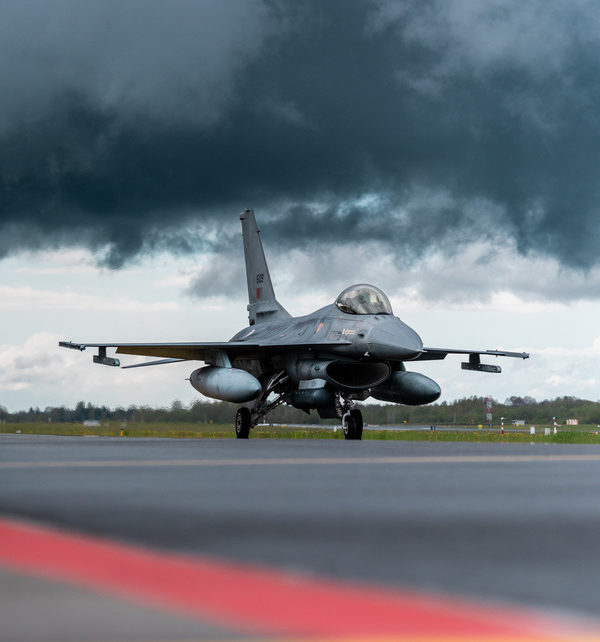
Photo: Portuguese Air Force patrols the Baltic skies from Estonia. Source: NATO.
Disclaimer: Any views or opinions expressed in articles are solely those of the authors and do not necessarily represent the views of the NATO Association of Canada.