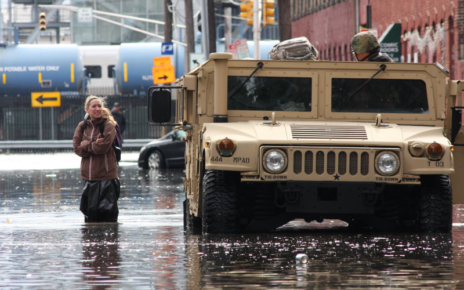
Extreme weather is no longer a distant concern for defence planners. Across the Euro-Atlantic region, flooding has damaged military infrastructure, rising temperatures have affected personnel and equipment, and the accelerating loss of Arctic ice has begun to reshape strategic geography. As climate impacts intensify, they increasingly intersect with NATO’s core security priorities. Rather than constituting a single, clearly defined threat, climate change acts as a force that amplifies existing vulnerabilities. For instance, climate change is undermining readiness, complicating crisis response, and placing additional strain on allied forces in an already unstable security environment. As an alliance built around collective defence, this challenge is difficult to categorize, yet impossible to ignore. In response, NATO has begun integrating climate considerations into its understanding of resilience and risk. At the same time, this engagement raises a more fundamental question about institutional boundaries. Climate change may be reshaping the security landscape, but it also tests the limits of what a military alliance can realistically address within its mandate.
As a security issue, climate change is often described as a “threat multiplier” because it intensifies existing political, economic, and social pressures. Rising sea levels, extreme heat, and resource scarcity can exacerbate instability, strain governance capacity, and increase the likelihood of humanitarian crises. In security terms, these dynamics matter less for their environmental origins than for their downstream effects on risk and resilience. For NATO, this logic is particularly relevant. The Alliance operates in an environment already shaped by geopolitical competition, fragile states, and increasingly frequent crisis-response demands. Climate-related disruptions can compound these challenges by increasing the operational burden on armed forces, straining logistics and readiness, and creating new contingencies that require coordination among allies. At the same time, climate change does not fit neatly within NATO’s traditional threat framework. Unlike conventional military risks, it is diffuse, long-term, and largely driven by factors beyond the Alliance’s direct control. This ambiguity helps explain both why NATO has begun to engage with climate security and why that engagement remains carefully circumscribed.
For NATO, the security implications of climate change are most visible in their effects on military infrastructure and operational readiness. Extreme weather events such as flooding and heatwaves can damage bases, disrupt supply chains, and accelerate wear on equipment, increasing both maintenance costs and operational risk. In some cases, installations built for past climate conditions are no longer fit for purpose, requiring adaptation simply to remain functional. Climate impacts also affect the ability of armed forces to train and operate effectively. Rising temperatures can limit the duration and intensity of training exercises, particularly for ground forces, while extreme weather increases uncertainty in operational planning. These constraints matter for an alliance that depends on readiness and interoperability, as uneven climate exposure can create asymmetries among member states’ capabilities. Beyond infrastructure and readiness, climate change places additional demands on NATO’s crisis response functions. More frequent natural disasters and climate-related emergencies increase the likelihood that armed forces will be called upon to support humanitarian assistance, disaster relief, and stabilization efforts. While these missions are not new, their growing frequency risks diverting resources from other strategic priorities. In this sense, climate change does not introduce a single new threat, but systematically amplifies pressures across NATO’s security environment.
In response to these pressures, NATO has increasingly acknowledged climate change as a factor shaping the security environment. Over the past decade, the Alliance has incorporated climate considerations into strategic documents and defence planning processes, framing climate impacts primarily through the lens of resilience, readiness, and risk management. This approach reflects an understanding of climate change not as an environmental policy issue, but as a condition that affects how military forces operate. A central feature of NATO’s response has been integrating climate risk into resilience standards and infrastructure planning. This includes efforts to adapt military facilities to more extreme weather conditions, improve energy efficiency in operations, and assess how climate impacts may affect logistics and supply chains. NATO has also committed to reducing the climate footprint of its military activities, primarily through energy efficiency, while keeping its climate agenda focused on adaptation rather than mitigation. The Alliance does not seek to regulate emissions beyond its own operations, nor does it position itself as a climate governance institution. Instead, climate considerations are treated as one of several factors that influence defence planning and operational sustainability.
Despite NATO’s growing engagement with climate security, its role in this area remains structurally limited. As a military alliance, NATO’s mandate is centered on collective defence and crisis management, not on addressing the underlying drivers of climate change. Decisions within the Alliance are made by consensus, and responsibility for climate policy remains firmly with member states. These institutional features shape both what NATO can do—and what it cannot. Climate mitigation, in particular, falls largely outside NATO’s authority. While the Alliance can reduce emissions within its own operations and encourage best practices, it lacks the legal mandate to set or enforce climate targets for its members. Any broader climate action depends on national governments, which vary widely in their political priorities, economic structures, and exposure to climate risk. This diversity constrains the scope of collective action NATO can realistically pursue. There are also limits to how far climate risks can be integrated into defence planning without blurring institutional boundaries. NATO operates alongside other international bodies, including the European Union and the United Nations, whose institutional mandates are more directly oriented toward environmental governance and development policy. Expanding NATO’s role too far into these areas risks both duplication and political resistance, particularly from member states concerned about sovereignty and mission creep. In this sense, climate change exposes a fundamental tension within the Alliance: NATO increasingly recognizes climate risk as a security concern, yet remains constrained by an institutional design that prioritizes military coordination over broader governance.
Taken together, NATO’s approach to climate security reflects a careful and deliberate act. By integrating climate considerations into resilience and defence planning, the Alliance has taken pragmatic steps to adapt to a changing operating environment without overextending its mandate. At the same time, the limitations of this approach are clear. Framing climate change primarily as an operational challenge risks keeping NATO’s response reactive rather than anticipatory, addressing consequences rather than underlying dynamics. As climate-related disruptions become more frequent and severe, pressures on allied forces are likely to intensify, potentially straining resources and political cohesion. Whether NATO’s current approach will prove sufficient remains an open question, as climate change continues to reshape security dynamics beyond traditional threat models.
Climate change is no longer a peripheral issue in the Euro-Atlantic security environment; for NATO, it has become a structural condition shaping readiness, resilience, and risk across military activities. The Alliance’s response reflects a realistic effort to adapt to these pressures while remaining within its mandate. At the same time, climate security exposes the limits of what a military alliance can address through adaptation alone. As climate impacts intensify, NATO’s experience underscores a broader challenge: recognizing emerging risks does not always confer the authority to resolve them.
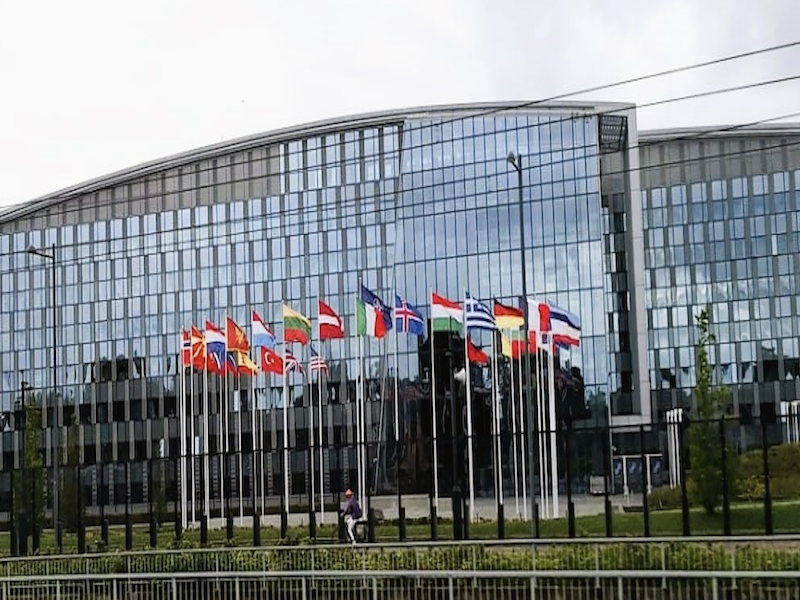
Image credit: NATO headquarters (Brussels) (photo date unknown), depicting the NATO headquarters in Brussels, by David Monniaux via Wikimedia Commons. Licensed under CC BY-SA 4.0.
Disclaimer: Any views or opinions expressed in articles are solely those of the authors and do not necessarily represent the views of the NATO Association of Canada.