China Indo-Pacific and NATO Russia

China’s Calculated Partnership: Decoding Beijing’s Alignment with Russia and NATO’s Strategic Response

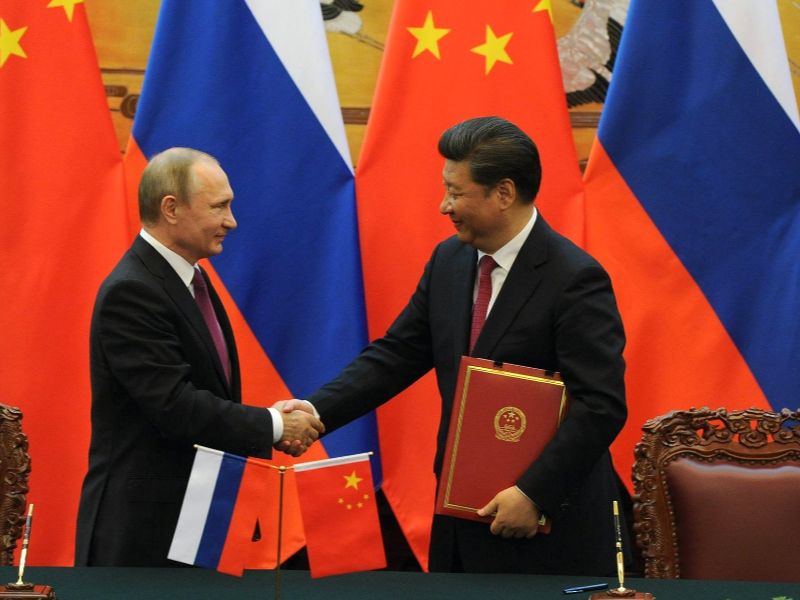
In “China’s Calculated Partnerships: Decoding Beijing’s Alignment with Russia and NATO’s Strategic Response,” Daniel Lincoln argues that Beijing’s support for Moscow stems from insecurity, not ideology, and that misreading this dynamic risks hardening a fragile partnership. The piece calls for a strategy of restraint and engagement – one that deters aggression while offering China reasons to distance itself from the Kremlin.

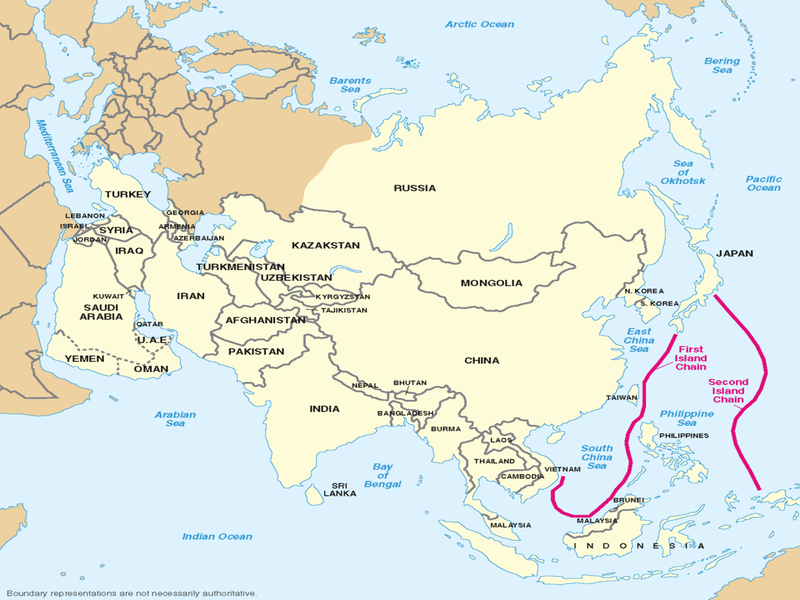
Geographic Boundaries of the First and Second Island Chains
Alexander Morrow China Defence Spending Indo-Pacific and NATO Russia Taiwan Ukraine

The 2025 NATO Summit and Its Implications for Indo-Pacific Security

In his latest piece, Alexander Morrow highlights how new NATO spending commitments strengthen security in both Europe and the Indo-Pacific. As the alliance rebalances burden sharing, European arms purchases have the potential to bolster the United State’s military industrial base and its ability to deter aggression against Taiwan.

Amila Sadic Cyber Security and Emerging Threats

How state-sponsored cyber strategies are undermining Canada and the west

Cyberspace has become the new realm for battles to be waged, where state/non-state-sponsored groups are exploiting cyber vulnerabilities to control critical state sectors. Cyberattacks have escalated beyond espionage and financial theft to actions that constitute acts of war, endangering national and global security. Salt Typhoon and Volt Typhoon, People’s Republic of China (PRC) sponsored cybergroups, Read More…

China Indo-Pacific and NATO Ukraine

Strategic Myopia: The Folly of Tariffing China to Halt Russian Aggression in Ukraine

In Strategic Myopia: The Folly of Tariffing China to Halt Russian Aggression in Ukraine, Daniel Lincoln argues that proposed secondary sanctions on China would backfire by hurting Western economies more than Beijing. Drawing on data and historical parallels, he contends that China’s vast domestic market, diversified trade networks, and resilience to sanctions make economic coercion ineffective. Instead, he maintains that NATO should focus on understanding Beijing’s strategic calculus and pursue policies that engage rather than alienate China.

Asia-Pacific China Indo-Pacific and NATO International Relations Russia South Asia

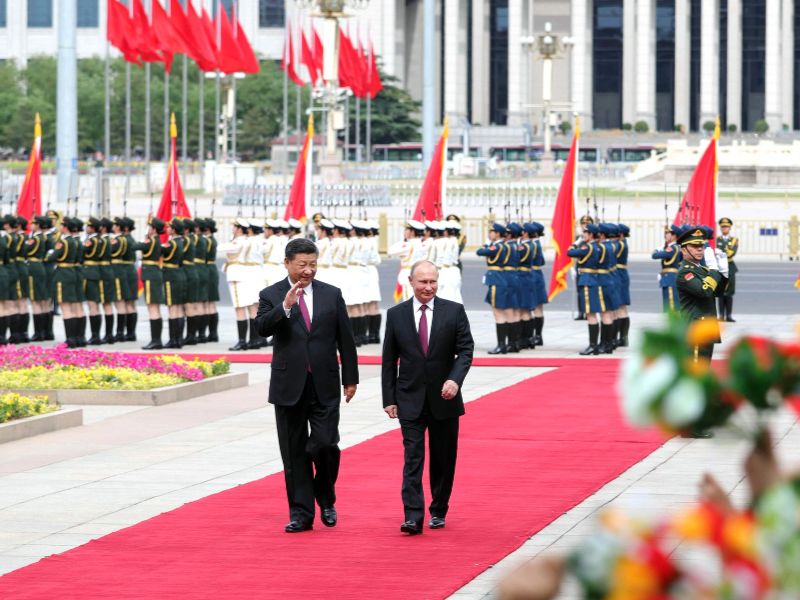
Strange Bedfellows, Real Consequences: What do Moscow-Beijing-New Delhi’s SCO Optics Mean for NATO and Canada?

Narayan Srivastava highlights how NATO’s relevance in today’s multipolar world depends on engagement with the Global South. From safeguarding maritime chokepoints to strengthening resilience in energy and trade, actors like India, Brazil, and the Gulf states are emerging as indispensable partners. By expanding its partnership models and leveraging shared interests, this article explores how NATO can reinforce its role as the global custodian of stability, ensuring that the Alliance not only adapts to new realities but leads in shaping them.

Environment, Climate Change, and Security

POWER PLAY IN THE ARCTIC: Part 2 – Dissecting the Arctic’s Power Struggles by State

*This is the second instalment of a six-part series. As each Arctic state strengthens its security and defence capabilities in the High North, there is likewise an overall intensification of geopolitical rivalries, an expansion of coastal states’ territorial and energy ambitions, increasing clashes of interest, and a corresponding potential for instability. Problematically, NATO lacks an Arctic policy, Read More…

Environment, Climate Change, and Security

POWER PLAY IN THE ARCTIC: Part 1 – From Isolation to Insecurity

*This is the first instalment of a six-part series. Although the Arctic’s extreme environment has historically been an effective obstacle to threats to Canada’s sovereignty and security, the region is now being reshaped by climate change. In 2007 alone, over 2.5 million square kilometres of ice melted in the Arctic Circle, leaving only half of that Read More…

Alexander Martin Cyber Security and Emerging Threats

The Digital Battlefield: How China’s Cyber Program Is Reshaping National Security

On Sunday, January 19th, TikTok, the app that has captivated millions, was expected to shut down its operations in the U.S. This follows a sweeping federal ban sparked by a new law demanding that ByteDance, the Chinese company behind TikTok, divest from the app. Canada, too, is stepping up its scrutiny, forcing TikTok to close Read More…

NATO and Canada

Special Report: The MAS Gap, Canada Falls Behind as Allies Adopt Maritime Autonomous Systems

This is Part One of a two part series on maritime autonomous systems. Introduction As the geopolitical landscape becomes increasingly complex, with rising global competition and evolving security threats, Canada must take decisive steps to enhance its maritime capabilities by adopting Maritime Autonomous Systems (MAS). While our allies, including the United States, France, and NATO Read More…

NATO and Canada

Special Report: Under the Ice and Into the Future, Strengthening Canada’s Submarine Capabilities

Canada faces an urgent need to modernize its submarine fleet, particularly with under-ice capabilities, to maintain strategic autonomy and meet its international obligations. Public Service and Procurement Canada (PSPC) must urgently fast-track the acquisition of under-the-ice capable submarines for the Royal Canadian Navy (RCN) or risk facing a critical capability gap. Several factors have recently Read More…