Why is Climate Change Specifically Detrimental in the Arctic?
As climate change has accelerated environmental risks in Northern Canada, the physical landscape as well as the security landscape is changing rapidly. The Arctic is a central indicator of climate change, as this region is warming four times faster than the rest of the world. This is because areas of higher latitudes are more sensitive to the high concentrations of greenhouse gases and subsequent global warming process. This observation is relevant as the Arctic comprises 40% of Canada’s land mass which is home to approximately 150 000 inhabitants with over half identifying as Indigenous. Thus, it is important for Canada to observe the effects of global warming in the Arctic and how this impacts Indigenous communities who have been contributing to land management and defense planning in the region.
Observed Changes and Repercussions
Locals and members of the Canadian forces stationed in remote communities have furthermore been noticing dramatic changes in the climate. In 2024, The Guardian reported a member of the Canadian Rangers who recalled temperatures jumping from “-8C, -4C, back to 8C and then even above 0C at the beginning of the year.” Natural Resources Canada supports the notion that Arctic temperatures are causing changes in the landscape as a report projects that “most Canadian Arctic marine regions will be sea ice- free for part of the summer by 2050.” This drastic depletion of sea ice disrupts ecological communities and food webs while also triggering migrations of different species. This furthermore impacts the dispersion of wildlife and supply of food through hunting to isolated communities. These communities are also experiencing a shortage of food through the depletion of fish stock which is caused by the warming sea temperatures. This emerging food shortage crisis threatens the economic sustainability of the region as it prevents communities from generating their own income, and limits access to food. This leaves Northern communities dependent on imports from the south and will limit abilities to practice cultural activities which have ensured the protection of the land long before colonization. A similar situation has been observed in Nunavut, where unpredictable ice conditions and changing migration patterns of caribou and marine mammals have made traditional hunting increasingly difficult. In 2018, the Nunavut Food Security Coalition reported that over 70% of Inuit households faced some level of food insecurity due to climate-related disruptions to hunting and fishing. From these cases, it becomes clear that successful adaptation depends on empowering local communities, supporting sustainable harvesting practices, and respecting Indigenous leadership in environmental management.
The Role of Indigenous Communities in Protecting the Arctic
The erosion of self determination and independence among Indigenous communities also impacts the intergenerational sharing of traditional knowledge which could be at risk of disappearing. This knowledge is directly connected to national security as Indigenous communities have been at the forefront of nature conservation, national defense, as well as “addressing climate disaster and disaster risks through adaptation and mitigation strategies.” The Intergovernmental Panel on Climate Change (IPCC) further indicated that policies of land management and restoration are more effective when developed in collaboration with local organizations. In terms of management and navigation of the land, Indigenous knowledge furthermore acts as a “lifeline” to national defense initiatives in navigating what Arctic veterans identify as the greatest enemy- the cold. In addition to aiding the Canadian forces in temperature adaptation, Indigenous knowledge has contributed to early warning systems, as local hunters and Elders are able to detect subtle environmental changes, including shifts in sea ice stability, wildlife migration and other potential hazards. These factors are all essential for military mobility and safety in the Arctic region. However, as intergenerational transmission of land knowledge has deteriorated due to the loss of self determination, displacement, and other impacts of climate change, Canada risks losing a significant source of expertise that cannot be replicated through modern training or technology. The disappearance of this knowledge would not only weaken cultural identity, but would also diminish Canada’s capacity to defend and sustainably manage its northern regions.
The collaboration between Indigenous communities and military forces also ensures that the region remains secure against growing geopolitical interests from other nations, specifically amid rising tensions between Canada and Russia. Russia is considered to be a ‘border state’ of Canada’s through the close proximity via the northern region. Furthermore, as Russia is attempting to establish its position as a “Leading Arctic Power,” the pressure is on for Canadian forces to maintain influence. Arctic forces have widely recognized that “tundra is one of the most hostile theatres for warfare conceivable for its ability to render hi-tech equipment unusable.” Thus, the use of Indigenous knowledge of the land has never been so prudent. Canada possesses a unique strategic resilience in this scope of national defense, as the blend of traditional knowledge and military technology allows for a more holistic and comprehensive approach to maintaining national security in the north. This is essential in a region where climate change and global interests intersect. However, if Canada neglects to address Indigenous interests amid the warming climate, the country risks losing a vital aspect of defense and legitimation in the region.
Recommendations
In conclusion, policies that address climate change in the Arctic should prioritize the securitization of Indigenous communities, as it is a key aspect in asserting strong national defense in the region. Canada can benefit from integrating Indigenous knowledge and ways of being into climate adaptation and defence planning, which not only strengthens the country’s ability to respond to environmental and geopolitical threats but also ensures the survival of Indigenous cultures that have safeguarded the Arctic for generations. Centering Indigenous perspectives further contributes to reconciliation by recognizing their role in managing ecosystems, sustaining food systems, and preserving cultural practices tied to the land, while also creating more sustainable and resilient climate strategies.
Any views or opinions expressed in articles are solely those of the authors and do not necessarily represent the views of the NATO Association of Canada.
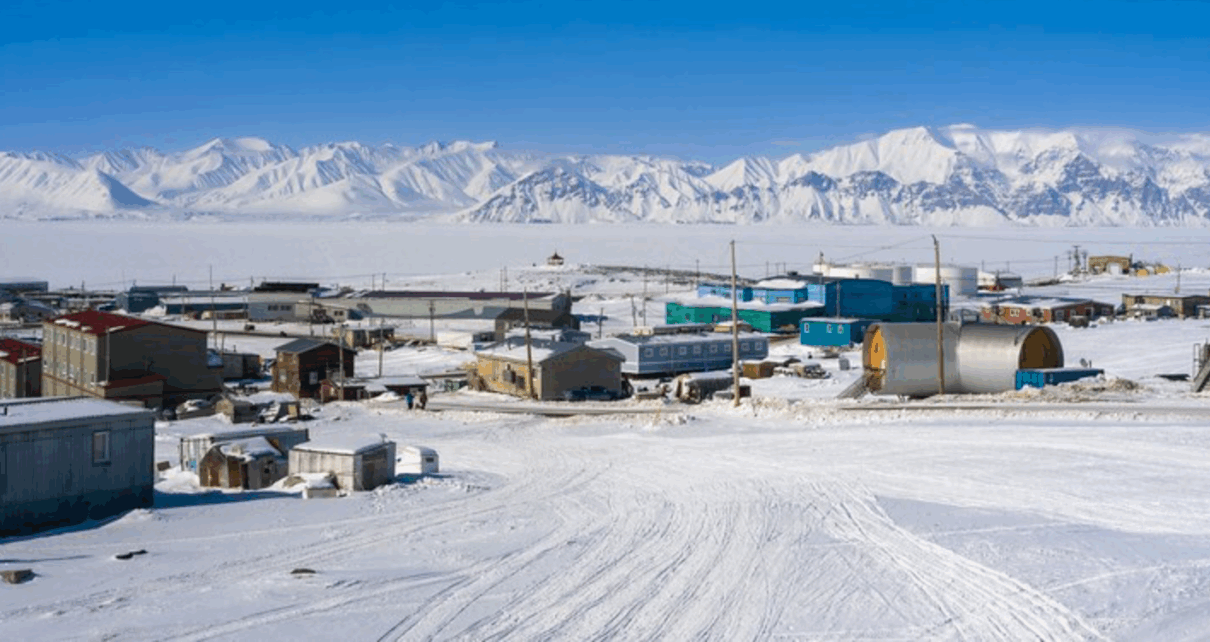
Photo: “A view of Beylot Sound” by I saw_that. Licensed under Creative Commons CC BY 2.0. Flickr.