A single geopolitical disruption can send shockwaves through the global economy, revealing not only how fragile the world’s energy systems are, but also how deeply they are tied to environmental challenges. The Strait of Hormuz is a vital passage in the global energy system, serving as a narrow passage through which a significant portion of the world’s oil supply flows. It is estimated that roughly 20 million barrels of the world’s oil pass through each day, making it significant to global energy security. Any disruption can trigger immediate increases in global oil prices and create uncertainty across international markets. As such, the current halt in oil exports through the Strait has caused nations to reconsider their energy security strategies. While the International Energy Agency is releasing 400 million barrels from its emergency reserves to ensure that the supply gap is filled, these short-term solutions cannot fully offset prolonged disruptions. Nations like Canada are now reassessing their long-term energy security strategies.
In this context, Canada holds a very unique position. As one of the world’s largest holders of proven oil reserves, estimated at approximately 170 billion barrels, Canada has the potential to play a stabilizing role in global energy markets. Despite this abundance, Canada remains the only G7 nation that does not maintain a strategic oil reserve. Instead, it relies on market-based systems and private storage to manage supply and demand. Canada’s crude oil imports come from “the U.S. (54%), Saudi Arabia (11%), Iraq (8%), and Norway (5%)”. This dependency raises an important question: should Canada develop its own strategic reserve to protect against global disruptions such as those occurring in the Strait of Hormuz?
Canada’s move at developing a strategic reserve has many benefits. Establishing a strategic reserve could enhance national energy security, ensuring that Canada can fall back on its reserve amid global supply crises. It would also strengthen Canada as a geopolitical influence, since Canada would be seen as a reliable supplier in times of international instability. Recent increases in oil prices due to disruptions have already provided Canadian producers with short-term economic benefits, as higher global benchmarks translate to increased revenues. However, these benefits are temporary, since companies remain cautious about expanding production unless high prices persist over the long-term.
On the other hand, expanding oil production or creating strategic reserves carries significant environmental consequences. Canada’s oil sands are among the most carbon-intensive sources of oil in the world. Research from Pembina Institute indicates that oil sands extraction can produce significantly higher emissions per barrel compared to conventional crude oil. The Canadian Centre for Energy Information reveals that while greenhouse gas emissions per barrel of oil sands production have decreased due to technological improvements, total emissions from the oil and gas sector have risen over the past two decades. Beyond emissions, oil sands development has other environmental impacts, including pollutants in the air, land degradation, deforestation, and the creation of tailings ponds that can leak harmful substances into surrounding ecosystems. The pollution from oil sands operations may be significantly underestimated, with studies suggesting emissions far exceeding reported levels. Tailing ponds contain contaminated water, covering large areas and posing risks of leakage into surrounding ecosystems and waterways. These impacts are concerning for the ecosystem, and particularly Indigenous communities in the area. These environmental costs directly conflict with Canada’s Climate Competitiveness Strategy and its goal of reducing greenhouse gas emissions. Expanding production in response to global supply disruptions could therefore undermine national and international efforts to combat climate change.
Policymakers who are considering increasing oil production would propose to position Canada as a stable and reliable supplier amid global uncertainty. At the same time, PM Mark Carney has emphasized a pragmatic approach to climate policy, stating that Canada’s strategy should focus on “driving investment…and results” rather than strict limitations on industry, reflecting a shift toward balancing economic growth with emissions reductions. However, Canada may struggle to meet its environmental targets as a result.
This creates a tension between economic opportunity and environmental responsibility. On one hand, global disruptions such as those in the Strait of Hormuz highlight the importance of energy security and the potential role Canada could play as a stable supplier. On the other hand, increasing reliance on oil sands production risks locking Canada into a high-emissions pathway at a time when the global energy transition is accelerating. While the current crisis may encourage Canada to reconsider its approach to energy security, any decision to expand oil production or establish strategic reserves must carefully balance short-term economic gains with long-term environmental sustainability. Expanding oil production may provide temporary relief during global crises, but it comes at a high environmental cost. Canada must carefully navigate this trade-off, ensuring that efforts to enhance energy security do not compromise its commitment to reducing emissions and transitioning toward a more sustainable future.
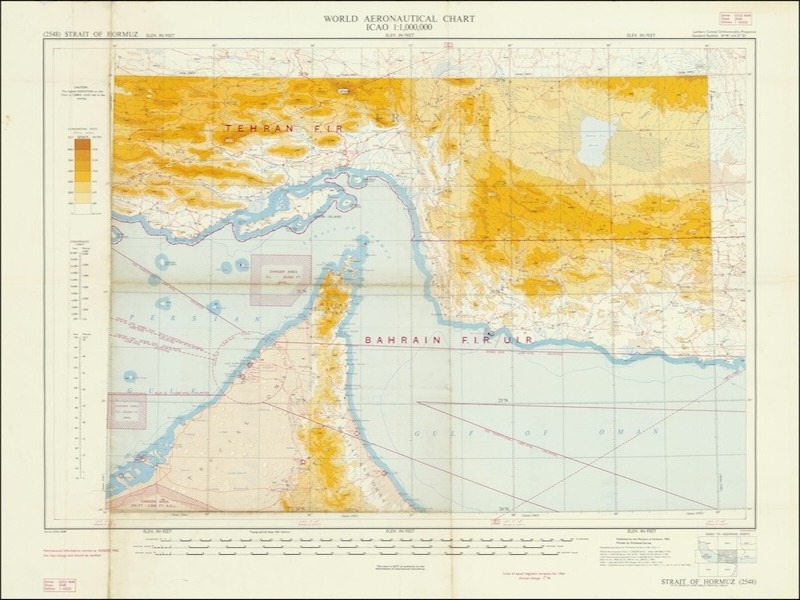
Image credit: World Aeronautical Chart – Strait of Hormuz (date unknown), depicting an aeronautical chart of the Strait of Hormuz region, via Wikimedia Commons. Licensed under public domain.
Disclaimer: Any views or opinions expressed in articles are solely those of the author and do not necessarily represent the views of the NATO Association of Canada.