How are environmental issues currently being framed by policymakers and what does this say about shifting public and political priorities in an age of crisis overload?
Climate action has previously dominated global headlines, and sparked major concern across the world. However, with competing global crises, it is clear that leaders must frame environmental policies in different ways to appease the public. In past years, climate change related policies did not require a dual solution and it seemed that ‘saving the world’ was enough of a reason to make changes in environmental regulations and laws in different states. This idea has shifted in recent years due to the emergence of other crises that the climate movement must now compete with, and has thus changed the way in which policymakers address the issue.
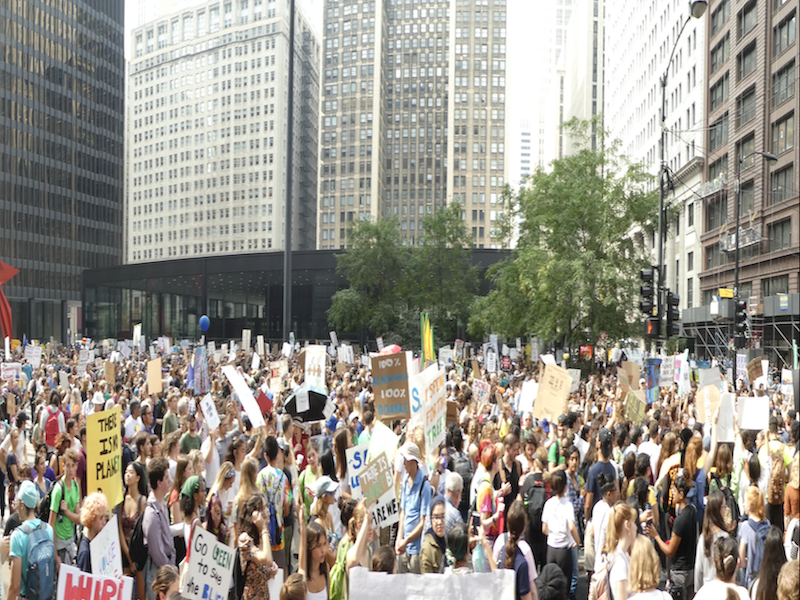
Attention to climate change started to gain traction when the United Nations Environment Program’s Governing Council expressed concern at the damage to the ozone layer in 1980. This early indicator of negative effects of climate change triggered many institutional actions such as the “adoption in 1985 of the Vienna Convention for the Protection of the Ozone Layer and the conclusion of a Protocol to the 1979 Transboundary Air Pollution Convention.” At this time, the climate crisis was moving toward the center stage, and led to other political actions such as Greta Thunberg’s speech at the UN Climate Summit, COP Summits, and the Fridays for the Future movement which attracted attention from government leaders, policymakers and the younger generation through social media.
These movements and displays of support in environmental activism triggered governmental response across the world, with actions such as President Bush removing the United States from the Kyoto Process, UK Prime Minister Tony Blair selecting climate change as primary concern during his term as chair of the G8 and president of the EU, along with 192 countries convening for the the UN Climate Summit in Copenhagen with goals of a new global agreement. The Canadian government has also produced policies such as reaching Net Zero by 2050, and reducing emissions by 2035. In 2019, the government also introduced a highly controversial Carbon Tax initiative, that was recently removed by newly elected Prime Minister Mark Carney. These measures implemented by policymakers in the past reflect a presentation of climate change concerns that take priority.
So, what has changed?
Social media use has evidently grown alongside the widespread acceptance of climate change as a legitimate concern. In fact, the University of Minnesota emphasizes that social media use has shaped discourse around climate change. This is accomplished through the unlimited access of current news and stories that are available at any time to anyone with access to the internet. What people were hearing and seeing triggered deeply emotional responses, as this crisis affects all individuals regardless of nationality, gender, or race. Words such as Greta Thunberg’s deeply resonated with many due to this personal connection to the climate crisis:
“You are failing us. But the young people are starting to understand your betrayal. The eyes of all future generations are upon you. And if you choose to fail us, I say: We will never forgive you.”
“We will not let you get away with this. Right here, right now is where we draw the line. The world is waking up. And change is coming, whether you like it or not.”
However, as the world has entered a new age of the internet, climate change stories must now compete with other emerging crises such as wars overseas, AI ethical issues, and cost of living crises among other issues emerging each day. While climate related crises still reach the headlines, they are seemingly not at the center stage of concern for leaders and policymakers. This has led to a shift to the way that policies relating to climate change are presented and illustrated to the public.
The shift in attention to issues related to climate change can be understood through the lens of policy framing, which is the way that issues and problems are presented to shape how people interpret or respond to them. This is perhaps why Cairney notes that “actors portray information selectively to influence the ways in which we see the world, or which parts of the world capture our attention.” Thus, policy frames can often shift depending on political, economic and social pressures.
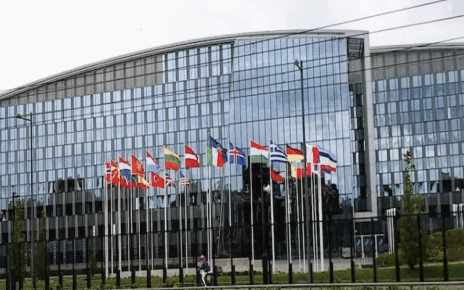
The moral urgency of climate change has seemingly shifted from “saving the planet” to a more strategic public policy framing as understood through analyzing how various governments and international bodies have been discussing climate action recently. In the EU, European Commission President Ursula von der Leyen and UK Prime Minister Keir Starmer emphasised reducing fossil-fuel dependence and boosting domestic renewables as part of “energy security” policy at a summit in London. This comes after the onset of the war in Ukraine in 2021 which exposed Europe’s dependence on Russia for energy resources. This decision highlights how the climate agenda is being framed not only as a moral obligation, but as a matter of national and regional security and resilience. In Canada, The federal government announced a new framework to cap greenhouse-gas pollution from the oil & gas sector. This policy is framed as helping Canada to “remain competitive in a shifting global market” Therefore, this is not simply a move to fight global warming, but is a strategically framed economic and industrial measure that strengthens Canada’s international commitments while managing, rather than eliminating, the long term transition of the fossil fuel industry.
These policies implemented by different states and policymakers are designed with the intention to illustrate international commitment and participation for purposes that perhaps expand beyond the environmental scope and toward forming partnerships with other countries for purposes of national security and globalization interests.
Therefore, in an age of crisis overload, leaders and policymakers are pressured to make decisions related to the climate crisis that also involve other initiatives such as international cooperation or economic strategies. In the age of unlimited access to the world, it seems that reactions of climate change have changed from emotion to strategy. ‘Saving the world’ is seemingly no longer as clear as solving the climate crisis in a changing global landscape that is complex and becoming more bleak every day. This is why policies must not simply be framed as targeted toward solving the climate crisis, but must include other elements that make the solution not only technically, but politically feasible.
Image credit: Chicago | Climate Change Protest (2019), depicting a climate change protest in Chicago, by Harry Carmichael via Flickr. Licensed under All Rights Reserved.
Disclaimer: Any views or opinions expressed in articles are solely those of the authors and do not necessarily represent the views of the NATO Association of Canada.