The Canadian Arctic has become a focal point of global strategic competition, but the region’s energy infrastructure has not kept pace. Currently, remote communities and military installations in the Arctic depend on diesel fuel delivered via seasonal ice roads or costly airlift operations. Communications networks are unreliable, and diesel power plants lacking redundancy are operating past their prime. Meanwhile, climate change is hastening the degradation of infrastructure via thawing permafrost. These interconnected vulnerabilities raise a hard question: Can Canada meet NATO’s baseline requirements for national resilience – which call for secure, sustainable, and continuous energy supply for both civilian populations and military forces? As Russia modernizes its Arctic military capabilities and demonstrates a willingness to weaponize energy dependencies, Canada’s domestic energy infrastructure gaps are becoming a broader risk to Alliance security.
This article examines Canada’s Arctic energy security challenges and their implications for NATO operations in the North American Arctic. It analyzes three structural problems that explain why decades of policy commitments have failed to transform Canada’s Arctic energy architecture, and outlines why this vulnerability represents a concern to the Alliance. Finally, it proposes NATO-level policy recommendations to address these vulnerabilities through enhanced cooperation and standardization.
The Structural Challenges of Canadian Arctic Energy Infrastructure
Beyond the immediate operational challenges of diesel dependency and unreliable communications, Canada’s Arctic energy infrastructure faces three deeper structural problems that explain why decades of policy commitments have failed to transform Arctic energy security.
- The Economics of Remote Energy Supply
Remote Arctic communities and military installations depend on diesel fuel for electricity and heating, but this dependency reflects harsh economic realities rather than policy neglect. Arctic energy demand is geographically dispersed across vast distances with small population centers. These conditions make conventional grid extension or large-scale generation economically prohibitive.
Diesel persists because alternatives face formidable barriers. Fuel arrives via vulnerable supply chains: summer barge delivery, winter ice roads that climate change renders increasingly unreliable, or expensive airlift. Yet diesel remains economically rational because capital costs of alternatives (grid extension, renewable generation with storage, advanced nuclear systems, etc.) exceed what small communities or military installations can justify through conventional cost-benefit analysis.
The result is a catch-22 situation, that is, the very logistical challenges that make diesel costly also make other alternatives financially unfeasible, locking communities into a diesel fuel dependency. The long-delayed Nanisivik naval facility, Forward Operating Locations, and existing radar installations all face the same constraints due to fuel logistics. Even Canada’s recent agreement with Australia to build/develop the over-the-horizon radar in the Arctic will face the same infrastructure challenges. However, alternatives require upfront capital investment that defence budgets alone have struggled to justify.
- Climate Change as Threat Multiplier
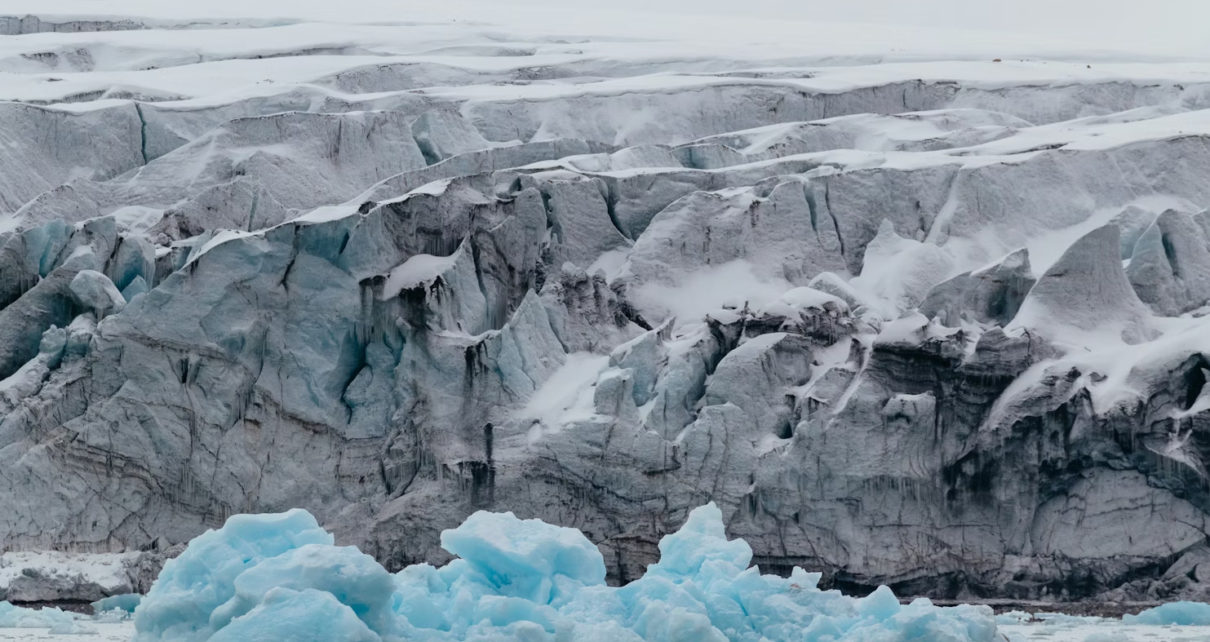
Thawing permafrost destabilizes foundations, roads, and runways that requires expensive remediation or complete reconstruction. Arctic infrastructure now faces rapid permafrost thaw, shifting precipitation patterns, coastal erosion, and extreme weather. These changes make historical data increasingly unreliable for planning infrastructure with longer lifespans.
Investment barriers exist along with uncertainties about climate risk exposure for private investors, particularly as permafrost degradation destabilizes current foundations. Government planning experiences significant cost-benefit challenges in areas where infrastructure lifespans differ from historical projections due to environmental changes. Overall underinvestment in the Canadian Arctic coincides with a period of intensifying strategic competition. Also, transportation network reliability is noted to be lower compared to southern corridors.
- The Technology and Connectivity Gap
The Arctic lies beyond geostationary satellite range, requiring expensive low-earth-orbit constellations or high-frequency radio systems that are unreliable due to ionospheric conditions. Beyond connectivity issues, funding for cyber defences around critical energy infrastructure is lacking. Many remote diesel facilities operate with minimal cybersecurity, leaving them vulnerable for sophisticated adversaries to exploit.
Energy systems do not have reliable remote monitoring, and coordinating emergency response remains a complex issue. Military operations in the region often suffer from degraded command and control. These conditions occur simultaneously, and independently within the Arctic environment.
Key Takeaways
The challenges outlined above don’t exist in isolation; they rather reinforce each other. Dependency on diesel continues because alternative energy options face economic and technical hurdles. Climate change speeds up the deterioration of existing infrastructure while adding uncertainty to planning. Communications and cyber vulnerabilities limit the effectiveness of distributed operations. These issues cannot be addressed by small funding increases and require fundamentally different frameworks that change the economic factors, address climate adaptation thoroughly, and scale up the deployment of advanced technologies. Furthermore, these interconnected structural challenges create vulnerabilities that extend beyond Canada’s borders.
Why Canadian Arctic Energy Security Matters to NATO?
The structural challenges outlined above create strategic weaknesses that reach beyond Canadian borders. Russia’s Arctic military presence in the Arctic and its use of energy infrastructure as a strategic tool turn Canada’s domestic energy issues into opportunities for exploitation during crises.
- Russian Arctic Capabilities and Strategic Doctrine
Russia has put significant resources into its Arctic military capabilities. This includes restoring and expanding its bases along its northern coast, building an icebreaker fleet with plans for seven nuclear and four non-nuclear icebreakers by 2035, developing advanced air defence systems, and enhancing long-range precision strike capabilities. Russian strategic doctrine views the Arctic as a stronghold for submarine-launched ballistic missiles and a potential theater for cutting off NATO reinforcement routes across the North Atlantic.
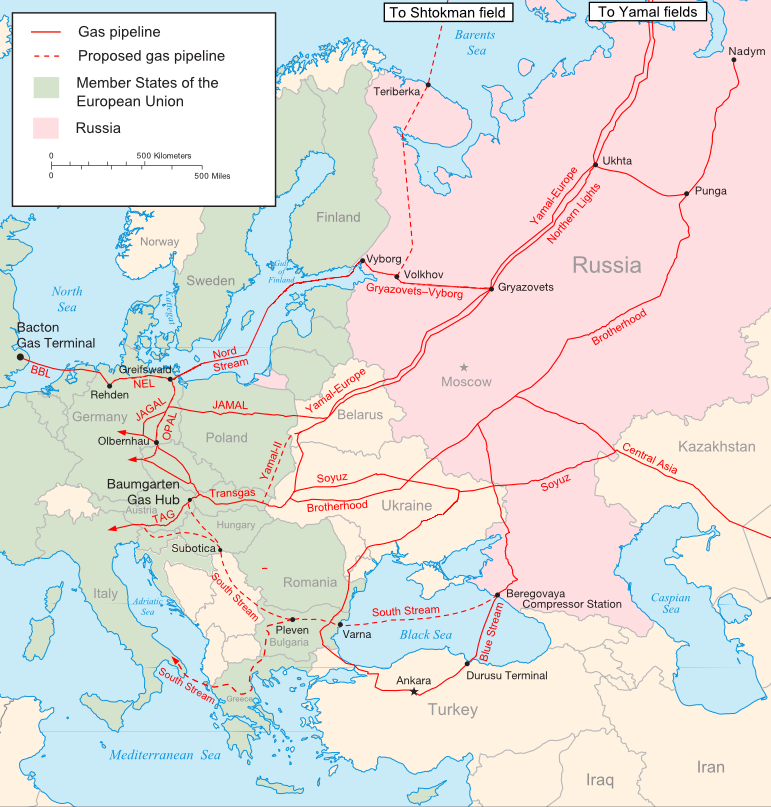
Russia’s approach to Ukraine demonstrates a readiness to target energy infrastructure as part of a broader military strategy. The 2022 Nord Stream pipeline sabotage (regardless of attribution) and repeated use of energy (natural gas supplies) as a coercive tool against European nations highlight a situation where critical infrastructure is viewed as a legitimate military target. This sets a precedent, that in a potential future Arctic crisis, Russia might focus on Canada’s energy weak points, i.e., fuel storage locations, predictable supply routes, poorly defended communications nodes, cyber-vulnerable control systems. These vulnerabilities could serve as exploitable targets offering strategic advantage with low risk of escalation.
- Exploitation Vectors in a Crisis
Russian Arctic forces along their northern coast could carry out precision strikes against fuel depots, disrupt vulnerable barge or ice road supply routes, or send special operations forces to attack critical points with little warning due to communications gaps that hinder early detection. Cyber operations could place malware in aging energy management systems and cause coordinated disruptions that coincide with military operations that overwhelm response efforts.
The main issue is that the current energy architecture limits NATO’s operational choices. Forces cannot sustain long-term Arctic operations without reliable power for radar systems, fuel for aircraft and vessels, heat for facilities, and communications for coordination. Canada’s visible infrastructure shortcomings may potentially embolden Russian risk-taking and complicate the Alliance’s efforts in deterrence and crisis management.
Policy Implementation Recommendations
Addressing Canada’s Arctic energy vulnerabilities requires actions at the NATO level that go beyond national capabilities. The following recommendations outline concrete steps the Alliance can take to strengthen collective Arctic energy security.
- Expand on NATO Arctic Energy Cooperation
Canada should build on existing initiatives such as the UK-Norway Lunna House Agreement, to create similar bilateral or multilateral frameworks with Denmark/Greenland, Iceland, and Norway for shared investment in dual-use energy infrastructure along critical maritime routes. Such agreements can lower costs for individual countries, while strengthening collective Arctic energy security through coordinated infrastructure projects.
- Formalize Energy Infrastructure Standards
Deepened collaboration with the NATO Energy Security Centre of Excellence to develop common technical specifications for Arctic energy systems—fuel storage, power generation, communications networks—would enable interoperability across Allied forces. Current NATO operations have varying energy systems that lead to gaps in operations. Unified standards could help bridge these gaps. Canadian leadership in developing these standards would ensure they fit Arctic operational needs while enhancing mutual support among Allied forces.
Conclusion
Canada’s Arctic energy infrastructure has vulnerabilities that affect NATO’s defence posture. The region’s aging and diesel-dependent systems create potential weaknesses that adversaries can potentially exploit during a crisis. Three main problems, i.e., economic barriers to alternatives, climate-related degradation, and technology gaps explain why traditional defense procurement has failed. The urgency comes from infrastructure timelines that exceed the pace of emerging threats.
NATO can act through improved cooperation and established standards to address these vulnerabilities. Cost-sharing frameworks can distribute responsibilities while enhancing collective security. Common specifications will ensure that forces can work together effectively. These practical steps would greatly improve the Alliance’s Arctic stance.
The Alliance should not view Canadian Arctic energy security as just a national issue. Article 3 resilience requirements apply to all Allies, and infrastructure shortfalls create vulnerabilities in collective defense. As strategic competition tightens, the resilience of infrastructure is increasingly crucial for nations conducting operations in the Arctic.