In an era of intensifying great-power competition and accelerating climate change, the Arctic has emerged as a central arena where environmental transformation and geopolitical rivalry increasingly intersect. Washington’s threats to seize Greenland have undermined NATO unity. Potential threats have generated geopolitical instability that poses security and environmental risk to Canada’s Arctic sovereignty. This article aims to examine the implications of such threats and their impact on the climate in the Arctic region. The melting Arctic is affecting geopolitics, making Greenland a strategic location for Washington in an attempt at achieving global hegemony. The intersection of climate change and power politics risks accelerating militarization, weakening geopolitical relations, and undermining cooperative environmental protection.
For Canada, Greenland has been a key partner in the Arctic foreign policy, which is why Washington’s power play has serious ramifications for Arctic security and climate stability. Canadian foreign policy explicitly frames climate change as the most pressing threat to its northern security front. The Canadian Arctic Foreign Policy highlights that Canada must remain strong in the North American Arctic and strategize with the United States, Nordic partners, and broader multilateral forums to preserve stability and protect northern communities. Yet, the U.S. push on Greenland, including threats of tariffs to force negotiations and the political pressure around Arctic defense, has strained transatlantic unity. Ottawa has signalled support for sovereign decision-making by Denmark and Greenland. At the 2026 World Economic Forum in Davos, Prime Minister Mark Carney condemned U.S. tariff threats linked to Washington’s push to acquire Greenland, emphasizing Canada’s measures to achieve shared security goals in the Arctic region. This diplomatic rift reflects a deeper tension, which is that Greenland’s strategic value has increased as the Arctic ice sheets melt, opening new maritime routes and exposing vast untapped mineral and energy resources, which Washington views as critical to maintaining global power status.
In addition to Canada’s reaction to Arctic threats, icebreaker operations in the Arctic present the opportunity for military operations, scientific research, and monitoring climate trends. Yet, the expansion of icebreaking activities carries environmental risks, with increased traffic and operations, which can disturb sensitive habitats, raising the risks of environmental governance. Apart from Canadian icebreaker operations, the United States’ limited icebreaking capability in the Arctic highlights how climate-induced accessibility challenges shape military and economic policy in the Arctic. The U.S. currently relies on aging icebreakers and partnerships with allies like Canada and Finland to operate in these harsh conditions. This highlights that even as Washington asserts its presence in the Arctic, it remains dependent on cooperative Arctic infrastructure networks whose erosion would destabilize both security and environmental maintenance in the region.
While the idea of the U.S. acquisition of Greenland has sparked public alarm, NATO’s core structure and collective defense mechanisms would persist even through serious disagreements. The current situation is seen as a test of alliance cohesion and political trust, highlighting the strategic differences over Arctic policy and territorial sovereignty between Washington and its European partners. At the same time, NATO’s growing presence in the Arctic signals a broader shift in how the region is viewed, which is an emerging strategic zone shaped by climate change, great-power competition, and security concerns. Due to the tension between Washington and Europe, there has been an increase in the militarization of the Arctic, which has led to climate concerns. This shift in focus reflects NATO’s Regional Perspectives Report on the Arctic, which emphasizes that climate change and environmental transformation are now central to geopolitical competition. As melting sea ice opens new maritime routes and access to natural resources, states have expanded surveillance, naval patrols, and defense capabilities. Thus, the report calls upon NATO to bring the Arctic to the forefront of its strategic planning. NATO’s expanding presence following the Greenland tensions is reshaping geopolitical and environmental conditions. Danish officials have stressed that a forced transfer of Greenland to U.S. control would effectively spell the end of NATO’s cohesion, as European allies view any such move as a violation of international law and alliance norms.
The recent geopolitical tensions disregard the environmental implications that are present in the Arctic. As great-power rivalry intensifies around Greenland and the High North, security interests risk overshadowing the urgent need for cooperative climate governance, environmental protection, and the safeguarding of the fragile Arctic ecosystems. In contrast, Canadian Arctic Foreign Policy must adapt to a rapidly evolving geopolitical landscape by integrating climate security as the focus of sovereignty and defense. In this context, rather than treating environmental change as an afterthought, Canada must advance a strategy that links alliances, indigenous protection, and multilateral diplomacy with commitments to environmental monitoring, sustainable development, and conflict prevention. Only through such an integrated approach can Canada protect its Arctic sovereignty while contributing to long-term regional stability and climate resilience in an increasingly contested Arctic.
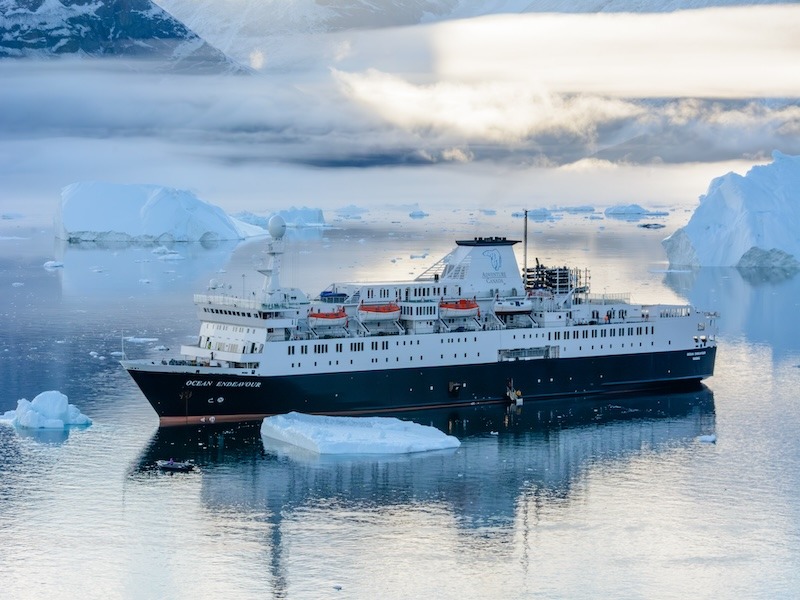
Image credit: 2015-09-18 MS OCEAN ENDEAVOUR – IMO 7625811, at Qeqertarsuaq Island (Karrat Fjord), Greenland (18 September 2015), depicting the expedition ship MS Ocean Endeavour at Qeqertarsuaq Island in Greenland, by Gordon Leggett via Wikimedia Commons. Licensed under CC BY-SA 4.0.
Disclaimer: Any views or opinions expressed in articles are solely those of the authors and do not necessarily represent the views of the NATO Association of Canada.




,_Greenland.jpg)
