*This is the third instalment of a six-part series.
Given the effectiveness of the Canadian Arctic’s harsh conditions as a deterrent against security threats, for most of its history, Canada’s defence of the Arctic has been sporadic at best. At present, although Joint Task Force North (JTFN) is tasked with northern operations, there are no permanent CAF bases in the Canadian Arctic. Instead, JTFN uses forward operating locations (FOLs) in Inuvik, Iqaluit, and Yellowknife to enable fighter jets from bases in other parts of Canada such as Bagotville, Quebec, and Cold Lake, Alberta, to land, refuel, and take off in support of Canadian Arctic missions. JTFN also maintains facilities throughout Nunavut in Alert, Resolute Bay, Fort Eureka, and Nanisivik. However, they located far apart from each other, such that CAF infrastructure is only able to “provide limited support for large or sustained deployments.” Northern operations are further supported by RCAF units across the country, which assist with resupplying CAF installations in the Arctic and providing crucial support for search and rescue operations in the region.
In terms of maritime security, Canada’s current naval fleet includes four submarines with limited Arctic operability, to be replaced by 12 submarines beginning around 2035. Canada also operates 18 icebreaker (the world’s second-largest fleet after Russia) and is building six more. It also operates eight Arctic and Offshore Patrol Ships (AOPS) – jack-of-all-trades ships deployed for sovereignty patrols, Arctic presence, and limited ice operations, which perform none of these tasks exceptionally well, earning them the disparaging “Frankenboat” moniker.
Further to these limitations, the CAF also struggles with sensing and surveillance technology and equipment in the Arctic. To remedy this, the CAF regularly collaborates with allies and partners at both strategic and tactic levels, and has committed C$38.6 billion in 2022 over two decades to help modernize NORAD. A key part of this effort involves deploying advanced surveillance technologies, such as over-the-horizon radars, designed to improve early detection of potential threats. However, this modernization does not include the ability to defend against ballistic or hypersonic missiles; NORAD will only be able to defend against cruise missiles.
The CAF’s challenges also extend to its annual Arctic security exercises, such as Operation NANOOK, which are executed in partnership with allies. These exercises fail to reveal the CAF’s true capabilities (or lack thereof) in Arctic operations. In fact, the largest part of Operation NANOOK takes place in late summer, during which the actual difficulties of operating in the Arctic’s winter, such as the ability for equipment to endure severe cold, are avoided. Moreover, due to a lack of assets, Operation NANOOK must rely on leased air transport and equipment, which accounts for over 50% of the operation’s budget. Although the CAF has spent years carrying out northern operations like Operation NANOOK, each new NANOOK deployment seems to “start from a zero-base knowledge of the Arctic.”
In addition, the CAF suffers from inadequate and diminishing physical infrastructure, the “exact status [of which] is unknown,” as well as the inability to build and protect its own infrastructure to shelter personnel in the Arctic, all of which has further hindered the CAF’s ability to operate in the Canadian Arctic. In fact, without intervention, the state of the CAF’s Arctic assets will soon reach the “rust out” stage: 81% of assets are 30+ years old, while 38% of buildings are 50+ years old. Additionally, out of 102 Arctic airfields, less than about half can be used by the CC-130 Hercules and only about 13% can be used by the CC-177 Globemaster due to short gravel runways.
Finally, as of 2024, there are (still) no clear guidelines as to how the CAF can best respond to emerging threats in the Arctic, whether they be ecological consequences resulting from stranded ships, intercontinental missiles passing through Canada’s Arctic, or the failure of critical military infrastructure due to climate change. Indeed, the lack of a comprehensive Arctic security strategy has led the army and navy to establish their mutually exclusive Arctic strategies, while the air force has yet to produce one.
Building a Credible Deterrent
To bolster its Arctic sovereignty and security, Canada requires a credible military deterrent that complements diplomacy and serves to prevent conflict through strength and engagement. Moreover, a more assertive role with respect to NWP regulation will make it clear to international actors and states that Canada is very intent on protecting its jurisdictional rights in this body of water, and that it will not be denied agency within its own territory. In fact, a majority of Canadians in a 2024 poll advocated for a more assertive stance on territorial disputes, with 49% favouring an aggressive approach. Interestingly, only 32% thought a strategy centered on negotiation and compromise with other nations regarding Arctic boundaries was appropriate. As such, it is clear that Canada must immediately invest in re-building the CAF’s assets to a combat-ready state so that Canada can “project power, protect national interests, prevent conflict, and preserve order” in the Arctic. In doing so, Canada will ease its reliance on the United States for security and demonstrate to the Trump administration that Canada is willing and able to defend itself, thus paving the way for a potential reset in Canada-U.S. relations. Indeed, preparing for war is the best way to prevent it.
As this will be an undertaking of historic proportions that will require significant funds, this investment in the CAF will be resourced through several primary funding streams. During the 2024-2025 fiscal year, Canada allocated approximately C$30.58 billion to its miliary (compared with approximately C$1.2 trillion for the U.S. over a similar period of time, given that both states have different fiscal years.) As such, it is proposed that an overall approximate additional C$6 billion or 20% be added annually to the military’s federal budget allocation, with this increase to be specifically designated for Arctic military spending. This increase would be funded through re-appropriations from other parts of the federal budget, such as (but not limited to) the federal public service (which has grown by approximately 40% since 2015) and foreign aid. Specifically, Canada spent approximately C$11 billion in foreign aid in 2023-2024 (2024-2025 figures were not yet available at the time of writing), so it is proposed that this budget item be reduced through a re-assessment of foreign aid priorities and recipients.
As ships transiting through the NWP are required by Canadian law to submit NORDREG documentation, additional funding could also be generated through the implementation of a mandatory fee for the submission of NORDREG documentation and reports. This fee would not only cover the cost of mandatory icebreaker escorts and navigational support but also allow for a modest 5% margin to support the execution of this policy solution. These fees would also be variable depending on the size and class of the transiting vessel, as multiple icebreakers or additional environmental mitigation measures may also be necessary. Furthermore, fee parity with Russia’s fees for transiting the NSR would be established to help create cost certainty for Arctic shipping routes, while discounted rates will be offered to ships from states that recognize Canadian sovereignty over the NWP. Indeed, as the Arctic ice begins to melt and NWP traffic increases, these fees would provide a steady (and increasing) revenue stream to further fund CAF Arctic investments.
It is anticipated that this policy prescription would be initially implemented in four consecutive, three-year phases as per the table below, during which Arctic security infrastructure would be acquired and/or renewed. Each year of each phase is budgeted with the additional C$6 billion identified above, bearing in mind that specific asset requirements and configurations will impact the final cost of each asset. After these four phases (covering a span of 12 years), the annual allocation of C$6 billion will be used for ongoing renewal and modernization of Arctic security assets and infrastructure, based on evolving operational requirements and strategic assessments.
Phase 1
-
- Establish permanent military bases at strategic locations along the NWP and throughout the Canadian Arctic, including all supporting and related infrastructure such as (but not limited to) multi-domain situational awareness assets, airstrips, supply depots, barracks, etc.
-
- Create a $12 billion Arctic Done Development Fund (building upon the 2025 bilateral defence production partnership with Ukraine) to develop drone and counter-drone systems specifically designed for the Arctic’s environmental conditions. These drones would have the ability to carry armaments to further project Canadian security in the Arctic and would be used to conduct regular surveillance patrols in the Arctic in coordination with the Canadian Coast Guard (CCG).
Phase 2
-
- Begin the procurement and design process for additional AOPS (costing up to C$1 billion each) and CCG icebreakers (costing approximately C$1.4 billion each) equipped with advanced sensors, anti-ship missiles, and offensive strike capabilities for Arctic defense.
Phase 3
-
- Establish surface-to-air missiles (such as the NASAMS system acquired by Norway in 2024 for approximately C$630 million for multiple batteries) in the Arctic region to protect strategic infrastructure and military bases. These would be compatible with NATO systems to ensure Arctic airspace dominance.
-
- Implement integrated cyber defense, offensive cyber capabilities, and electronic warfare systems to protect Arctic energy infrastructure, communications, and satellite surveillance, while enabling the jamming of enemy communications and radar as a non-kinetic means to disrupt adversaries.
Phase 4
-
- Expand the role of the JTFN and Canadian Rangers to engage in covert and specialized missions in the Arctic, such as (but not limited to) reconnaissance, surveillance, counter-sabotage operations, and interception of adversary operations.
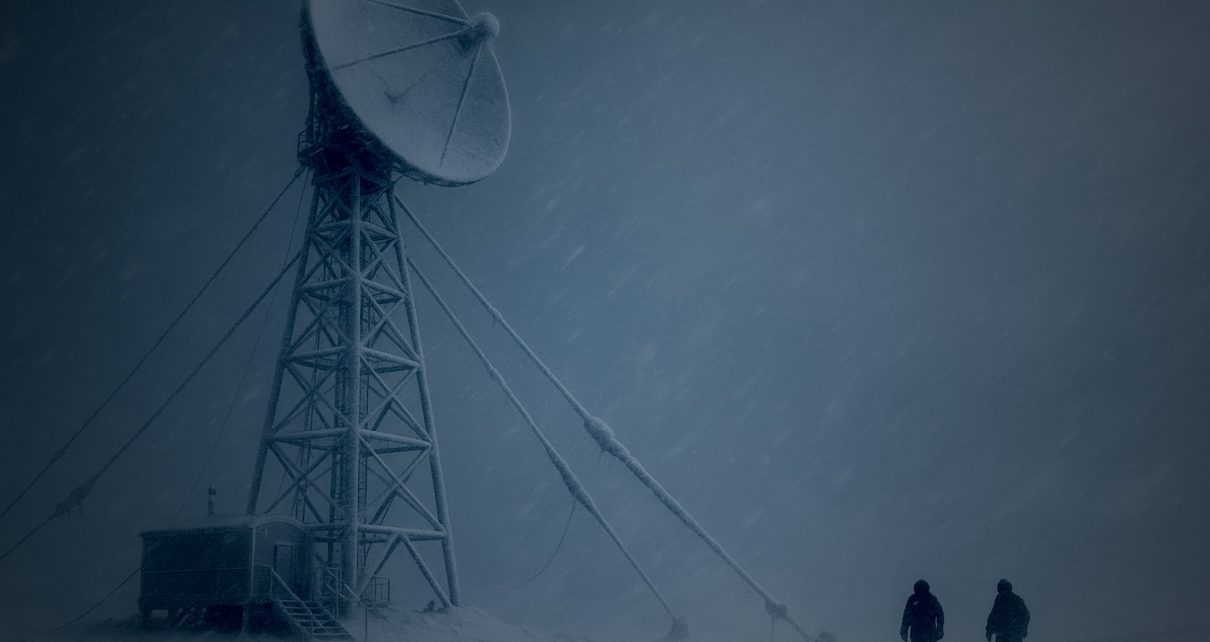
Cover photo: A radio tower in Canada’s arctic, (2025), by Marcus Wong via ChatGPT.
Disclaimer: Any views or opinions expressed in articles are solely those of the authors and do not necessarily represent the views of the NATO Association of Canada.