The world at present is situated before an interchange between growing geopolitical tensions and surging national defence budgets. Albeit, the cycle is complicated by the current Climate Crisis. It is no longer weapons or foes in which the battlefield is defined, but the environment itself. Modern armed forces, including Canada’s, must therefore confront threats emerging from environmental degradation at the same time as they are tasked with defending against conventional security challenges.
Due to this fundamental shift in the nature of security, there needs to be a reconsideration of what warfare entails. The traditional notion of warfare is defined as, “an activity undertaken by a political unit (such as a nation) to weaken or destroy [one] another,” through the denial or destruction of the environment to the enemy. At the end of 2025, the Council on Foreign Relations (CFR) released their annual conflict watch for the succeeding year, reminding us that the threat of conflict is always present; but moreover, it underscores the destructiveness and longevity of ongoing conflicts such as in Ukraine, Gaza, or Sudan.
These prolonged conflicts highlight the environmental consequences of modern warfare. It would not be difficult to imagine how these conflicts altered their respective environments: destroying ecosystems, crippling infrastructure, and releasing vast amounts of greenhouse gases. For example, a study in April 2024 estimated that the War in Gaza could produce an astonishing 31 million tonnes of carbon dioxide equivalents (CO2e). The detrimental impacts of warfare extend far beyond the direct participants; it encompasses the pre-conflict military buildup and the extensive reconstruction that follows.
Collectively, military activities account for 5.5 percent of the emissions globally. For example, the Canadian Armed Forces (CAF) alone comprises nearly 60 percent of the government’s total emission from 2019 to 2020. This number is predicted to rise even higher, as Canada and NATO have pledged as of June 2025 to raise their defence spending to at least five per cent of annual GDP.
In general terms, it is often difficult to conceive of the concept of warfare in accordance with the needs for environmental sustainability, since the two are fundamentally at odds. Yet it is necessary. With Canada’s Net-Zero Emissions Accountability Act, the federal government has committed to cut Canada’s national emissions in half by 2035, and reach net-zero by the mid-century. The question is: how does Canada build a green and sustainable military force?
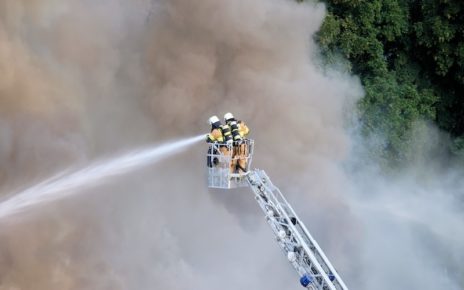
One must first address how climate change has developed the needs of the modern soldier. Climate change is producing a growing division between Southern and Northern Canada. In Southern Canada, the climate crisis has so far exacerbated environmental extremities, exposing local communities to forest fires, floods, and hurricanes. The CAF is increasingly called to domestic Humanitarian Assistance and Disaster Relief (HADR) roles in these regions. In Northern Canada, however, the challenge is fundamentally different. For context, the northern seaboard consists of 70% of Canada’s total coastline. The event of rising temperatures have opened previously unviable icebound channels between the northern archipelagos, thereby creating seasonal and permanent trade routes through the Northwest Passage. The new economic discoveries in the Arctic have since created new tensions amongst interested nations, not least by China.
The issue of Canada’s sovereignty is unquestionable in Toronto or Ottawa; it would however be less certain in the North, due to the unchartered nature of the territories. China, despite not being an Arctic nation, expressed its desire to become “polar great power” by 2030, and so far attempted to expand its role and reach in the region. A threat to Canada’s sovereignty has thus demanded a stronger approach, requiring military presence in the North for Canada to defend itself against foreign encroachment.
Thus, in recent years, the CAF has steadily expanded to develop and expand the armed forces in a sustainable manner through infrastructure renewals and equipment procurement. Earlier in 2023, the Department of National Defence (DND) outlined the Climate Resilience, Environmental Sustainability Science and Technology (CRESST) strategy, in alignment with their target of reducing emissions by 40 percent before 2025. The study defined three objectives: (1) research climate change mitigation and environmental sustainability; (2) assess challenges, risks, and opportunities; and (3) support climate change adaptation and resilience. The goal of the strategy is to invest in innovation and reduce the impact of climate change. The CRESST builds upon existing initiatives, including the Defence Energy and Environment Strategy (DEES). The DEES possesses four themes: energy efficiency, reduced climate change risks, sustainable property, and most importantly, green procurement.
Although billions of dollars are pledged under Canada’s updated security policy,Our North, Strong and Free,new investments into equipment are unlikely to have any impact until the foundational issue of basic infrastructure is addressed. Simply put: “As the climate changes, long-lived infrastructure and equipment assets will face different operating conditions than those for which they were designed”. Currently, Energy Performance Contracts (EPC) are developed in National Defence facilities across Canada. The EPC projects are expected to reduce the annual energy consumption of the DND and CAF by nearly $20 million per year and emissions by 64,000 tonnes annually. The DND accounts for “…more federal emissions from buildings than any other source by far, [or] about 466 kilotonnes of carbon dioxide equivalents… roughly half of the total from all government structures”.
The armed forces’ hardware is also confronted by the physical challenges precipitated by the climate crisis. For example, airplanes fly better and more efficiently in cooler air. The increase in outside air temperatures reduces weight limit on flights, affecting range or payload capacity. Remediation is constrained since Canada does not possess a domestic airline industry. The federal government has since sought suppliers for lower-carbon aviation fuel as an alternative to purchasing or developing new aircraft models. So far, CAF acquired four million litres of sustainable fuel, to be blended with conventional aviation fuel, in a bid to decrease its aviation carbon footprint.
Furthermore, DND vehicles have roughly emitted 547 kilotonnes of greenhouse gases from 2023 to 2024, which is the most out of any government department. DND civilian vehicles would add an additional 19 kilotonnes. The DND has since ventured to switch its civilian fleet to hybrid or electric vehicles; but options for military vehicles, on the other hand, are far more limited. Industry Canada has presently decided to procure new, electric armoured vehicles. So far, a $49.9 million project is currently entrusted to General Dynamics Land Systems’ Canadian subsidiary based in London, Ontario. The project seeks to design and produce a LAV with an electric drive and an onboard power plant capable of generating a megawatt of electricity. Moreover, General Motors’ defence division is also creating a new hybrid truck that runs on batteries. Tactically, both designs are sound: electric models are far quieter than combustion engines, as well as generating a smaller heat signature on the battlefield.
In some respects, Canada’s progress would appear to be far too slow to adapt to the scale and pace of the threats it now encounters. Nevertheless, the Canadian Armed Forces has emerged as a leader amongst NATO peers, demonstrating that environmental sustainability and military effectiveness does not have to be mutually exclusive. Although it remains to be seen whether the present expenditure trajectory will bear fruit; Canada appears, for now, to be moving in the right direction.
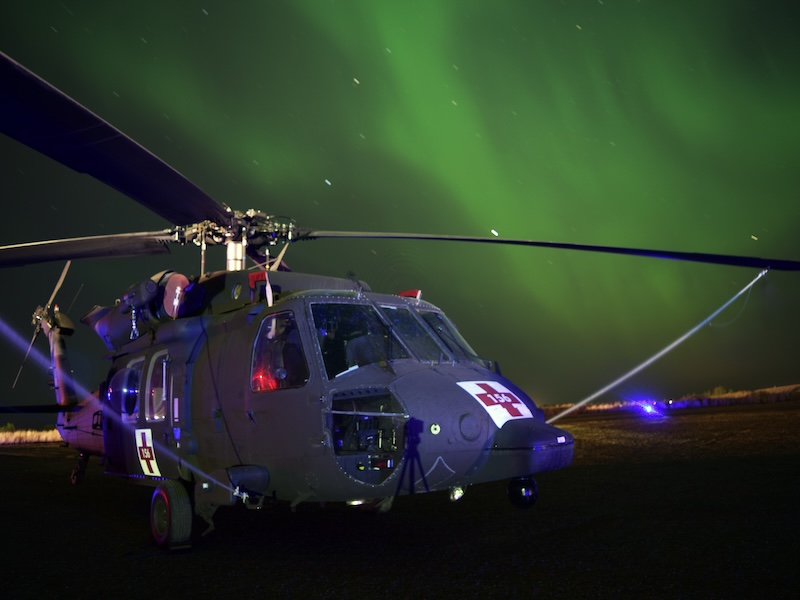
Image credit: Oregon Army National Guard medevac unit trains with Canadian armed forces during Maple Resolve 2015 (photo ID 150513-Z-AM123-002), depicting an Oregon Army National Guard medical evacuation unit training with the Canadian Armed Forces during Exercise Maple Resolve 2015 in Canada, by MC2 Robert Stirrup via Wikimedia Commons. Licensed under CC BY-SA 2.0.
Disclaimer: Any views or opinions expressed in articles are solely those of the authors and do not necessarily represent the views of the NATO Association of Canada.