In Africa’s Sahel Region, however, the threat of terrorism is very much at the forefront. In 2025, 70% of global terror deaths were concentrated in five countries, four of which are located in Africa: Burkina Faso, Niger, Nigeria, and the Democratic Republic of Congo. The rising prominence of the Islamic State (IS) in the Sahel poses a complex challenge to NATO, specifically due to the organization’s decentralized and cross-border structure. Capitalizing on weak political environments, the increase in IS violence can render Allied economic ventures unviable in the mineral-rich region, while pressuring NATO’s Southern Flank via mass migration. Alliance members, such as Canada, have made the consolidation of critical minerals a clear strategic priority, illustrated by Ottawa’s release of its first-ever African Strategy in 2025. While from the Canadian perspective, jihadist violence in the Sahel may appear tangential at a glance, Ottawa’s ambition to increase its economic presence in Africa is affected by the rise of insurgent activity. Therefore, despite its geographic removal from the Southern Flank, Canada has an interest in the development of a coordinated strategy designed to address the threat of terror. This can be achieved through alliance-level engagements with African partners, similar to the model employed in the Indo-Pacific, collaborating on security to protect economic interests.
A key factor in the region’s increased volatility is the spread of Russian influence. Moscow, through careful political calculation, has manipulated anti-Western sentiments to become the key security guarantor of the Sahel, replacing former colonial powers such as France. In exchange for lucrative mining rights, Russia has provided security guarantees enforced by its Africa Corps, the Wagner Group’s state-absorbed successor. In practice, however, Russian mercenaries are concerned primarily with regime protection instead of civilian security. The security vacuum exacerbated by newfound Russian influence became immediately evident in 2022 when French forces were expelled from Mali. This same year, the Islamic State Sahel Province (ISSP) earned de facto control of Mali’s northeast for the first time. As French influence was replaced by Moscow’s in Burkina Faso and Niger, the Islamic State again followed suit, establishing a presence in both states. There is a clear link between Russia’s expanded sphere of influence and the rehabilitation of the Islamic State, ultimately amplifying regional insecurity while asserting the Kremlin’s control of critical resources.
In its 2025 African Strategy, Canada underscores the strategic importance of the continent and the connections to its own national security. In Ottawa’s view, Africa is a key setting of the global green energy transition due to its high concentration of critical minerals and solar capacities. This economic utility is similarly recognized by rival states, adding a deeper layer of strategic implications extending beyond trade. China and Russia, for example, have a strong foothold on the continent and are well positioned to capitalize on mining rights, providing an edge in the competition for niche minerals. Canada recognizes the security consequences associated with monopolized resource extraction, stating that “regional and global security are at stake”. A key takeaway from the strategy is that Ottawa understands the fusion of its economic and security interests in Africa, illustrating how security environments have become interconnected globally. Moreover, the profits generated from Russian mining ventures in the Sahel have provided the Kremlin with significant sanction-proof revenue used to fuel its war in Ukraine. This marks a throughline connecting NATO’s security calculations southward to Africa.
Increased Allied presence in Africa becomes unviable if the Sahel continues its devolution into the next stronghold of jihadism. European NATO actors, like Germany and the UK, share Canada’s interests on the continent and have similarly released sovereign African strategies, each hinged upon key themes of global transition and economic opportunity. While it may be strategically in vogue to recognize this emerging theatre, the present rise in terror adds an asterisk to any commercial ambition. The spread of the Islamic State in the Sahel has been prevented most effectively by other jihadist groups, notably the Al-Qaeda linked Jama’at Nusrat al-Islam wal-Muslimin (JNIM), which seeks to assert its own rule in the region and deter foreign investment. Overland trade routes in Mali and Senegal have been a focus of JNIM violence in recent years, designed to disrupt the flow of petroleum and inflict economic paralysis. Simultaneously, foreign-owned business interests have been targeted by the group through disruptive attacks and widespread kidnappings. If Canada and its NATO allies recognize the economic value of increased African relations, the current security vacuum fostering terrorism must be addressed.
Beyond economic considerations, widespread jihadism in the Sahel threatens NATO’s Southern Flank. Competition between warring extremist factions paired with increased attacks on civilians have amplified the region’s preexisting displacement crisis. Millions of people have fled their homes to head northward, first to North Africa, then typically on to Europe via illegal channels, straining the immigration systems of European countries due to the unpredictability of influx patterns. This sort of migration poses a direct threat to the national security and sovereignty of Southern NATO allies, notably Spain, which has received a significant number of asylum-seeking refugees. In August, 60,000 people poured into the Spanish port of Ceuta, putting massive strain on Madrid’s domestic security and humanitarian apparatuses. The rise of unchecked Jihadist violence in already vulnerable Sahelian countries will intensify this phenomenon, increasing the pressure on NATO’s Southern Flank while boosting the rise of far-right, anti-immigration political sentiment
Ottawa has identified expanded diplomatic relations with Sahelian states as a driver of its African strategy, appointing a Special Envoy to the region and strengthening its ties with multilateral institutions like the African Union. While an important first step, much is left to be desired when it comes to the securing of the region. This is where the integrated security apparatus of NATO can anchor political ambitions in a strategy of stabilization. In the Indo-Pacific, the Alliance has proven itself adaptable by increasing relations with like-minded states, essentially conducting diplomacy as an institution. The notion that global threat landscapes span multiple theatres and can no longer be compartmentalized, crystalizes the need for NATO to project its power southward. The alliance has already taken steps to do so, engaging with North African states on security issues through the Mediterranean Dialogue. The expansion of this presence deeper on the continent with governments and institutions capable of restoring stability in the region thus presents itself a natural next step. .
The military expertise and intelligence capabilities of the Organization would provide these regional actors with the tools needed to deal with terrorism, thus paving a path for Western investment. Canada understands the strategic value of African partnerships and has made moves in the right direction; its next step must be to address the fraught security situation in the Sahel. By utilizing the coordinated security apparatus of NATO, allies can anchor economic ambition in security foresight, evolving alongside the changing threats it faces. Establishing connections with African states and partners allows NATO to project stability southward, insulating Allied interests from the rise in jihadist violence while preparing itself for the next theatre of great power competition.
Disclaimer: Any views or opinions expressed in articles are solely those of the authors and do not necessarily represent the views of the NATO Association of Canada.
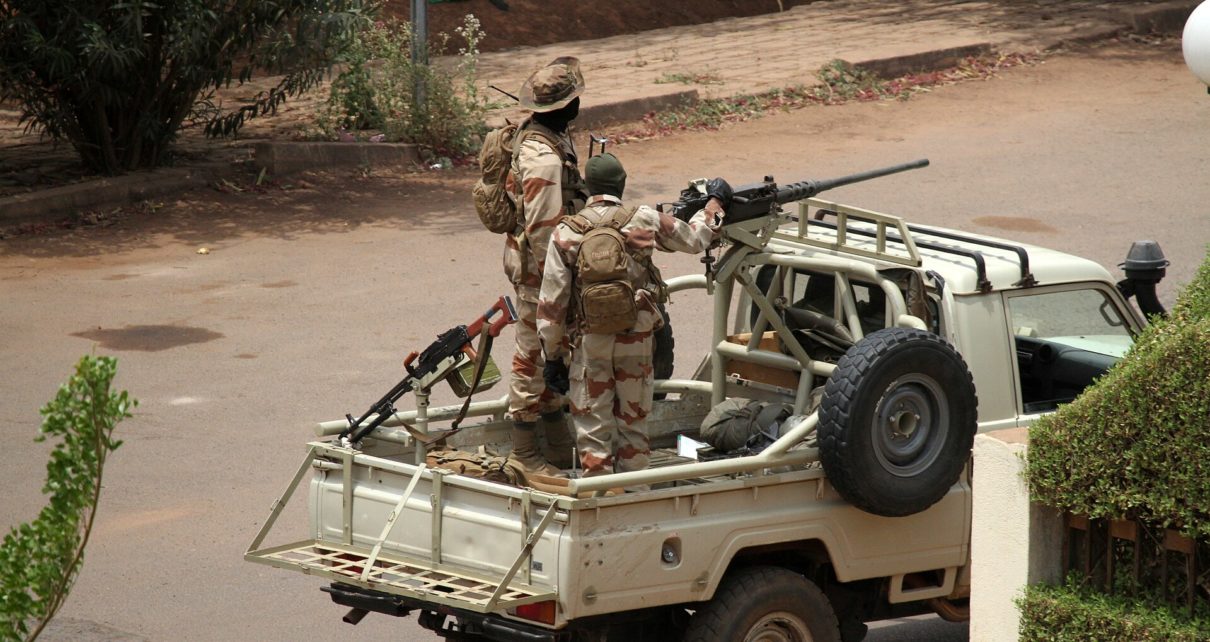
Photo: https://commons.wikimedia.org/wiki/File%3AMalian_soldiers_in_Bamako_during_2012_coup.jpg