Extreme weather in Canada has become both an environmental challenge and an information crisis. As record-breaking wildfires, floods, and heatwaves sweep across the country, Canadians are confronted with accelerating climate impacts and a parallel surge in misinformation and greenwashing that obscures the causes of these events, distorts policy debates, and weakens democratic cohesion.
In recent months, debates over proposed anti-greenwashing rules in Bill C-59, which would require companies to substantiate environmental claims, have highlighted how rapidly Canada’s climate-information landscape is evolving. Greenwashing, the practice of presenting misleading or exaggerated environmental commitments, now sits at the centre of this shift. Climate denialism, once the dominant form of disinformation, has given way to subtler and more strategic narratives. These include corporate sustainability claims that mask harmful practices, such as selective net-zero pledges or “transition fuel” branding, along with political messaging designed to fuel uncertainty or backlash, and real-time misinformation that spreads during crises when people are most vulnerable. These narratives may look different from the climate denial of the early 2000s, but they are no less dangerous. In many ways, they are more effective.
The Rise of Climate Misinformation in Canada
Climate misinformation in Canada has shifted dramatically over the last decade. Although outright denial of climate science has receded, it has been replaced by more insidious forms of narrative manipulation. Rather than attacking science directly, today’s misinformation campaigns tend to either cast doubt on attribution science (“Are we sure this wildfire is climate-related?”), undermine the legitimacy of climate policy (“Carbon pricing does not address emissions and is just a tax grab”), deflect responsibility away from high-emitting industries, or reframe climate action as economically destructive or socially divisive.
This evolution reflects a broader global trend. As the scientific consensus on human-caused climate change became unassailable, opponents shifted from denying the existence of climate change to contesting attempts to stop it. The result is a fragmented information environment where scientific facts must compete with emotionally charged narratives engineered to delay, confuse, or polarize.
How Extreme Weather Creates the Perfect Conditions for Disinformation
Unfortunately, extreme weather events have become part of Canada’s seasonal cycle and are no longer rare. With each crisis also comes a spike in misleading claims, where wildfires are blamed on “arson conspiracies”, floods are attributed to mismanagement rather than rising sea levels or extreme rainfall, and heatwaves are downplayed through cherry-picked temperature charts circulating on social media.
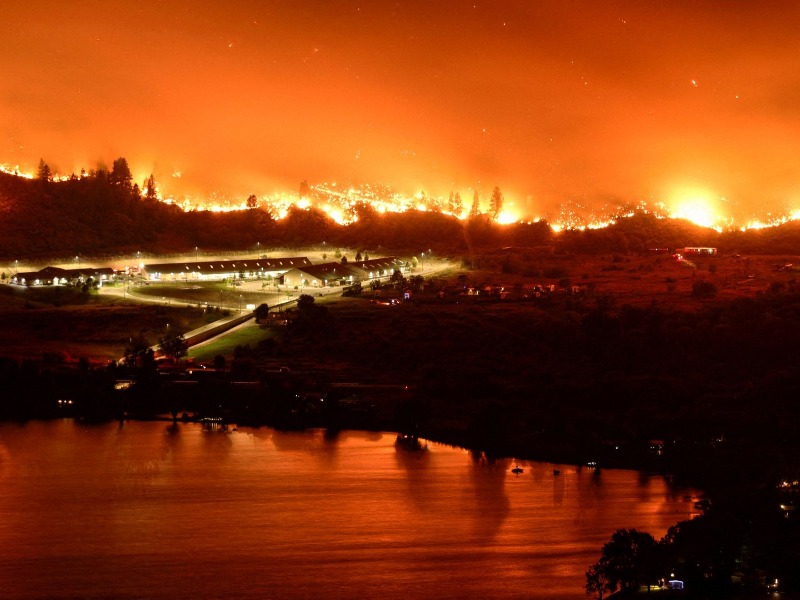
Crises create what communication experts call information vacuums. During emergencies, the public is desperate for answers, and when official information is delayed, inconsistent, or overly technical, misinformation fills the void. The 2023 wildfire season in British Columbia and Alberta illustrated this dynamic vividly. As smoke blanketed major cities and evacuation orders were issued at unprecedented scale, misinformation claiming the fires were intentionally set circulated online. In multiple cases, isolated incidents of arson were elevated out of context to cast doubt on the role of climate change in creating the dry, unstable conditions that fueled the fires. The more chaotic the environment, the stronger the appetite for simple explanations, and disinformation actors know this.
Corporate Greenwashing and Political Narratives: Disinformation in Plain Sight
Greenwashing has arguably become one of the most politically consequential forms of climate disinformation in Canada. Unlike misinformation spread by anonymous social media accounts, greenwashing comes from trusted institutions: corporations, financial actors, and political leaders who frame environmentally harmful activities as climate-friendly. Examples include marketing “natural gas” as a low-emission or “transition” fuel despite its methane footprint; corporate net-zero pledges without credible transition plans; selective disclosures that highlight minor environmental initiatives while ignoring major emissions sources; and political rhetoric that claims climate policies are uniquely responsible for inflation or rising household costs.
Of these examples, perhaps the most prominent one on recent display was the debate over the Federal consumer carbon tax. For months, the Federal Conservative party leader Pierre Poilievre aggressively campaigned against this policy, claiming it to be completely ineffective and nothing but an additional tax on consumers that increases food prices. What Mr.
Poilievre and his counterparts would conveniently omit in their criticism of the policy, however, is that 80 per cent of Canadian families received more in rebates than they paid in pollution pricing in 2024, because major polluters bore the highest costs under the system. Yet, the Federal Conservative party’s hammering of this policy was incredibly successful, so much so that the very first policy measure Prime Minister Mark Carney enacted upon taking office was eliminating the consumer carbon tax, citing that it had become “too divisive.”
Altogether, greenwashing thrives because it leverages institutional credibility while obscuring meaningful scrutiny. It also exploits the public’s desire for climate leadership, presenting an illusion of progress while delaying systemic change. Political narratives further reinforce this challenge. During extreme weather events, some elected officials emphasize individual responsibility (e.g., “better forest management”) rather than addressing the climate-driven conditions that make wildfires and floods more severe. Others use momentary public frustration to weaken or delay climate legislation, arguing that during economic uncertainty, environmental policy is an unaffordable luxury.
These narratives do not need to deny climate change. They simply need to create enough doubt, division, or delay to weaken action.
Why Climate Disinformation Threatens Public Trust — and What Canada Must Do About It
Climate-related disinformation is both an environmental threat and a national security concern. When misinformation spreads faster than official updates during wildfires or floods, they undermine evacuation compliance, erode trust in emergency management, and make coordinated response more difficult. Misleading narratives also weaken public confidence in government and science; when citizens cannot agree on basic facts, policy debates become unmoored from evidence, making informed democratic decision-making nearly impossible. These dynamics have real geopolitical implications as well. Foreign actors increasingly exploit climate crises to circulate divisive narratives — from blaming renewable energy for grid failures to portraying environmental policies as economically ruinous — in an effort to discredit democratic institutions and inflame social fracture.
Because these risks are now inseparable from the climate crisis itself, building climate resilience requires building information resilience. Therefore, strengthening Canada’s climate-information ecosystem must become a core policy priority. Enforceable standards for corporate climate claims can curb greenwashing and prevent deceptive sustainability branding from shaping public opinion. Emergency management agencies need dedicated strategies for real-time misinformation monitoring and rapid communication during extreme weather events, while social media platforms should be required to act on demonstrably false claims that jeopardize public safety. Finally, public education, especially for youth and communities disproportionately targeted by misinformation, must improve climate literacy and help Canadians evaluate the claims they encounter.
As Canada faces more frequent and intense climate events, the battle for accurate information will determine the success of climate policy itself. Climate change is no longer solely an ecological crisis; it is an information crisis that shapes how the public interprets risk, evaluates leadership, and trusts institutions. Without stronger anti-greenwashing rules, coordinated emergency communication, and platform accountability, disinformation will continue to delay the response Canadians urgently need.
Any views or opinions expressed in articles are solely those of the authors and do not necessarily represent the views of the NATO Association of Canada.
Photo retrieved from CIGI.