Introduction
In 2026, Australia, a G20 nation with universal healthcare and a childhood vaccination rate that, on paper, sits at 93.4% among five-year-olds, is living through its largest diphtheria outbreak since national record-keeping began in 1991. The disease is prevented by the diphtheria-tetanus-pertussis vaccine, given routinely to children in Australia and most of the world. If a vaccine-preventable disease can spread this widely in a country with Australia’s resources, what does that say about how NATO measures a nation’s readiness for a health crisis?
Diphtheria is a bacterial infection of the throat or skin that spreads through coughing, sneezing and close contact, and in severe cases can block the airway or cause death. It is not the only bacterial infection concentrated in remote Indigenous communities: acute rheumatic fever, which follows untreated group A streptococcal infection, occurs there at some of the highest rates in the world, and falls when housing and crowding improve. Routine childhood vaccination had made diphtheria a disease of the past in Australia, until 2026. By late May, at least 248 cases had been notified nationally since January, more than 94% of them among Aboriginal and Torres Strait Islander people, and the total roughly 30 times the usual annual average. On May 21, the federal government announced a funding package to deploy additional doctors and nurses and purchase more vaccines and antibiotics, and the next day Australia’s Chief Medical Officer declared the outbreak a Communicable Disease Incident of National Significance. This isn’t a new or emerging disease. It spread through a population whose vaccination coverage looked adequate on paper, exploiting lapsed booster coverage and long-standing gaps in access that reopened quietly enough to cross four jurisdictions before drawing national attention.
NATO’s Health Resilience Baseline
This immunization gap matters to NATO for a specific reason. Australia is not an Alliance member but a close partner, and its civil preparedness rests on the same logic NATO’s baseline requirements encode. At the 2016 Warsaw Summit, allied leaders agreed to seven baseline requirements against which member states measure their national resilience, one of which is the ability to deal with mass casualties and other disruptive health crises. NATO adopted these requirements because civil preparedness is meant to complement military defence by reducing the vulnerabilities an adversary could exploit in peacetime, crisis, or conflict. The underlying logic is that every ally’s individual resilience reduces the vulnerability of the Alliance as a whole. In practice, the health baseline requirement was designed to answer a narrow, wartime-shaped question:
Can a country increase the number of hospital beds, mobilize medical stockpiles, and coordinate a mass-casualty response if conflict, disaster, or attack floods its health system all at once?
That is a legitimate concern, but it is also the wrong instrument for catching a slow-building erosion like Australia’s. The failure was not a sudden shock but a gradual, geographically concentrated drop in routine vaccination coverage and primary care access that national-level statistics can mask entirely.
What the Metrics Miss
NATO regularly assesses the overall state of the Alliance’s resilience against these baseline requirements. The problem is that a health system can score well on stockpile levels, surge-bed capacity, and emergency-operations protocols while still failing the populations most exposed to disruption. An emergency medicine registrar at Royal Darwin and Palmerston Hospitals describes what this looked like on the ground for Indigenous communities in the remote Northern Territory, where most cases occurred. Overcrowded housing accelerated transmission, while limited access to clean water and sanitation made it harder to contain. High rates of skin infection caused by Staphylococcus aureus, the bacterium behind most skin sores and abscesses, gave the diphtheria bacteria an entry point, people who had gone years without a booster had lost their vaccine-induced immunity, and geographic isolation limited access to prevention and treatment. None of these risks were new or hidden. Each was a long-documented feature of life in these communities, and none appears in the stockpile and surge metrics by which national preparedness is judged. That same account describes emergency departments rapidly developing clinical guidelines mid-outbreak, isolating exposed staff, and absorbing a heavy contact-tracing burden. None of these strains shows up in a national stockpile count either. By measuring only what a health system can mobilize in a crisis, and not who it already reaches, NATO’s metrics overlook exactly the conditions that turned a preventable disease into a national emergency.
Voices from the Frontlines
Two Indigenous health organizations closest to the outbreak, the Australian Indigenous Doctors’ Association (AIDA) and the Aboriginal Medical Services Alliance of the Northern Territory (AMSANT), make the same point from a different angle. AIDA has argued that the crisis must be treated as a clinical and equity problem at once, tying the outbreak’s severity to gaps in primary care access, immunisation follow-up, housing, wound care, and culturally safe services. It also stressed that the response should not blame communities and should instead focus on rebuilding trust and keeping care consistent over time. AMSANT made a similar case from the frontlines, noting that outbreaks like this hit hardest the people who already face the greatest barriers to healthcare. It argued that Aboriginal Community Controlled Health Services are best placed to close that gap, because they are local, familiar, and already trusted by the people they serve. None of this is measurable in a bed-capacity figure or a stockpile audit. These gaps only become visible when an assessment asks who is protected, and who has been left behind for years.
A Structural Blind Spot
The gap between how prepared a country looks in national metrics and how well its most exposed populations are protected is the structural blind spot this outbreak exposes. A country can look fully prepared for a mass-casualty health event on paper, with the surge capacity and supplies the baseline requirement asks for. Meanwhile, one population within it may already be unprotected against the kind of health shock a war or hybrid attack would bring. If Australia’s civil-preparedness posture can look sound in aggregate while missing a 30-fold spike concentrated almost entirely in one population, it is worth asking what else that same measurement gap might be hiding in allied states.
Implications for NATO and Future Preparedness
The solution does not demand scrapping the baseline requirement, instead it requires a broader scope. NATO’s civil preparedness assessments should place population-level health equity indicators, such as immunization coverage disparities, remote and regional access gaps, and trust in health systems among historically underserved communities, alongside the existing stockpile and surge metrics. The United States recommends a diphtheria booster every 10 years for adults and most Canadian provinces use the same interval, which is what Australia already recommends, so the gap lies in delivery rather than policy. NATO’s updated 2026 health requirement already commits Allies to ensuring essential healthcare for the population, but none of its objectives measure who receives that care. These indicators would close that gap.
How a society handles a gradually escalating, vaccine-preventable outbreak is a real test of how its health and governance systems would handle a wartime or hybrid-threat health shock. It is arguably a more honest test than a tabletop exercise. The outbreak is happening in real time, against a real population, with real consequences for the people least able to advocate for themselves. Australia’s 2026 outbreak shows what a framework like NATO’s is not built to see. By adding health equity indicators to its resilience assessments, NATO can help allies catch the next gap like this before it becomes an outbreak.
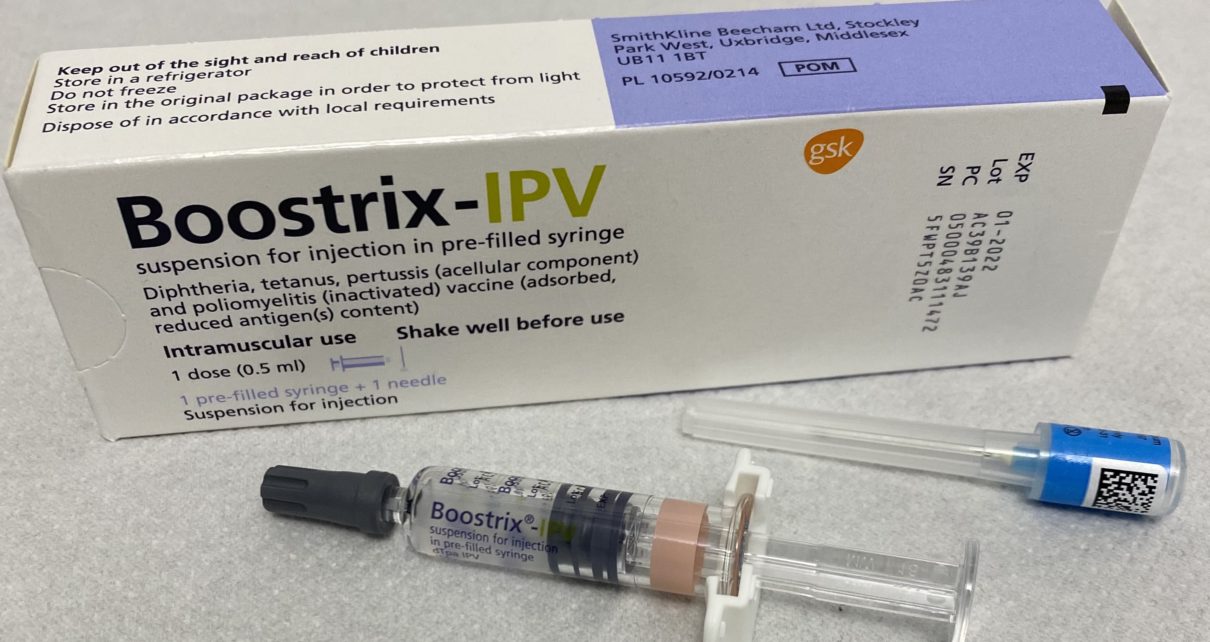
Photo: Boostrix-IPV, a diphtheria, tetanus, pertussis and polio booster vaccine (2021), by Whispyhistory via Wikimedia Commons. Used under CC BY-SA 4.0
Disclaimer: Any views or opinions expressed in articles are solely those of the authors and do not necessarily represent the views of the NATO Association of Canada.