

NATO Association of Canada
The mission of NATO Association of Canada is to promote peace, prosperity, and security through knowledge and understanding of the importance of NATO.
We strive to educate and engage Canadians about NATO and NATO’s goal of peace, prosperity and security. NATO Association of Canada ensures that we have an informed citizenry able to contribute to discussions about Canada’s role on the world stage.
As a leading member of the Atlantic Treaty Association (ATA), NATO Association of Canada has strong and enduring ties with sister organizations in many of the alliance countries, as well as members of NATO’s “Partnership for Peace” and “Mediterranean Dialogue” programmes. The NAOC has had a leading role in the recent transformation and modernization of the ATA, and helped to create and develop the Youth Atlantic Treaty Association (YATA).
The NAOC has strong ties with the Government of Canada including Global Affairs Canada and the Department of National Defence. We are constantly working to create and maintain relationships with international organizations such as the World Bank Group, the European Bank of Reconstruction and Development, NATO Headquarters, the International Criminal Court, and other prominent international NGOs and think tanks.
Related Articles

POWER PLAY IN THE ARCTIC: Part 2 – Dissecting the Arctic’s Power Struggles by State
Posted on Author Marcus Wong
*This is the second instalment of a six-part series. As each Arctic state strengthens its security and defence capabilities in the High North, there is likewise an overall intensification of geopolitical rivalries, an expansion of coastal states’ territorial and energy ambitions, increasing clashes of interest, and a corresponding potential for instability. Problematically, NATO lacks an Arctic policy, Read More…
The Middle Power Moment: Canada’s WPS Opportunity in the Indo-Pacific
Posted on Author Isabelle Zhu
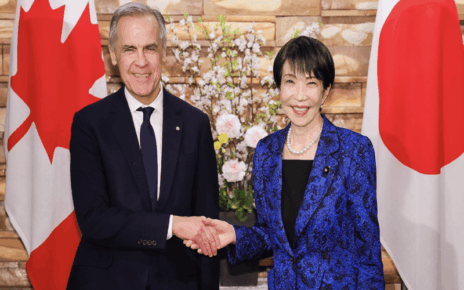
Canada’s shift to the Indo-Pacific for trade, economic, and defence opportunities is a strategic pivot away from the United States to create key partnerships and establish diplomatic ties. This also highlights an avenue for Canada to reaffirm its commitment to the broader values and principles represented by the Women, Peace, and Security (WPS) agenda, where the US appears to have abandoned the cause. Isabelle Zhu argues that in this new geopolitical landscape, Canada can leverage its soft power and emerge as an engaged and dependable ally from security and defence to trade and energy, but also in principles and values, which contributes positively to Canada’s normative reputation and international visibility.

Cyber Security and Emerging Threats
Defense
Development
Diplomatic Relations
Global Governance
International Law & Policy
Peace & Conflict Studies
Rights
Society
Steven Chadwick
The Middle East and North Africa
Promised Land or Apartheid State: Israeli Settlements & International Law – Part 2 of 2
Posted on Author Steven Chadwick
In Part II, Steven Chadwick discusses the legality of Israeli settlements in the West Bank with reference to the Fourth Hague Convention in addition to several UN Security Council Resolutions.