*This is the fourth instalment of a six-part series. Canada faces a number of challenges beyond those experienced by the Canadian Armed Forces that have further contributed to its inability to project sovereignty and security into the Canadian Arctic. These challenges have included: low Arctic population density, vast uninhabited areas, small remote settlements, and significant Read More…
Environment, Climate Change, and Security
Guardians of the Arctic: Indigenous Knowledge at the Core of Climate and Security Policy
Why is Climate Change Specifically Detrimental in the Arctic? As climate change has accelerated environmental risks in Northern Canada, the physical landscape as well as the security landscape is changing rapidly. The Arctic is a central indicator of climate change, as this region is warming four times faster than the rest of the world. This Read More…
Canada on Thin Ice: Securing Arctic Sovereignty
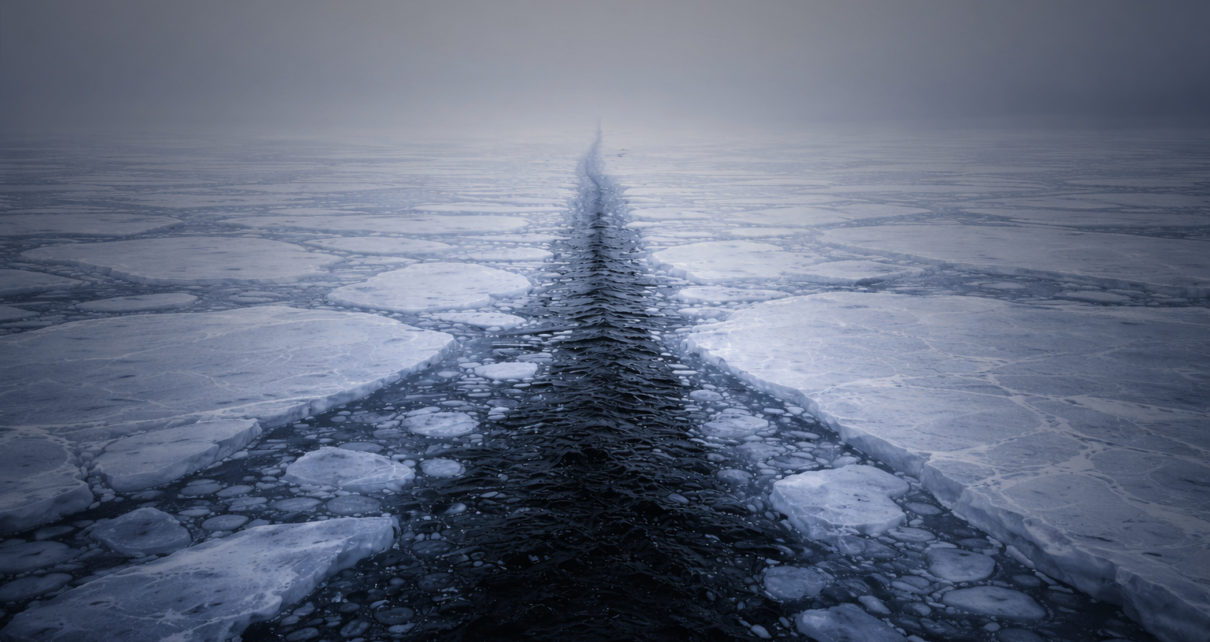
The Arctic is warming up, both in temperature and tension. In the east, Russian nuclear icebreakers – specially purposed ships designed for the ice – are carving strategic routes through once-impassable waters. China declares itself a “near-Arctic state,” with ambitions of shaping the cold pursuit of Arctic dominance. Meanwhile, Canada, steward of the world’s longest Arctic coastline – stemming more than Read More…
Brave New World: Canadian Armed Forces’ Climate Change Preparedness
Climate Change, or Climate Crisis, should it be aptly named in this scenario, has become an existential threat to our way of life as it is now. The North Atlantic Treaty Organisation (NATO), as a defensive charter, can no longer sit on the sidelines, but to act proactively, and not only to prevent, but adapt. Read More…
Rising Sea Levels: The Peculiar Case of Pacific Island Nation Tuvalu and Canada’s Arctic
Climate change is not a distant threat; it is already reshaping nations, identities, and security. While much of the world debates its consequences, the reality is inescapable for the Pacific Island nation of Tuvalu; as rising seas threaten its very existence. Located midway between Hawaii and Australia, Tuvalu may not exist in a matter of Read More…
POWER PLAY IN THE ARCTIC: Part 3 – A Policy Prescription for Canada’s Arctic Defence
*This is the third instalment of a six-part series. Given the effectiveness of the Canadian Arctic’s harsh conditions as a deterrent against security threats, for most of its history, Canada’s defence of the Arctic has been sporadic at best. At present, although Joint Task Force North (JTFN) is tasked with northern operations, there are no Read More…
Challenges in National Response Mechanisms: Climate Change Related Disasters
Canadian wildfires are observably intensifying throughout the country as discussed in my previous article. While it is extremely important to tackle this issue from the root cause through methodologies such as the Net Zero commitments and recent COP 29 negotiations, it is also important to analyze how disasters such as wildfires may be exacerbated by Read More…
US Military Climate Policy and Key Lessons for NATO
The United States military is the premier force in the NATO alliance. To uphold regional security alongside its NATO allies, it operates bases in over 80 countries around the globe. However, this power comes at a considerable environmental cost. The US military emitted ~48 million megatons of CO2 in 2023 alone. This high consumption of fossil fuel Read More…
POWER PLAY IN THE ARCTIC: Part 2 – Dissecting the Arctic’s Power Struggles by State
*This is the second instalment of a six-part series. As each Arctic state strengthens its security and defence capabilities in the High North, there is likewise an overall intensification of geopolitical rivalries, an expansion of coastal states’ territorial and energy ambitions, increasing clashes of interest, and a corresponding potential for instability. Problematically, NATO lacks an Arctic policy, Read More…
POWER PLAY IN THE ARCTIC: Part 1 – From Isolation to Insecurity
*This is the first instalment of a six-part series. Although the Arctic’s extreme environment has historically been an effective obstacle to threats to Canada’s sovereignty and security, the region is now being reshaped by climate change. In 2007 alone, over 2.5 million square kilometres of ice melted in the Arctic Circle, leaving only half of that Read More…