Canada has spent considerable time defining what it wants from the Indo-Pacific. The next challenge is demonstrating what it can accomplish there.
Mongolia offers an opportunity to do precisely that.
Prime Minister Mark Carney has argued that, in an era of great-power rivalry, middle powers need stronger networks among themselves. Canada cannot exercise influence in the same way as the world’s largest powers, but it can diversify its relationships, build coalitions around common interests and work with partners to increase their collective influence. His March 2026 address at the Lowy Institute outlined this approach to strategic autonomy and international cooperation.
Mongolia understands that imperative particularly well.
Landlocked between Russia and China, Mongolia cannot change its geography. Instead, it has spent decades pursuing a “third neighbour” policy designed to broaden its diplomatic and economic relationships beyond its two powerful neighbours.
Canada is one of those third neighbours, a relationship acknowledged in the Government of Canada’s overview of bilateral relations.
That creates an opportunity extending beyond the bilateral relationship. Canada and Mongolia can demonstrate how countries outside the ranks of the great powers can build practical partnerships that strengthen economic resilience while preserving greater strategic autonomy.
The foundation is already there.
Canada and Mongolia marked 50 years of diplomatic relations in 2023 by elevating their relationship to a Comprehensive Partnership. Canada maintains an embassy and trade presence in Ulaanbaatar, and the two countries cooperate in areas ranging from development and responsible resource management to governance, security and multilateral affairs.
Mongolia is also explicitly included in Canada’s Indo-Pacific Strategy, whose objectives include peace and security, trade and investment, supply-chain resilience, people-to-people ties and sustainable development.
The question, therefore, is no longer simply why Mongolia should matter to Canada.
It is what Canada and Mongolia should now accomplish together.
A visit to Ulaanbaatar by Prime Minister Carney or a senior cabinet minister could provide the catalyst. But the visit itself should not be the achievement. It should be judged by what it produces.
The first priority should be critical minerals and responsible resource development.
Canada brings considerable expertise in geological exploration, mining technology, finance, environmental management and responsible resource development. Mongolia possesses significant mineral resources and has an interest in diversifying both its economy and its international economic relationships.
Canada and Mongolia should establish a structured critical-minerals and responsible-mining dialogue bringing together governments, geological agencies, industry, financial institutions and investors.
Its purpose should extend beyond extracting minerals. Canada should identify where its technology, expertise, capital and environmental standards can contribute to responsible development while creating opportunities for Canadian businesses and helping Mongolia diversify its economic relationships.
Second, Canada should bring business to the table.
A high-level political visit should include representatives from Canadian mining, engineering, clean technology, agriculture and financial institutions. Diplomatic relationships can open doors, but enduring economic relationships require companies, investors and institutions prepared to walk through them.
Third, the partnership should deliberately extend beyond mining.
The Comprehensive Partnership already identifies opportunities in clean energy, energy efficiency, climate-smart agriculture, green infrastructure and other sectors. Education should be part of this expansion as well. Canadian universities and colleges can develop institutional relationships that build skills, research partnerships and lasting connections between the two countries.
Diversification should work in both directions. Mongolia wants economic relationships beyond its traditional partners. Canada increasingly wants markets and partnerships beyond those upon which it has historically depended.
Fourth, Canada and Mongolia should deepen their strategic dialogue.
Few democracies have had to think as persistently as Mongolia about maintaining sovereignty and diplomatic flexibility while living beside two major powers.
Canada’s circumstances are obviously different. But the broader question — how middle powers preserve their freedom of action in a world increasingly characterized by great-power rivalry and economic leverage — has become considerably more relevant to Canadian foreign policy.
There is also scope for deeper cooperation on peacekeeping, regional security, international law and the multilateral institutions upon which middle powers disproportionately depend. The two countries already recognize the importance of joint defence training, including Mongolia’s multinational Khaan Quest peacekeeping exercise, in their 2023 joint statement.
None of this requires Canada and Mongolia to have identical interests.
That is precisely what makes the relationship an interesting test of middle-power diplomacy.
Carney has described Canada’s emerging approach as building a “dense web of connections” and forming different coalitions around different issues. The premise is pragmatic: countries do not have to agree on everything to work together where their interests align.
Mongolia’s third-neighbour policy and Canada’s strategy of diversification therefore have something important in common. Both recognize the value of having choices.
Canada’s Indo-Pacific Strategy provides an additional reason to act. But the credibility of any regional strategy ultimately depends upon implementation.
Canada’s Indo-Pacific engagement cannot be measured solely by its relationships with the region’s largest economies. It should also be demonstrated through sustained partnerships with strategically situated countries where Canadian economic interests, expertise and foreign-policy objectives intersect.
Mongolia presents such an opportunity.
A Prime Ministerial or senior ministerial delegation should therefore arrive in Ulaanbaatar with deliverables ready: a critical-minerals and responsible-mining framework; identifiable commercial and investment opportunities; expanded educational and institutional partnerships; and a mechanism for regular strategic consultations between the two governments.
And there should be a simple test for whether the visit succeeds:
What exists after the delegation leaves that did not exist before it arrived?
A new agreement matters if it produces investment. A critical-minerals dialogue matters if it generates projects. Educational cooperation matters if it connects institutions and students. Strategic consultations matter if they become sustained rather than episodic.
That is how Canada should increasingly measure its diplomacy in the Indo-Pacific — by outcomes rather than announcements.
There is a larger principle at stake.
Canada cannot compete with great powers simply by attempting to imitate them. Mongolia cannot overcome the realities of geography. But neither country is without agency.
Middle powers can diversify. They can build coalitions. They can strengthen supply chains, establish standards and develop economic relationships that reduce vulnerabilities. Where their interests coincide, they can increase their ability to shape events rather than simply react to decisions made elsewhere.
Canada and Mongolia will not transform the international system by themselves.
But they can demonstrate something important about how countries navigate it.
Canada and Mongolia have spent more than half a century building their relationship. They now have a Comprehensive Partnership and Canada’s Indo-Pacific Strategy within which to advance it.
The next stage should be measured in results.
A high-level Canadian visit to Mongolia would be worthwhile — not because the visit itself would be the achievement, but because of what Canada and Mongolia could accomplish through it.
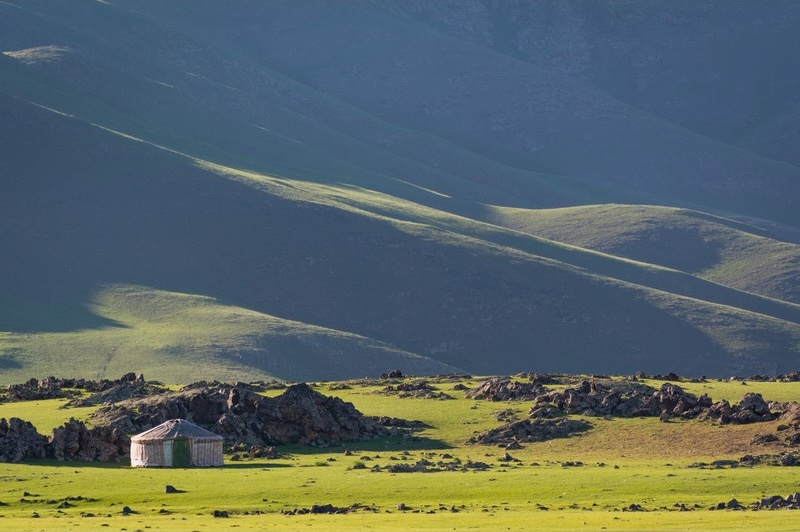
Photo: A lonely yurt against the backdrop of the Mongolian landscape (2022), by Martin Vorel via Libreshot.
Disclaimer: Any views or opinions expressed in articles are solely those of the authors and do not necessarily represent the views of the NATO Association of Canada.