In the last seven years, approximately 1,329 women and girls have died in Canada under criminal or suspicious circumstances. Data from the Investigative Journalism Bureau shows that from 2019 to 2024, there was a 46 per cent increase in women dying under mysterious circumstances. The increasing number of deaths of women has prompted discussions in Canada among researchers, advocates and police officials, as these numbers point in the direction of a Canadian epidemic of femicide. The United Nations (UN) Women defines femicide as the intentional killing of women with a gender-related motivation. The rising number of women experiencing and dying from intimate partner violence, sexual assault and domestic violence has pushed Canadian parliamentarians to introduce major revisions to the legal system for women and pass Bill C-16, known as the Protecting Victims Act. For the first time in the Canadian Criminal Code, the word femicide was formally incorporated into federal criminal law through the bill, which received Royal Assent on June 18, 2026.
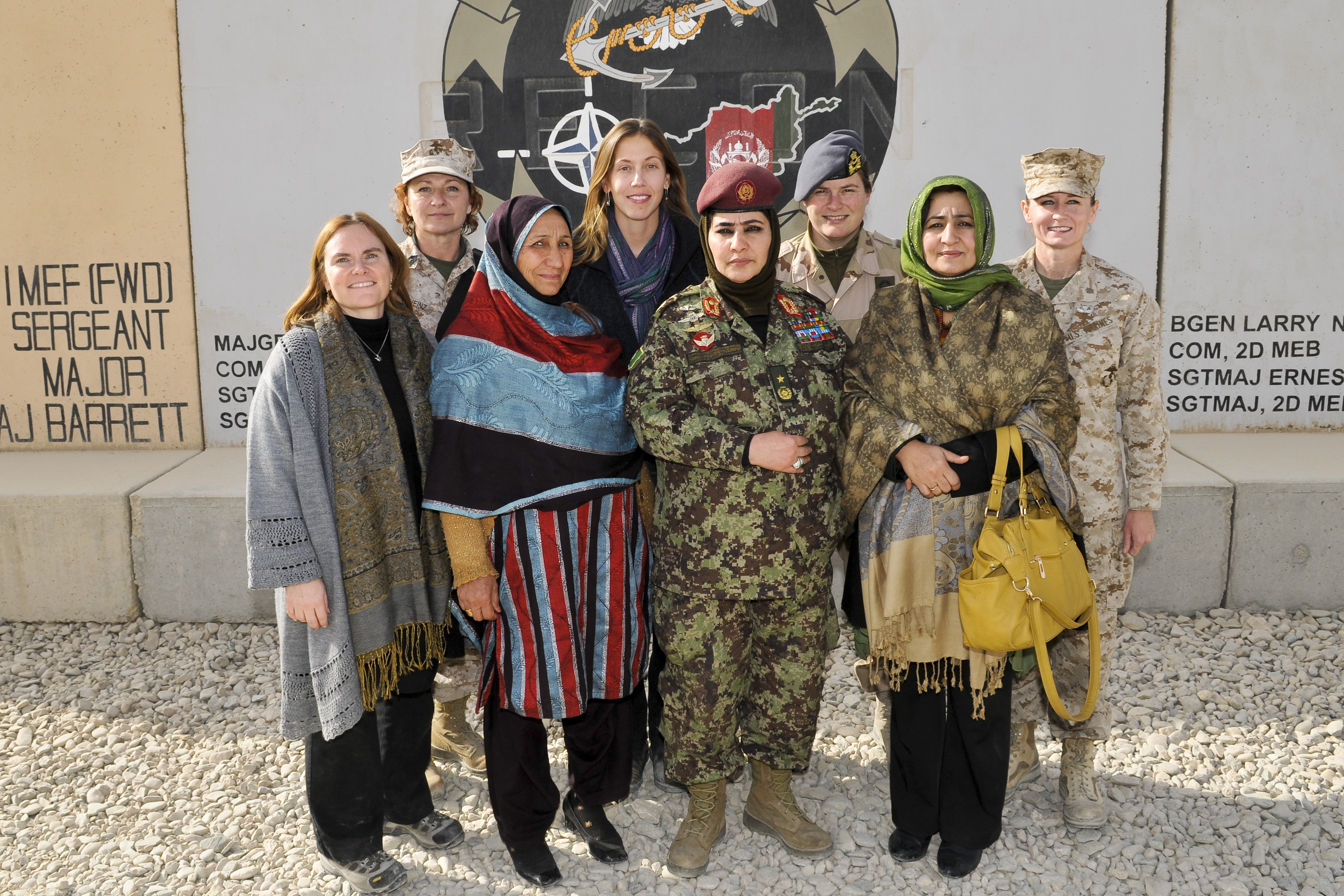
The Women, Peace and Security (WPS) agenda was launched on 31 October 2000 with the adoption of United Nations Security Council Resolution 1325 and now includes nine additional resolutions. NATO adopted its first policy on WPS in 2007, developed by Allies and partners within the Euro-Atlantic Partnership Council. NATO’s WPS agenda focuses on four strategic objectives: gender-responsive leadership and accountability, participation, prevention, and protection of women and girls. Through these objectives, NATO is committed to defending and promoting individual liberty, human rights, democracy and the rule of law while improving the safety and security of women.
NATO members are encouraged to remain committed to advancing the global WPS agenda by adopting specific goals that reflect their domestic circumstances while supporting its implementation nationally and internationally. Canada, a founding member of NATO since 4 April 1949, introduced its first National Action Plan (NAP) on WPS in 2010, its second in 2017 and its third in 2023. Canada’s approach draws inspiration from NATO’s WPS mandate and involves ten federal partners, including the Department of Justice. Canada’s 2023 NAP places greater emphasis on domestic challenges than its previous plans, recognizing that women’s peace and security must also be addressed within Canada’s borders. This raises an important question: why is NATO’s WPS mandate relevant to Canada, and how does Canada’s implementation of its own WPS agenda, particularly through the Department of Justice, relate to Bill C-16?
The relationship between international mandates and domestic legislation is important because ensuring women’s peace and security requires more than broad commitments. It requires domestic legal and institutional measures working cohesively to respond to the specific challenges that women experience. Canada’s WPS agenda provides a framework for federal partners to identify these challenges and work towards solutions. The Department of Justice has increasingly incorporated a gendered perspective by consulting experts, including women lawyers, law enforcement professionals and individuals in other government positions. Women in policymaking positions have the power to increase women’s representation in key leadership roles and promote gender justice in Canada. Increased representation of women in such roles creates more opportunities for women to bring a gendered lens to decisions and policies that impact our society. These consultations help the department understand how women are uniquely affected by different circumstances and identify ways to improve their access to justice in Canada.
NATO’s WPS mandate provides a uniform framework for its 32 member countries, while allowing each country to establish domestic priorities. This creates a balance between shared international and national objectives. Common objectives allow members to assess progress towards women’s participation, protection and security, while domestic action plans allow governments to address emerging challenges without waiting for NATO to revise its overarching policy. This approach encourages a more bottom-up process in which countries can identify problems affecting women in their own societies and incorporate them into their national agendas. It also reduces bureaucratic delays by allowing governments to respond to new challenges within their existing frameworks.
One emerging challenge is the use of artificial intelligence (AI) that threaten women’s safety and security, particularly through the creation and non-consensual circulation of sexually explicit deepfake images and videos. As women increasingly use digital platforms for professional and personal purposes, their safety online becomes an important part of their participation in public life. Bill C-16 is relevant to this discussion because it introduces the first legal protections addressing the use of AI to generate and distribute sexually explicit deepfakes without consent. Such protections are important because threats and harassment can discourage women from participating in online spaces, limiting their ability to work, communicate and express themselves freely. Laws must respond to emerging forms of violence and ensure that women can participate safely both online and offline.
When legislation does not adequately address emerging threats, women may become vulnerable to abuse in their homes, workplaces and online spaces. However, when governments listen to women’s concerns and translate them into legal protections and institutional support, women are able to maintain their safety and independence. This is particularly important because women contribute to society in numerous ways, including through paid employment and unpaid work, while continuing to face unequal opportunities, gender-based violence (GBV) and intimate partner violence. In 2024, 85 per cent of women aged 25–54 were employed in Canada. Women also contribute through unpaid work, including caring for children and adults, cooking and cleaning. The additional hours women spend on caregiving compared to men demonstrate the unequal responsibilities they continue to carry while simultaneously participating in the economy. These responsibilities can affect women’s physical and mental well-being, particularly when combined with violence, discrimination and unequal access to opportunities. In this respect, the WPS agenda is relevant beyond traditional peacekeeping and conflict settings. Its domestic application recognizes that women’s security also depends on their ability to participate in society without fear of violence, intimidation or exclusion.
The benefits of Canada’s NAP extend beyond individual protections. The Government of Canada has stated that the Canadian economy could be $150 billion larger if women’s economic participation matched men’s. This highlights the relationship between women’s security, equality and economic participation. Women who disappear or die under suspicious circumstances are not simply statistics; they are individuals who contribute to the workplaces and communities around them. Addressing violence against women is therefore not only a matter of protecting individual rights but also of preserving the social and economic contributions women make throughout their lives. Canada’s National Action Plan on WPS provides a framework for addressing these challenges, including sexual and gender-based violence, gender equality and women’s participation in public, political and online spaces. Bill C-16 can be understood within this broader effort to strengthen protections against violence and improve women’s access to justice. Its relevance lies in translating the broader objectives of women’s safety and participation into legal protections that respond to specific forms of abuse.
NATO’s WPS mandate and Canada’s National Action Plan are important because they provide a structure through which governments can identify challenges, establish priorities and evaluate progress towards gender equality. NATO’s framework establishes shared international objectives, while Canada’s domestic action plan allows the government to address challenges specific to women in Canada. Through coordination among federal partners, including the Department of Justice, these objectives can inform legal and institutional responses to violence against women. Bill C-16 is significant to this discussion because it illustrates how legal protections can respond to emerging threats and support women’s ability to participate safely in society. By strengthening women’s access to justice and addressing perpetrators’ conduct, Canada can work towards ensuring that women are not forced to live in fear but instead have the freedom and opportunity to live, work and participate in their communities with confidence.
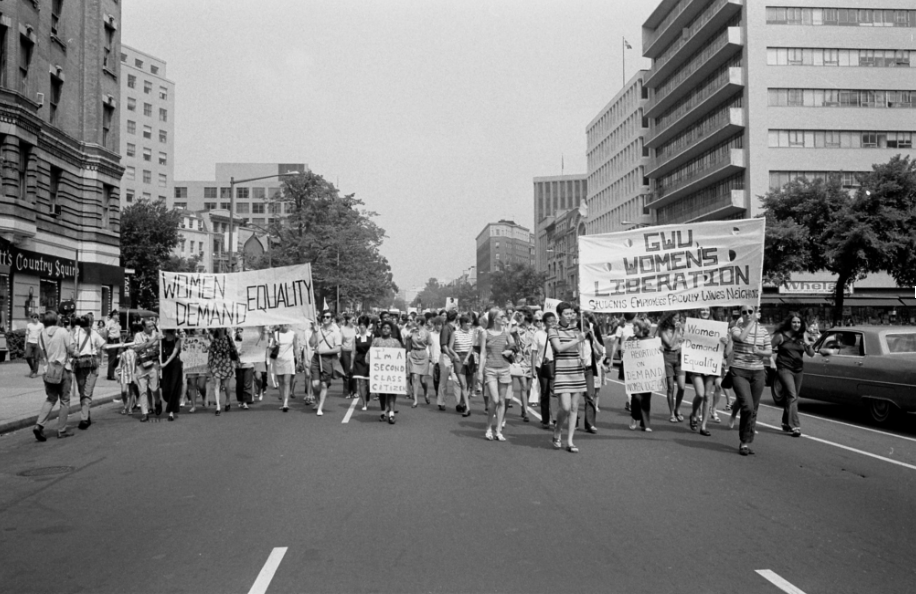
Photo: From the Library of Congress – Photo: Photograph shows women carrying banners and signs while marching down a street in Washington, D.C., during a demonstration in favor of equal rights for women. (1970), by Warren K. Leffler via the Library of Congress Prints and Photographs Division. Photo courtesy of the Library of Congress.
Disclaimer: Any views or opinions expressed in articles are solely those of the authors and do not necessarily represent the views of the NATO Association of Canada.