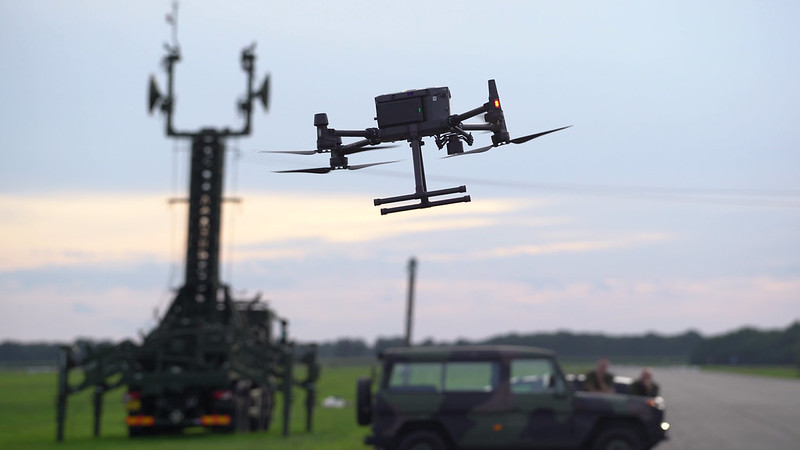
In November 2024, the FBI disrupted a plot to attack an electrical substation in Nashville, Tennessee, using a drone carrying explosives. The suspect intended to damage the facility and disrupt electricity supplies. Amid ongoing drone attacks on energy infrastructure in Ukraine, Russia, and the Middle East, the incident demonstrated that civilian energy infrastructure can become a target of drone attacks even outside active conflict zones. Although the attack was prevented, the incident raised an important question: How prepared are critical energy facilities to respond to emerging drone threats?
This question is particularly relevant to Canada, where the energy sector plays a vital role in the economy and national security. Canada has been developing and testing counter-drone technologies for years through initiatives such as the Counter-UAS Sandbox. The central challenge for Canada is therefore not the absence of counter-drone capabilities, but how to effectively apply existing and emerging capabilities to protect strategically important civilian energy infrastructure.
Canada’s Expanding Energy Infrastructure and Its Growing Strategic Importance
Canada continues to expand its energy infrastructure in response to efforts to diversify export markets and meet rising domestic electricity demand.
In the oil sector, the Trans Mountain Expansion Project (TMEP), which expanded the existing Trans Mountain Pipeline between Edmonton, Alberta, and Burnaby, British Columbia, entered full operation in May 2024. The federal government and the Government of Alberta are also advancing a proposed new West Coast oil pipeline intended to expand Canada’s access to Asian markets. A similar trend is evident in the natural gas sector. The federal government approved the approximately C$4-billion Sunrise Expansion Program in April 2026, and construction began in July of the same year. The project will add approximately 140 kilometres of pipeline.
The electricity sector is also undergoing significant expansion. In May 2026, the federal government announced plans for a National Electricity Strategy, noting that domestic electricity demand could roughly double by 2050. In response, major investment and expansion in electricity generation, transmission networks, and energy storage infrastructure are expected.
The expansion of Canada’s energy infrastructure creates economic opportunities and strengthens strategic autonomy, but it also increases the strategic importance of protecting these facilities. If major energy infrastructure were disrupted by terrorism, hostile activity, or a serious accident, the consequences could extend well beyond temporary supply interruptions. Such incidents could generate broader economic effects, weaken public confidence in the government and industry, and damage Canada’s reputation as a secure and reliable energy exporter.
Growing Drone Threats to Energy Infrastructure
Energy infrastructure security has traditionally focused on risks such as accidents, natural hazards, espionage, and sabotage. However, emerging technologies, particularly drones, are creating new forms of risk.
Recent conflicts in the Middle East involving Iran demonstrate how energy infrastructure can be targeted for strategic effect. By late March 2026, more than 40 energy facilities across nine Middle Eastern countries had reportedly suffered severe damage. Drones were used in several attacks against refineries, gas facilities, export terminals, and other energy assets, demonstrating that uncrewed aerial systems have become a practical means of attacking energy infrastructure.
These threats are not confined to active conflict zones. The November 2024 Nashville case, discussed earlier, illustrates how civilian electricity infrastructure can also become a target of drone-enabled attack plots in peacetime. Although these incidents do not indicate an immediate threat to Canadian energy facilities, they highlight risks that warrant closer examination. Drones offer a relatively low-cost means of targeting geographically dispersed infrastructure, while posing challenges for detection and the identification of those responsible. As Canada expands its energy infrastructure, understanding these vulnerabilities becomes increasingly important for assessing and strengthening protection against drone attacks.
Canada’s Drone Response Capabilities for Energy Infrastructure
Canada’s existing critical infrastructure framework provides several building blocks for addressing drone-related risks. The National Strategy for Critical Infrastructure identifies Energy and Utilities as one of Canada’s ten critical infrastructure sectors, while the Canadian Energy Regulator Act and related regulations impose broader safety and security obligations on federally regulated energy infrastructure. Within this framework, primary responsibility for protecting facilities rests with owners and operators, supported by government agencies through public-private cooperation, information-sharing, risk management, emergency response, and law-enforcement coordination.
Meanwhile, Canada has continued to develop specialized counter-drone capabilities at the federal level. The Royal Canadian Mounted Police operates a Counter Drone Program capable of supporting major events, protective operations, and other public-safety and national-security activities. The Canadian Armed Forces are similarly expanding their counter-drone capabilities for the protection of military bases and personnel.
Together, these measures demonstrate that Canada already possesses important regulatory, institutional, and technical components of a counter-drone response. However, several limitations remain in applying these capabilities to protect civilian energy infrastructure against drone threats. Private energy infrastructure operators face legal restrictions on using active countermeasures such as radiocommunication jammers, making it difficult for them to deploy appropriate counter-drone measures. However, federal counter-drone capabilities that could support energy infrastructure protection during emergencies are primarily focused on law enforcement, counterterrorism, and military operations. The Sentinel Shield initiative, designed to enhance wide-area drone detection around military facilities, is scheduled for development and testing during its Build & Test phase. Its publicly available plans do not explicitly address sharing drone detection information with nearby critical infrastructure, such as energy facilities.
Addressing these limitations requires practical government-led measures to help civilian energy operators assess drone risks, access suitable protection technologies, and coordinate with relevant government agencies.
Policy Priorities for Protecting Energy Infrastructure
Canada should first ensure that major energy infrastructure operators incorporate drone threats into their security risk-management processes. Existing regulations establish broad security obligations, but more specific drone-related risk assessments and response procedures could be incorporated into these requirements. Canada should therefore consider requiring strategically important facilities to develop risk-based capabilities for drone detection, identification, tracking, warning, and incident response. Rather than imposing identical requirements on every facility, standards should reflect each site’s importance, location, vulnerability, and the potential consequences of disruption. These standards could also provide a basis for assessing whether strategically important facilities should qualify for exemptions permitting the use of radiocommunication jammers, subject to appropriate regulatory oversight and safety requirements.
At the same time, Canada should develop energy infrastructure protection measures in parallel with the acquisition and operational deployment of CAF counter-drone capabilities. Military bases and energy facilities are both fixed sites and share many of the same protection requirements. Defence-led procurement can therefore help identify proven technologies, inform the development of operational requirements for future energy infrastructure protection, and facilitate the adaptation of suitable systems for civilian critical infrastructure, potentially enabling more rapid capability development.
The federal government should also strengthen drone early-warning and information-sharing mechanisms. Small drones can approach rapidly at low altitude and can be difficult to detect, making perimeter security alone insufficient. Canada could build on technologies developed through Sentinel Shield and related programs to support information-sharing not only within the CAF but also, when necessary, with federal agencies, law enforcement agencies, provincial authorities, and critical infrastructure operators. To this end, Canada could initially explore pilot projects in regions where critical infrastructure facilities, including energy facilities, are concentrated.
Conclusion
In summary, Canada should strengthen risk-based regulatory requirements for major energy infrastructure, explore the civilian application of counter-drone technologies developed through defence programs, and improve government-coordinated early-warning and information-sharing mechanisms. Together, these measures could strengthen cooperation between government agencies and critical infrastructure operators.
As Canada’s energy infrastructure expands and its strategic importance grows, protecting these facilities from drone threats will become increasingly important for strengthening the resilience of the country’s energy system and maintaining Canada’s reputation as a secure and reliable energy supplier.